Showing posts with label #JamaicanEconomy. Show all posts

Wednesday, July 22, 2026

Skettel Kingdom

How the Faithful City Became a Digital Whore

My Take on Jamaica’s J$500 Million OnlyFans Bill

“How the faithful city has become a whore! She who was full of justice—righteousness lodged in her—but now murderers.” 

— Isaiah 1:21


I read that verse and used to think of ancient Jerusalem. But then, when I read the news: Jamaicans spent nearly J$500 million on OnlyFans last year, I can only think Jamaica has become The Skettel Kingdom. More than any other English‑speaking Caribbean country. According to OnlyGuider—a web activity tracker that watches the watchers—we are the top subscribers in the region. I knew there would be a reckoning for all this 4th wave feminism, Sex and the City, Fifty Shades of Grey, Mills and Boons demographic. It has brought us to the Gen Z Jezebel, the 21st century skettel and toxic femininity in heavy doses.

Half a billion dollars. For digital pumpum.

Let that settle.


The Economy Is So Good…

People will tell you this is a sign of prosperity, probably those garbed in green. Money flowing, credit cards swiping, girls getting bags. But I look at it different. If the economy was truly good, would so many young women be selling digital flesh from their bedroom? Would so many young men be either  tapping out or tapping "subscribe" instead of learning to talk to a real woman? Why is it that in this 21st century, we have digitised the world's oldest profession? Is this how far humanity has come? Is this what Jamaicans have become?

Free pumpum pic soon stop send pon WhatsApp. That era dead. Now everything is pay-per-view, subscription-based, locked behind a monthly fee. The good tings dem? You don't get them for free anymore. Even the artists—the very same dancers and influencers you see on stage—them a swear up and down that they "empowered," but at the end of the month, OnlyFans takes its 20% and London laughs all the way to the bank.

Did you all see that article of the sex group in the church in Kingston? There seems to be female sexual epidemic going on and the church has been no exception.


Gen Z Incels With Online Banking

Let me tell you about the other side of the transaction. The subscribers. A whole generation of young men—some of them incels, let's call it what it is—sitting with online banking apps and no real romantic prospects. They will tell you straight: "Mi cannot afford real pumpum." Or some will be so based and say "Rasta f--k dem bitches, they too too expensive and demanding"

So what do they do? They pay for the ethereal version. The surreal. The digital. The virtual. Pixels arranged to look like skin. A ghost you can watch but never touch. Others will invest in flesh lights or flesh like and fall further and further down the digital rabbit holes and graphic glory holes.

Mi BRC. "You will own nothing and be happy!" That is one of mantras of the technofeudal lords and the transhumanists that would see humanity diminished and subdued. This is the ethos of the Epstein class and esoteric, occult elites. That's the slogan of our age, and we have swallowed it whole. You won't own a house. You won't own land. But you will own a monthly subscription to a woman who will never know your name. And somehow we call that progress.

Could I-Wayne have said it any better when he chanted:

"Bun babylon slaveries

Dem separate man and woman 

Lock dem in a cages 

Dem seh more sodomy to less babies 

Dem seh more birth control and abortion for di ladies for ages 

Di book of life pages" 

Is this funny when you consider that Trump stopped USAID from spending millions promoting the LGBT (LGBTQQIP2SAA or LGBTIQCAPGNGFNBA) agenda in Jamaica. Now consider our declining birth rate and you don't see any connections still. Then go to https://jmail.world/ and check out Jeffrey Epstein's emails for yourself, note his interests and activities in Jamaica. Am I sounding conspiratorial now. Maybe we are just reading too much into things eh?

My searches revealed that Jeffrey Epstein had interests in Jamaica primarily related to his funding of scientific research, particularly studies on elite Jamaican sprinters. Emails indicate discussions about genetic research and its potential connection to athletic performance. 

Here's a summary of the findings: 

Scientific Research Funding: Epstein provided financial support to evolutionary biologist Robert Trivers for research, some of which focused on Jamaican sprinters. This research aimed to study the genetics of elite athletes in Jamaica, with mentions of athletes like Usain Bolt, Shelly-Ann Fraser-Pryce, Yohan Blake, and Elaine Thompson.


Property Mentioned: An email references a property located in the "Tryall Club in Jamaica."


Travel: There are mentions of flights to and from Jamaica.


Personal Experience: An email from Peter Mandelson states he was "back from Jamaica." Another email from Robert Trivers mentions being in Jamaica and having limited internet access.


Overall, Epstein's interests in Jamaica appear to be primarily linked to his support for scientific research, specifically in the field of sports genetics, rather than any personal or business ventures beyond that.


Technofeudalism and Transhumanism, Right Here in Jamaica

I used those words in my comment, and people thought I was being fancy. But listen. Technofeudalism is real: the platform owns the castle, the creators are serfs, and the subscribers pay rent for a glimpse of something they'll never truly possess. OnlyFans takes its cut, sends nothing back to our economy, and we are left with less money and more loneliness.

Transhumanism sounds like science fiction until you realize it means detaching human experience from the human body. When a man pays for digital pumpum instead of seeking physical intimacy, he is already halfway to being a brain in a vat with a credit card. The flesh is no longer necessary. The algorithm is enough.

This is not a joke. This is the infection spreading through our nation.


A Deeper Look at the Birth Rate

Here is where the story gets darker. You cannot have a generation of young men satisfying their sexual needs through a screen and expect the population to replace itself.

Jamaica's birth rate has been declining for years. The latest data shows we are barely above replacement level in some parishes, and below it in others. The reasons given are always the same: cost of living, women's education, delayed marriage. All true. But let me add another reason that nobody wants to say out loud.

If boys are going digital, what are we expecting? Virtual babies?

You cannot subscribe your way to a family. A monthly OnlyFans charge does not produce a child. A screen does not hold your hand in the delivery room. And a generation of young men who have learned that intimacy is something you purchase, consume, and close like a browser tab—those men are not going to become fathers. They are not going to become husbands. They are going to become permanent subscribers, paying rent to a platform until their credit card declines.


What the Half-Billion Actually Buys

The evidence from OnlyGuider doesn't tell me whether people are spending because they are rich or because they are broken. But I know our streets. I know our unemployment lines. I know the young men who scroll for hours and the young women who calculate whether showing a little more will pay the light bill.

Half a billion dollars buys a lot of things. It could have bought microloans for small farmers. Scholarships for girls who don't want to take their clothes off. Mental health services for the lonely. Fertility support for couples who actually want children. Instead, it bought subscriptions. Screenshots. Temporary dopamine.

And at the end of the month, the content is still there, but the money is gone—and so is the next generation.


So What Does Isaiah Say to Us Now?

The prophet didn't condemn the city because of a few sex workers. He condemned it because the whole covenant system had rotted. Justice had become transaction. Righteousness had become performance. And the people had learned to pay for what once received freely—love, loyalty, touch, truth, and yes, children.

That's us. That's Jamaica in 2026. We have turned the faithful city into a digital market, and we are spending half a billion dollars to prove it. And in the same breath, we are wringing our hands about why young people aren't having babies.

You cannot replace flesh with pixels and then act surprised when the cradle stays empty.

I'm not calling for a ban. I'm not standing on a street corner with a sign. I'm just a man who saw the news, remembered the Bible, looked at my own country's birth rate, and felt something between a laugh and a sob.

The free pumpum pic really did stop sending on WhatsApp.

And now? Now we pay.

And we will own nothing.

And we will birth no one.

And somehow, we are supposed to be happy.

— A Jamaican who still remembers that children require more than a subscription.

Monday, April 06, 2026

Jamaica on Film: A Journey Through the Island in 10 Documentaries🎬

Notable Jamaican Documentaries

Jamaica has a rich history of documentary film-making, dating back to the 1960s. Early Jamaican documentaries focused on the country's political and social issues, including poverty, inequality, and the struggle. These films also shed light on Jamaica's vibrant music scene, including the rise of reggae and dancehall music. In recent years, Jamaican documentaries have continued to address important social issues, such as gender-based violence and the impact of tourism on the island. Many of these documentaries are directed by independent filmmakers who use their work to shed light on the complexities of Jamaican society, offering a unique and nuanced perspective on the country's history and culture.

1. Life and Debt (2001)

Director: Stephanie Black

This documentary explores the impact of globalization on Jamaica, focusing on the country's agricultural sector and the struggles of small farmers. Informative and Important Documentary using Jamaica as its focus this award-winning documentary examines the impact of the International Monetary Fund's global economic policies on a developing nation's economy. It takes an unapologetic look at the new world order from the point of view of Jamaican workers, farmers and government officials.

Personal note: My sister, Tanya Pessoa, was part of the production crew of this powerful and important film.

2. The Story of Lover's Rock (2005)

Director: Menelik Shabazz

An insightful look into the history and cultural significance of the lover's rock subgenre within reggae music.

3. Marley (2012)

Director: Kevin Macdonald

A compelling biographical documentary chronicling the life and legacy of Bob Marley.

4. A Dancehall Queen Documentary (2017)

Directors: Rick Elgood & Don Letts

Bruk Out follows six unique dancers from around the globe as they prepare for the world's biggest Dancehall Queen competition.

5. Rasta: A Soul's Journey (2005)

Director: Stuart Samuels

Explores the Rastafarian movement—its origins, beliefs, and cultural impact.

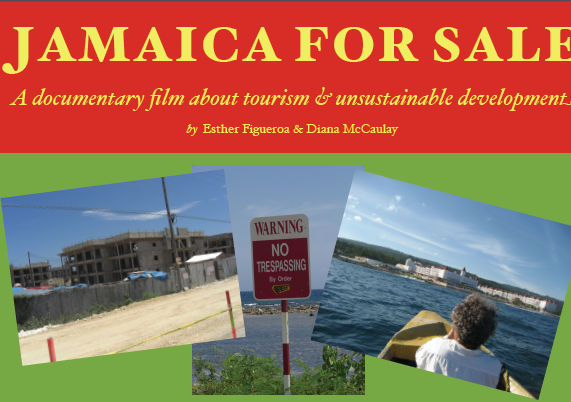
6. Jamaica for Sale (2006)

Director: Esther Figueroa

Examines the impact of tourism and resort development on Jamaican society.

7. Bob Marley: Roots of the Man (2018)

Director: Finn White-Thomson

Documents Bob Marley’s rise and his influence on reggae and Rastafarianism.

8. Bad Friday: Rastafari After Coral Gardens (2011)

Directors: Deborah A. Thomas & John L. Jackson Jr.

A powerful account of the Coral Gardens incident and its aftermath.The history of violence against Rastafari through the eyes of a Rasta community of in western Jamaica who annually commemorate the 1963 Coral Gardens "incident".

9. The First Rasta (2011)

Directors: Hélène Lee & Christophe Farnarier

Explores the life of Leonard Howell and the founding of Pinnacle. Going far beyond the standard imagery of Rasta-ganja, reggae, and dreadlocks-this cultural history offers an uncensored vision of a movement with complex roots and the exceptional journey of a man who taught an enslaved people how to be proud and impose their culture on the world. In the 1920s Leonard Percival Howell and the First Rastas had a revelation concerning the divinity of Haile Selassie, king of Ethiopia, that established the vision for the most popular mystical movement of the 20th century, Rastafarianism.

10. Stepping Razor: Red X (1992)

Director: Nicholas Campbell

A compelling portrait of Peter Tosh using his autobiographical recordings. Archival interviews with Tosh and rare concert footage fill out this picture of the Rasta visionary.


🎖️ Honorable Mentions

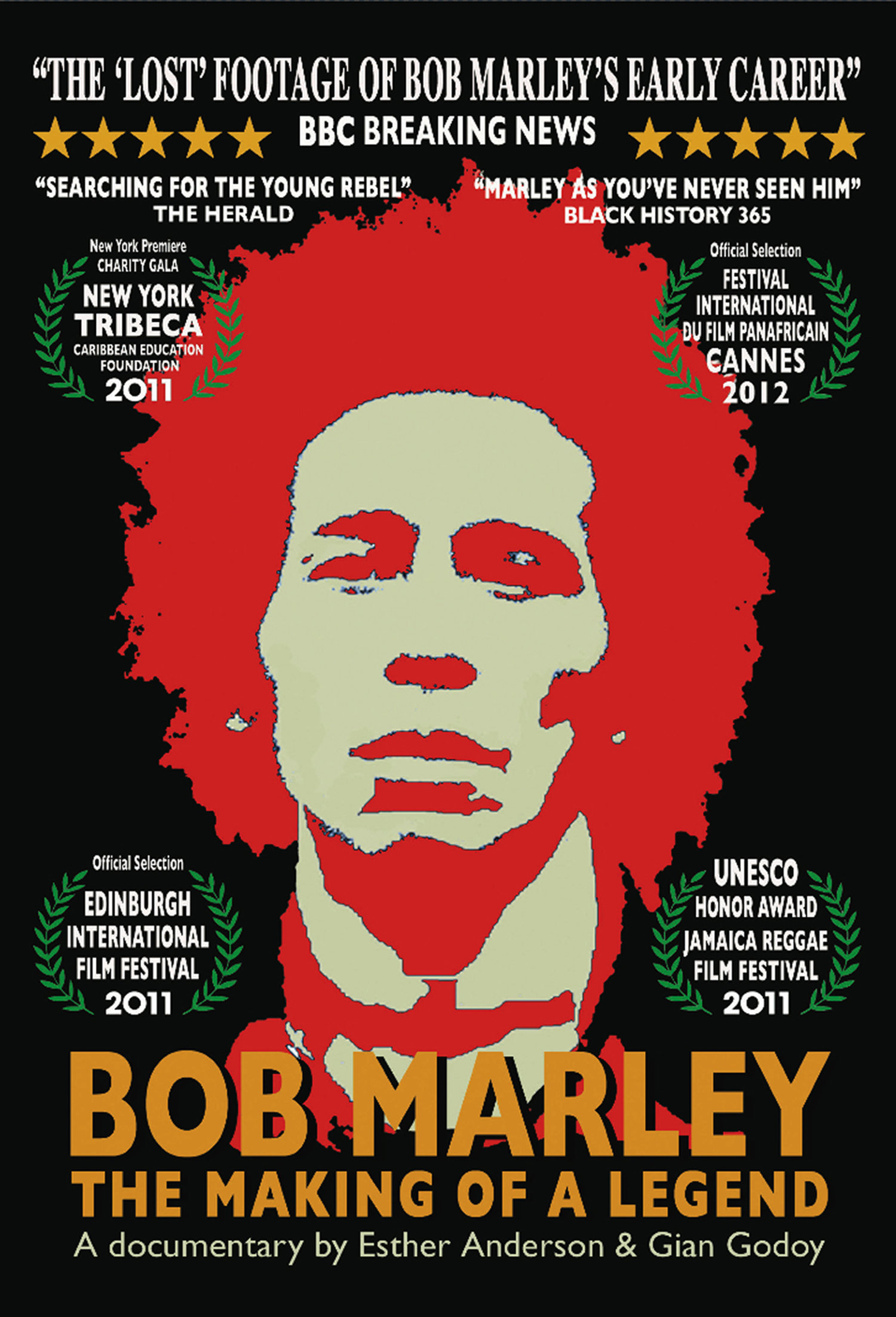
Bob Marley: The Making of a Legend (2011)

Director: Esther Anderson

A UNESCO Award nominated film charting the rise of Bob Marley and The Wailers to international stardom made from footage shot in the early 1970s and lost for more than thirty years, Esther Anderson takes us on a journey to Jamaica and into 56 Hope Road.

Black Mother (2018)

Director: Khalik Allah

A poetic visual ode to Jamaica’s spiritual and cultural landscape. In Black Mother, director Khalik Allah brings us on a spiritual journey through Jamaica. You will hear about and sometimes witness a dark Jamaican history, housing, physical violence, health problems, Rastafarianism, relationships and more.

Courage and Purpose (2022)

Director: PBCJ

Chronicles the legacy of Indian indentured laborers in Jamaica.

Finding Foster (2022)

Director: Alana Nelson

Explores the legacy of GC Foster and Jamaica’s sprinting heritage.


🇯🇲 Final Reflection

These documentaries collectively offer a layered perspective on Jamaica—from globalization and tourism to reggae music and Rastafari.

Jamaica’s documentary tradition stands as a powerful tool for truth-telling, cultural preservation, and social critique.

These films do more than document—they interrogate, celebrate, and challenge, shaping how Jamaica’s story is told globally.

Jamaica and Rastafari's Debt to Cuba


On clear days from Montego Bay, you can sense Cuba just ninety miles north. Close enough to swim, if desperation or love demanded it. Close enough that between 1900 and 1930, 150,000 Jamaicans crossed that water to work, to live, to die. My grandmother's father rests in Cuban earth. Mortimo Planno, one of our most important Rastafari elders, was born there. The line from Cuba to Trench Town to the world runs through him—he walked up the gangplank in 1966 to escort Haile Selassie to the ecstatic crowd, he mentored Bob Marley, he taught us to see spirituality and justice as one struggle.

Cuba gave my neighbours in Norwood their sight back. The Jamaica-Cuba Eye Care Programme flew ordinary Jamaicans—many on their first airplane ride—to Cuba for free surgery. Over 3,400 sight-saving procedures. Acts of love between neighbours.

Cuba gave the world Ebola treatments when wealthy nations sent soldiers. Cuba developed five COVID vaccines while under blockade, a lung cancer vaccine America bought in secret, treatments for vitiligo that plague our people. Cuba gave us the Buena Vista Social Club, refuge for Hemingway, revolutionary spirit that moved my father to name my brother Ernesto Che.

And now? Now our Prime Minister offers "constructive dialogue" and "humanitarian concern"—mealy-mouthed platitudes—while Cuba starves, while her lights go out, while the United States tightens a sixty-year blockade. Now the eye programme ends March 20 because we fold under Washington's pressure.

I remember 2022, when Jamaica sent medical supplies to Matanzas after that devastating fire. We know how to be generous. So where is our flotilla now? Where are the small boats loaded with food and medicine crossing those ninety miles? Where are our artists, our churches, our elders demanding solidarity?

Rastafari has always understood that Babylon is one and resistance must be one. Mortimo Planno, born in Cuba, buried in Jamaica, knew the struggle doesn't stop at the water's edge.

So I ask my fellow Jamaicans, I ask the Rastafari brethren: Are we fairweather friends? Do we only love Cuba when it costs us nothing? When Cuba gave us sight, gave us prophets, gave us medicine and music and revolutionary hope—we celebrated. Now Cuba needs us, and we offer statements.

Lions do not watch family starve while issuing press releases. What are we waiting for?

Wednesday, January 15, 2025

California Fires: A Jamaican Critique of Governance, Accountability, and Preventable Tragedies

The Cali Fires

Reflections on Political and Municipal Responsibility in the Woke Khalifate


Fires in Jamaica are a common occurrence and can have devastating consequences in Shanty towns and such, and I myself when living in Kendal, Manchester as child, woke up in a burning house. I am intimate with the particular scent that massive fires have after burning houses. I still have books that smell of that burning house. I can't help thinking about that Shawn Calvin song "Sunny Came Home"... especially that line that says, "...dry is good but wind is better..."Armageddon they say will be in an apocalyptic fire. But what is an Apocalypse if not the burning away and the revelation of truth. Trial by fire as it were.


The recent wildfires in California have not only devastated communities but have also ignited a fierce debate about political and municipal ineptitude. As I observe the critiques directed at Governor Gavin Newsom and Mayor Karen Bass, particularly from those who oppose "woke" and diversity, equity, and inclusion (DEI) policies, I find myself in agreement with many of these sentiments. These wildfires in California have become a tragic annual spectacle to the global news viewer. Towering flames consume homes, forests, and lives, and while the world watches in horror, one can’t help but wonder: could this all have been avoided? From where I sit in Jamaica, a land familiar with the wrath of nature, the answer feels like a resounding “Yes." The fires are predictable, and therefore, preventable. So why does California, one of the wealthiest places on Earth, seem so incapable of stopping them? 

The fires are not just tragic events; they expose significant failures in leadership and governance. As a Jamaican, I view these fires not just as natural disasters but as glaring symbols of political ineptitude, misplaced priorities, and systemic negligence. Let’s explore this issue from a uniquely Jamaican perspective, with a touch of cynicism, a splash of insight, and a strong dose of accountability. For as I pen this post I've had to ask my mother the family hub, about the family in California practically every other day last week. Though she says they're safe one can't help but feel a tad edgy and remember why I lobby for all our diaspora to have some place and hub out of Jamaica.

---

Fire and Accountability: Where’s the Leadership?

In Jamaica, we have a saying: “Prevention better than cure.” It’s simple, direct, and rooted in common sense. When we know a hurricane is coming, we prepare. We board up our windows, stock up on supplies, and rely on our leaders to put systems in place to minimize damage. Disaster preparedness here isn’t perfect, but it’s proactive. 

Contrast this with California, where wildfires are as inevitable as sunshine, and yet the response often seems like an afterthought. The question is: where's the leadership? Officials like Governor Gavin Newsom and Los Angeles Mayor Karen Bass are quick to make speeches, but what about action? If a government knows these fires are coming every year, why isn’t there a more robust strategy in place?

In Jamaica, our **Office of Disaster Preparedness and Emergency Management (ODPEM)** works tirelessly to anticipate and mitigate the effects of hurricanes. We try to enforce strict building codes though even the Prime Minister himself flouts them from time to time. We conduct public education campaigns, and maintain community disaster plans. If Jamaica, with its limited resources, can do this for hurricanes, why can’t California do the same for wildfires? Huh???

---

Negligence or Ineptitude? A Legal and Ethical Perspective

From a legal standpoint, California’s failure to prevent these fires could be seen as a breach of  “duty of care.”  In Jamaican law, negligence occurs when a party fails to act reasonably to prevent foreseeable harm. By this standard, California’s leaders and utility companies like PG&E could find themselves squarely in the crosshairs. 

Let’s break this down:

  • If the government knows that electrical sparks from outdated grids can ignite fires, why hasn’t it invested in infrastructure upgrades?
  • If wildfires are exacerbated by overgrown vegetation, why aren’t there more controlled burns and firebreaks?
  • If zoning laws allow people to build homes in high-risk areas, who’s responsible when those homes go up in flames?

These aren’t rhetorical questions. They’re the kinds of hard truths Jamaicans demand from our leaders. When something goes wrong here, we don’t dance around the issue—we demand accountability. Maybe California could use a bit of our fiery spirit, pun intended.

---

Woke Policies vs. Practical Solutions

Now, let’s talk about the critique of “woke” policies and DEI (Diversity, Equity, and Inclusion) initiatives, which some argue have distracted leaders like Newsom and Mayor Bass from practical governance. As a Jamaican, I understand the importance of equity—our national motto is literally, “Out of Many, One People.” In Jamaica I think most people get it that we want equal opportunity and not equal outcomes. So equity isn’t just about representation; it’s about ensuring that everyone, especially the most vulnerable, is protected.

When fires ravage California, it’s often the poorest communities that suffer the most. They’re the ones with the least resources to rebuild, the least political clout to demand better, and the least ability to escape. If leaders are spending more time on ideological posturing than on preventing disasters, then yes, they deserve criticism. Equity must extend beyond boardrooms and policy documents to include real-world protection for those at risk. 3.9% of donations must not be filtered to any political campaigns or organisation like some have tried to get by with in recent days. If you are donating please don't do it through Mr. Newsom.

---

Lessons from Europe: How Others Tackle Wildfires

California isn’t the only place dealing with wildfires. Countries like Spain, Portugal, and Greece face similar challenges but often handle them more effectively. Here’s what they’re doing right:

  1. **Controlled Burns:**    
    European nations regularly conduct controlled burns to reduce flammable vegetation. California has been criticized for neglecting this simple, effective practice.
  2. **Infrastructure Upgrades:**  
    In Europe, utility companies are held accountable for maintaining safe electrical grids. In California, PG&E has faced lawsuits but continues to fall short. Why?
  3. **Strict Zoning Laws:**  
    European countries enforce laws that prevent construction in high-risk areas, unlike California, where urban sprawl often pushes communities into fire-prone zones.
  4. **Community Involvement:**  
    Europeans actively engage local communities in wildfire prevention efforts. This approach mirrors Jamaica’s reliance on community disaster response teams, where local knowledge plays a crucial role.

---

Elon Musk, Mel Gibson, and the Culture of Distrust

Even cultural icons have weighed in on California’s wildfires. Elon Musk, ever the technophile, has criticized the state for failing to innovate, suggesting that drones, AI, and other technologies could revolutionize wildfire prevention. He’s not wrong. California, with its wealth and tech industry, has no excuse for not leading the world in disaster prevention technology.

Then there’s Mel Gibson, whose more conspiratorial tone reflects a broader mistrust in the system. When preventable disasters keep happening, people start to wonder: is this incompetence, or is there something more sinister at play? While I won’t dive into conspiracy theories, it’s clear that these repeated failures have eroded public trust in California’s leadership.

---

A Jamaican Call for Better Governance

From a Jamaican perspective, the California fires are a tragic reminder of what happens when leaders fail to prioritize the basics: preparation, accountability, and care for the public good. Here in Jamaica, we know that nature is unpredictable, but that doesn’t mean it’s unbeatable. We prepare, we adapt, and we hold our leaders accountable.

California, take a page from our book. Stop making excuses, stop pointing fingers, and start doing the work. Invest in controlled burns, upgrade your infrastructure, enforce zoning laws, and engage your communities. And for heaven’s sake, stop letting utility companies and water managers off the hook.

As we say in Jamaica: “If yuh cyaan ketch Quako, yuh ketch him shut.” In other words, if you can’t fix the problem at its root, at least address the symptoms. California’s leaders have no excuse for letting predictable disasters spiral into chaos year after year. Captain's must take responsibility for the ship, ain't it?

It’s time for action, not just rhetoric. The fires may be burning in California, but the heat is on its leaders to finally step up.

--- 

Conclusion

The California fires are a tragedy, but they don’t have to be inevitable. From a Jamaican perspective, the solution lies in accountability, preparedness, and a commitment to protecting all citizens, not just the wealthy and powerful. Let’s hope California’s leaders are listening—because if they aren’t, the flames will be back, fiercer than ever.

Friday, February 24, 2023

Top 10 Most Infamous Banking Scandals That Shocked Jamaica: A Chronological List

On the heels of the breaking international news about NCB and Sagicor bank scandals, we have the new SSL and Usain Bolt saga. In light of that I thought it would be worth looking at  how Jamaica's banking industry has been plagued by a number of scandals and controversies over the years, involving insider trading, fraud, embezzlement, and other illegal financial practices. These scandals have not only caused significant financial losses for thousands of investors and depositors, but have also damaged public trust in the country's financial institutions and regulators.

The following is a list of the top 10 most notable banking scandals and controversies in Jamaica's history, arranged in chronological order. These scandals have involved some of the country's largest and most well-known banks and financial institutions, and have led to criminal investigations, arrests, and convictions of some of the individuals involved. They also sparked public outrage and calls for greater oversight and regulation of the financial sector in Jamaica.


  1. The NCB Financial Group scandal of the 1990s, in which it was revealed that executives at the bank had engaged in insider trading and other illegal financial practices.

  2. The "Cash Plus" scandal of the 2000s, in which the company's owner Carlos Hill defrauded thousands of investors of millions of dollars.


  3. The "Pan Caribbean Financial Services" scandal of the 2000s, in which it was revealed that executives at the company had engaged in fraudulent activities, including Ponzi scheme.

  4. The OLINT banking scandal of the 2000s, in which the owner and operator of the OLINT Corporation, David Smith, used a Ponzi scheme to defraud investors of millions of dollars

  5. The "National Commercial Bank" scandal of the 2010s, in which it was revealed that executives at the bank had engaged in corrupt practices, including insider trading and money laundering.

  6. The "Victoria Mutual Building Society" scandal of the 2010s, in which it was revealed that executives at the company had misused funds and engaged in other financial improprieties.

  7. The "First Global Bank" scandal of the 2010s, in which it was revealed that executives at the bank had engaged in fraudulent activities, including money laundering and insider trading.

  8. The "Clarendon Credit Union" scandal of the 2010s, in which it was revealed that officials had misused funds and engaged in other financial improprieties.

  9. The "Capital & Credit Merchant Bank" scandal of the 2010s, in which it was revealed that the bank had failed to disclose to its shareholders that it was facing financial difficulties and had been engaging in unsound banking practices

  10. The "Mico University College" scandal of the 2010s, in which it was revealed that executives at the college had misused funds and engaged in other financial improprieties.

It is worth noting that some of the court cases related to these scandals might not have been concluded yet.


#BankingScandals #Jamaica #InfamousScandals #FinancialCrimes #WhiteCollarCrime #Corruption #JamaicanBanks #BankFraud #MoneyLaundering #FinancialRegulation #JamaicanHistory #BusinessEthics #Transparency #CorporateCrime #JamaicanFinance #FinancialTransparency #FraudInvestigation #CorporateResponsibility #JamaicanEconomy #FinancialCrimeInvestigation