Showing posts with label jamaica. Show all posts

Sunday, March 22, 2026

Quantum Dreams & Forty-Leg Prophecies: When Jamaican Reality Meets Schrödinger’s Riddim

The Jamaican Philosopher's Quantum Dreams: Exploring the Mysteries of Consciousness and Reality


"The most incomprehensible thing about the universe is that it is comprehensible." 
- Albert Einstein


"Everything we call real is made of things that cannot be regarded as real." 

- Niels Bohr


As a Jamaican philosopher, artist, and community activist, I've had experiences that have profoundly challenged my understanding of reality. These encounters have touched on deep questions about consciousness, the limits of science, and the nature of existence itself. Join me as we dive into the quantum rabbit hole and explore the implications of these mind-bending phenomena.

It all began with a dream - or rather, two dreams that were eerily prophetic. In the first incident, I dreamed of centipedes biting me, only to wake up and find them exactly where I had envisioned them in my sleep. My friend's swift action to eliminate the pests felt like a "collapse" of the potential danger, mirroring the quantum mechanical concept of "decoherence." Maybe that description is too vague, let me ratchet it up:

I. Midnight at Rock Top: When Dream Became Reality  

Rain was falling, but the vibes were right at Rock Top that night. I was there with two friends, a little rum in our systems, laughing about life—when suddenly, my head got heavy. I dozed off…  

In my dream: Two forty-legs (Jamaican centipedes!) crawled out of the nook where I was sitting, slid up the back of my shirt, bit me, and I plunged off the cliff. I woke up—frightened, heart racing! I told my friend: “Vinnin, I dreamed forty-legs were right here!”  

He looked at me, dead serious: “Rasta, if you dream that—*dem deh yah.” 

I was skeptical, but he whipped out his phone light, shone it into the crack in the rock—  

BAM. Two forty-legs, exactly where I saw them in my dream. He grabbed his machete—CHOP!—collapsing that prophecy into two pieces.  

II. University Walkway: The Shared Vision  

The second dream was even more uncanny. My friend and I both dreamed the same vivid scene, which unfolded the very next day just as we had envisioned it. This shared experience evoked a sense of "quantum entanglement" - a spooky connection between our minds that challenges the classical understanding of cognition... let me explain this amazing incident more clearly.

Years back, at UWI, a friend and I (Pole) were rivals for a St. Lucian woman’s (Drenia's) affection. She graduated, vanished for a year—no word. Then one night:  

I dreamed we were standing on a concrete walkway, looked up—and saw her.  

Next day, I bumped into him on the same walkway. Before I could speak, his eyes widened:  

“You dream it too? We saw Drenia!”

We both looked up—there she was. No call, no text—pure synchronicity.  

III. Schrödinger’s Cat… or Jamaican Forty-Leg?  

Those two experiences made me question: What is real?  

Enter quantum physics—the science of the invisible, where particles exist in multiple states at once. Like Schrödinger’s cat: locked in a box with poison, it’s both dead and alive until you open the box.  

But why do physicists care? 

- Decoherence: The moment quantum particles interact with reality (air, light, sound), they lose their quantum magic—collapsing into one state.  

  → Like how my forty-leg dream “collapsed” when my friend shone his light. 

- Prediction vs. Description:  

  • Prediction Camp (Einstein): “Science must forecast outcomes—shut up and calculate!”  
  • Description Camp (Bohr): “No—science must reveal reality’s true nature!”

My dreams challenge prediction. Value for money? Quantum physics gives us phones and MRI machines—but doesn’t explain prophetic centipedes.  

These encounters raise profound questions about the nature of consciousness and its relationship to the physical world. Are our dreams mere coincidences and byproducts of brain chemistry, or do they hint at deeper layers of reality that science has yet to uncover? The debate between the "prediction" and "description" camps in the philosophy of science is at the heart of this conundrum.

The physics of decoherence offers a fascinating perspective on this dilemma. It explains how quantum superpositions, like Schrödinger's famous cat, "collapse" into definite states not because of consciousness or measurement, but due to the scrambling of quantum information across the environment. This bridges the gap between the weirdness of the quantum realm and the classical world we experience.

Yet, my dream experiences seem to defy this neat explanation. If decoherence can so easily "collapse" the quantum state, how can my dreams, which appear to tap into a deeper layer of reality, remain unexplained by the predictive power of science?

IV. What the Quantum Riddim Teaches Us About Life**  

As Jamaicans—we know the unseen has weight. Ghost stories, spiritual warnings, dream signs… Quantum weirdness feels familiar!  

- Many-Worlds Theory: Every possibility happens somewhere. Maybe in another universe, I didn’t wake up before the forty-legs bit me.  

- Entanglement: Like how my friend and I dreamed the same scene—particles sync across galaxies too.  

But here’s the stake: If science only values prediction, it dismisses our dreams as “coincidence.” But if it seeks description? Maybe consciousness runs deeper than brain chemistry.  

This is where the soul-deep question arises: Is science about prediction or description? The "prediction" camp, represented by the Copenhagen interpretation and the instrumentalist view, would dismiss my dreams as mere statistical flukes or byproducts of brain chemistry. But the "description" camp, championed by the realist and many-worlds interpretations, might see my experiences as hints of a deeper reality that science has yet to fully grasp.

As a Jamaican philosopher, I'm drawn to the middle path - the idea that science can describe the predictable phenomena of the physical world, while also acknowledging the existence of "anomalies" that challenge our understanding. Perhaps my dreams are not glitches, but data points in the mystery of consciousness, waiting to be explored and integrated into a more comprehensive understanding of reality.

The stakes are high, both for the individual and for the scientific community. If science is only about prediction, then my dreams and other "unexplainable" experiences are relegated to the realm of the "unscientific." But if science is about describing the true nature of reality, then these phenomena demand investigation, potentially leading to breakthroughs in our understanding of consciousness, quantum mechanics, and the very fabric of existence.

V. Tying It to Our Jamaican Soul

Our ancestors navigated by stars, felt spirits in the breeze. They never reduced mystery to “fluff.”  

So what am I saying?  

1. Science as a Tool, Not a Tyrant: It explains how things work—but doesn’t own the why.  

2. Honor the Unexplained: My forty-leg vision? The shared dream? They are real experiences—demanding we stay humble.  

3. Our Culture is Already Quantum:  

  • When Bob Marley sang “Natural Mystic”...  
  • When your grandma warned you about dream-snakes...  

   → That’s our own theory of everything.  

---

As J.B.S. Haldane famously said, "The universe is not only stranger than we imagine, it is stranger than we can imagine." Perhaps it is time for science to embrace the wonder and mystery that lies beyond the boundaries of prediction, and to venture into the uncharted territories of the human experience.

Quantum physics confirms: reality is flexible. But Jamaican wisdom adds: respect the mystery.  

Those forty-legs? Maybe they were a warning... or maybe they were just there. But when my friend chopped them—that collapsed my potential futures.  

To my diaspora family: Our existence is already quantum—split between yard and foreign, memory and future. Our dreams? Maybe they’re messages from the multiverse.  

“Perhaps reality is a dance—the seen and unseen, the measured and dreamed, moving to one riddim. Stay open. Stay curious. The universe has more verses.”

In the end, the journey of the Jamaican philosopher is one of holding the tension between the known and the unknown, the measurable and the ineffable. To me it is a call to expand the horizons of science, to integrate the insights of philosophy, spirituality, and the arts, and to embrace the profound mysteries that lie at the heart of our existence.


(Share your dream stories below! Have you ever seen prophecy in your sleep?)


Tuesday, February 25, 2025

From Red, Gold, and Green to Shades of Red and Blue: A Jamaican Philosopher's Journey Through the Political Labyrinth

Namibia

From Leftist Roots to Unlikely Advocacy: A Jamaican Journey of Political Thought


If my granny taught me anything, it’s that “every story have two sides, and sometimes three.” She would say it while sipping her bush tea, the morning sun glinting off her spectacles, as if she were a sage on the hilltop of wisdom. And for the longest time, I thought I understood her—until my own journey taught me that sometimes, those "two sides" can get twisted into a Möbius strip, where you're constantly flipping perspectives but never quite leaving the loop.

You see, I wasn’t always the Jamaican leftist-turned-Trump-policy supporter sitting before you today, typing this post on a world-weary laptop. Once, I was a wide-eyed Bernie Sanders supporter, shouting "Not me, us!" from the rooftops—or at least from my Twitter feed. Back then, I believed in the power of the left to challenge big money, to bring about social equity, to shake up the system. But as the story goes, heroes often become their own disappointment. Bernie bowed—not once, but twice—to the corporate Democrats, first to Hillary Clinton and then to Joe Biden. And the Squad? AOC and Ilhan Omar? Their fire seemed to fizzle out, leaving behind lukewarm platitudes where once there were calls for revolution. 

The disappointment didn’t stop there. Mainstream media, as it always does, failed to speak to my issues. I turned to the "Leftist Mafia" of YouTube—Democracy Now, The Young Turks, Sam Seder, David Doel, the Rational National. They were the new scribes of the revolution, or so I thought. But as Bernie's spark dimmed, their analysis seemed to grow more like fluff pieces than sharp critiques. I was left hungry, starving for the kind of journalism that could cut through the noise like Steven Sakur's *Hard Talk* used to do back in the '90s. Remember *Hard Talk*? That was when journalists still knew how to hold power accountable, before sensationalism and clickbait infected the trade like a parasite.

Disillusioned, I found myself wandering the digital wilderness, guided only by my granny's voice in my head: “Two sides, sometimes three.” That’s when I stumbled upon Russell Brand, the Jimmy Dore Show, and others who dared to question the narratives I had once held sacred. Names like Jordan Peterson, Lex Fridman, and even The Liberal Hivemind entered my orbit, each with their own lens on the world. Were they perfect? Hardly. But they reminded me of the importance of listening to perspectives beyond my echo chamber—a lesson I learned long ago from Batman, the world’s greatest detective. You can’t solve a case by only looking at it from one angle.

Now, let me pause here, because I can already feel some of you recoiling. “A Bernie supporter who now listens to Jordan Peterson? A socialist-turned-Trump advocate? What kind of madman is this?” And I get it. I really do. But let me ask you this: When was the last time you truly listened to someone you disagreed with? Not just to refute them, but to understand them? My journey taught me that truth doesn’t live on one side of the aisle. It’s scattered, fragmented, and often censored by the very systems that claim to protect our freedoms.

Take Russell Brand, for instance. A comedian turned social commentator, he was one of the first to call out how corporate interests shape our media narratives. Or Jimmy Dore, who dared to critique the left from within, exposing the cracks in the foundation I once thought was solid. These voices—along with platforms like Rumble, which I’m slowly migrating to—remind me of what journalism and discourse should be: messy, uncomfortable, but ultimately enlightening.

And let’s not forget the tech giants, the new gatekeepers of our digital agora. Facebook, Instagram, YouTube—they’ve become the digital plantations of our time, where algorithms decide whose voices are amplified and whose are silenced. I’ve seen my own digital presence reduced to a whisper, my posts buried beneath the weight of corporate censorship. It’s why I yearn for open-source platforms, public domain AI, and freer avenues for expression. Until then, I’ll keep fighting to be heard, even if it means shouting into the void.

But this isn’t just about me or my journey. It’s about us—Jamaicans, philosophers, thinkers, skeptics. We live in a world where censorship wears a friendly face, where dissent is branded as misinformation, and where the pursuit of truth often feels like a lonely road. Yet, as my granny would remind me, “Better to walk alone in the right direction than follow a crowd into the wrong one.”

So, to my fellow Jamaicans, and to anyone reading this who might be skeptical of my positions, I say this: Question everything. Question me, question yourself, question the narratives handed down to us by those in power. And when you feel yourself recoiling from an idea or a perspective, lean into it. Challenge it. Wrestle with it. Because at the end of the day, truth is rarely found in comfort zones.

My journey has been anything but linear. It’s been a dance between ideologies, a battle between skepticism and belief, a search for meaning in a world that often trades authenticity for convenience. But through it all, I’ve held onto one simple truth: There are always two sides, sometimes three. And the only way to truly understand the world is to listen to them all.


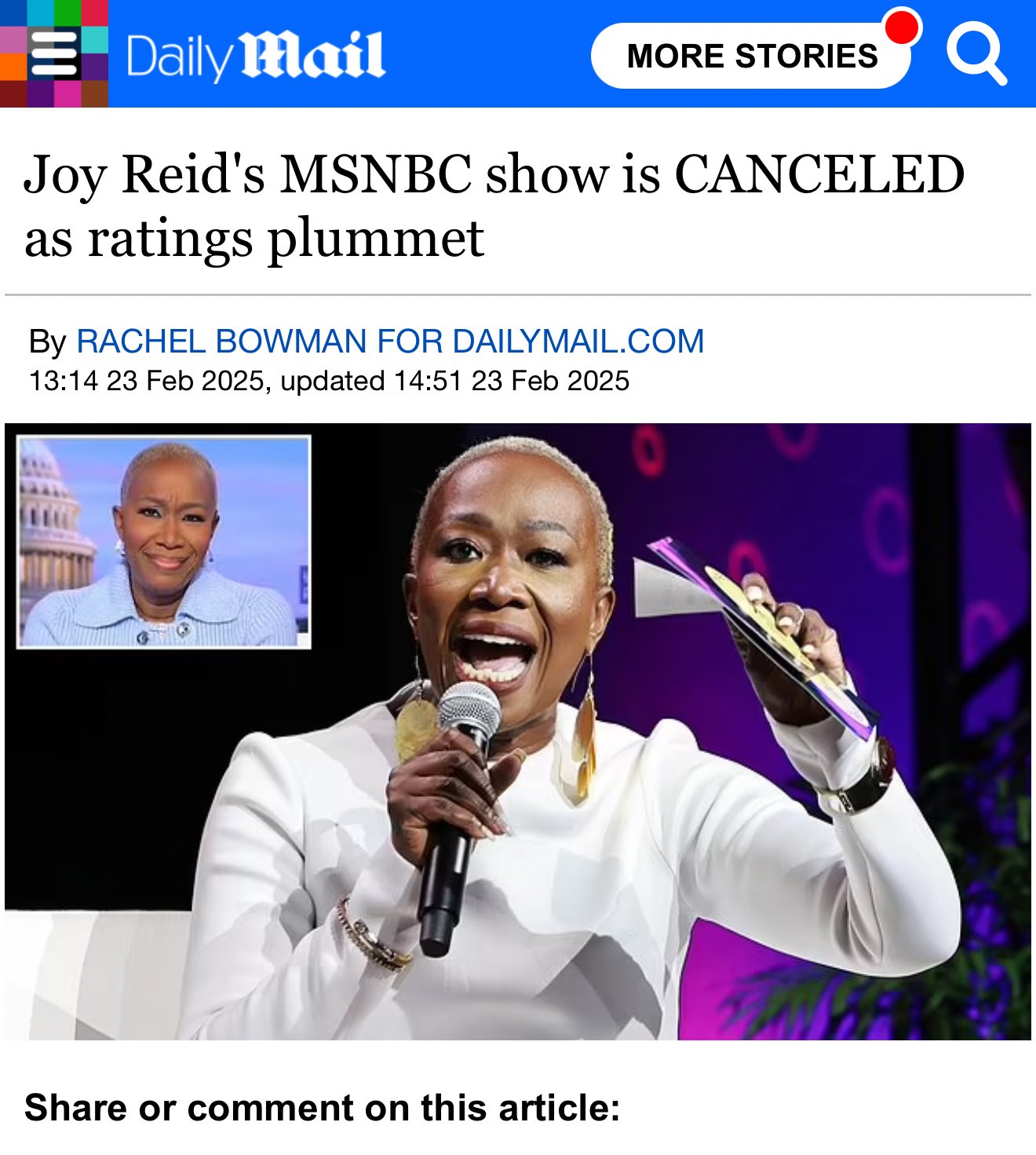
It is interesting to note I may not be the only person who feels this way, as since Donald Trump's victory in the 2024 election, mainstream and leftist media ratings have experienced significant declines. Here are some key statistics and facts regarding the changes in viewership:

MSNBC Ratings Decline

  • Overall Viewership Drop: MSNBC's average viewership fell by 39% since Election Day, averaging 550,000 viewers compared to its October average of 1.1 million viewers. In prime time, the decline was even steeper at 53% [1].
  • Specific Show Performance: Rachel Maddow's show, which is MSNBC's highest-rated program, saw a drop to 1.3 million viewers, about 1 million shy of her October average. This was the least-watched edition of her show among viewers under 54 since April 2022 [1].
  • Post-Election Performance: In the days following the election, MSNBC's primetime viewership plummeted by 54%, averaging 808,000 viewers compared to 1.8 million in October [3].

CNN Ratings Decline

  • Overall Viewership Drop: CNN's viewership also suffered, with an average of 413,000 viewers since the election, marking a 22% decline from its October averages. In prime time, CNN's viewership dropped by 43%[1].
  • Election Night Performance: Despite the overall decline, CNN had a strong showing on election night with 5.1 million viewers, but this was overshadowed by Fox News, which had over 10 million viewers [1].

Fox News Ratings Surge

  • Viewership Increase: In contrast to MSNBC and CNN, Fox News experienced a 21% increase in prime-time viewership, averaging 3.3 million viewers since the election. Its total day audience jumped by 38% [1].
  • Election Night Dominance: Fox News led the ratings on election night with 10.3 million viewers during prime time, significantly outperforming its competitors [3].

General Trends

  • Fragmentation of Media Consumption: The decline in traditional media viewership is attributed to a broader trend where younger audiences are increasingly turning to platforms like TikTok and YouTube for news, bypassing traditional cable news altogether [2].
  • Trust in Media: Public trust in mass media institutions is at a record low, which may contribute to the declining ratings of mainstream media outlets [2].

These statistics illustrate a significant shift in viewership dynamics following Trump's election victory, with left-leaning networks like MSNBC and CNN facing substantial declines while Fox News capitalizes on the situation.

As I sign off, I leave you with this: If you’ve made it this far, if you’ve read these words with an open mind, then you’re already on the path to becoming the kind of philosopher our world so desperately needs. Now go, seek your funky understanding, and remember—Batman would want you to investigate every angle. Even the uncomfortable ones.


Wednesday, January 15, 2025

California Fires: A Jamaican Critique of Governance, Accountability, and Preventable Tragedies

The Cali Fires

Reflections on Political and Municipal Responsibility in the Woke Khalifate


Fires in Jamaica are a common occurrence and can have devastating consequences in Shanty towns and such, and I myself when living in Kendal, Manchester as child, woke up in a burning house. I am intimate with the particular scent that massive fires have after burning houses. I still have books that smell of that burning house. I can't help thinking about that Shawn Calvin song "Sunny Came Home"... especially that line that says, "...dry is good but wind is better..."Armageddon they say will be in an apocalyptic fire. But what is an Apocalypse if not the burning away and the revelation of truth. Trial by fire as it were.


The recent wildfires in California have not only devastated communities but have also ignited a fierce debate about political and municipal ineptitude. As I observe the critiques directed at Governor Gavin Newsom and Mayor Karen Bass, particularly from those who oppose "woke" and diversity, equity, and inclusion (DEI) policies, I find myself in agreement with many of these sentiments. These wildfires in California have become a tragic annual spectacle to the global news viewer. Towering flames consume homes, forests, and lives, and while the world watches in horror, one can’t help but wonder: could this all have been avoided? From where I sit in Jamaica, a land familiar with the wrath of nature, the answer feels like a resounding “Yes." The fires are predictable, and therefore, preventable. So why does California, one of the wealthiest places on Earth, seem so incapable of stopping them? 

The fires are not just tragic events; they expose significant failures in leadership and governance. As a Jamaican, I view these fires not just as natural disasters but as glaring symbols of political ineptitude, misplaced priorities, and systemic negligence. Let’s explore this issue from a uniquely Jamaican perspective, with a touch of cynicism, a splash of insight, and a strong dose of accountability. For as I pen this post I've had to ask my mother the family hub, about the family in California practically every other day last week. Though she says they're safe one can't help but feel a tad edgy and remember why I lobby for all our diaspora to have some place and hub out of Jamaica.

---

Fire and Accountability: Where’s the Leadership?

In Jamaica, we have a saying: “Prevention better than cure.” It’s simple, direct, and rooted in common sense. When we know a hurricane is coming, we prepare. We board up our windows, stock up on supplies, and rely on our leaders to put systems in place to minimize damage. Disaster preparedness here isn’t perfect, but it’s proactive. 

Contrast this with California, where wildfires are as inevitable as sunshine, and yet the response often seems like an afterthought. The question is: where's the leadership? Officials like Governor Gavin Newsom and Los Angeles Mayor Karen Bass are quick to make speeches, but what about action? If a government knows these fires are coming every year, why isn’t there a more robust strategy in place?

In Jamaica, our **Office of Disaster Preparedness and Emergency Management (ODPEM)** works tirelessly to anticipate and mitigate the effects of hurricanes. We try to enforce strict building codes though even the Prime Minister himself flouts them from time to time. We conduct public education campaigns, and maintain community disaster plans. If Jamaica, with its limited resources, can do this for hurricanes, why can’t California do the same for wildfires? Huh???

---

Negligence or Ineptitude? A Legal and Ethical Perspective

From a legal standpoint, California’s failure to prevent these fires could be seen as a breach of  “duty of care.”  In Jamaican law, negligence occurs when a party fails to act reasonably to prevent foreseeable harm. By this standard, California’s leaders and utility companies like PG&E could find themselves squarely in the crosshairs. 

Let’s break this down:

  • If the government knows that electrical sparks from outdated grids can ignite fires, why hasn’t it invested in infrastructure upgrades?
  • If wildfires are exacerbated by overgrown vegetation, why aren’t there more controlled burns and firebreaks?
  • If zoning laws allow people to build homes in high-risk areas, who’s responsible when those homes go up in flames?

These aren’t rhetorical questions. They’re the kinds of hard truths Jamaicans demand from our leaders. When something goes wrong here, we don’t dance around the issue—we demand accountability. Maybe California could use a bit of our fiery spirit, pun intended.

---

Woke Policies vs. Practical Solutions

Now, let’s talk about the critique of “woke” policies and DEI (Diversity, Equity, and Inclusion) initiatives, which some argue have distracted leaders like Newsom and Mayor Bass from practical governance. As a Jamaican, I understand the importance of equity—our national motto is literally, “Out of Many, One People.” In Jamaica I think most people get it that we want equal opportunity and not equal outcomes. So equity isn’t just about representation; it’s about ensuring that everyone, especially the most vulnerable, is protected.

When fires ravage California, it’s often the poorest communities that suffer the most. They’re the ones with the least resources to rebuild, the least political clout to demand better, and the least ability to escape. If leaders are spending more time on ideological posturing than on preventing disasters, then yes, they deserve criticism. Equity must extend beyond boardrooms and policy documents to include real-world protection for those at risk. 3.9% of donations must not be filtered to any political campaigns or organisation like some have tried to get by with in recent days. If you are donating please don't do it through Mr. Newsom.

---

Lessons from Europe: How Others Tackle Wildfires

California isn’t the only place dealing with wildfires. Countries like Spain, Portugal, and Greece face similar challenges but often handle them more effectively. Here’s what they’re doing right:

  1. **Controlled Burns:**    
    European nations regularly conduct controlled burns to reduce flammable vegetation. California has been criticized for neglecting this simple, effective practice.
  2. **Infrastructure Upgrades:**  
    In Europe, utility companies are held accountable for maintaining safe electrical grids. In California, PG&E has faced lawsuits but continues to fall short. Why?
  3. **Strict Zoning Laws:**  
    European countries enforce laws that prevent construction in high-risk areas, unlike California, where urban sprawl often pushes communities into fire-prone zones.
  4. **Community Involvement:**  
    Europeans actively engage local communities in wildfire prevention efforts. This approach mirrors Jamaica’s reliance on community disaster response teams, where local knowledge plays a crucial role.

---

Elon Musk, Mel Gibson, and the Culture of Distrust

Even cultural icons have weighed in on California’s wildfires. Elon Musk, ever the technophile, has criticized the state for failing to innovate, suggesting that drones, AI, and other technologies could revolutionize wildfire prevention. He’s not wrong. California, with its wealth and tech industry, has no excuse for not leading the world in disaster prevention technology.

Then there’s Mel Gibson, whose more conspiratorial tone reflects a broader mistrust in the system. When preventable disasters keep happening, people start to wonder: is this incompetence, or is there something more sinister at play? While I won’t dive into conspiracy theories, it’s clear that these repeated failures have eroded public trust in California’s leadership.

---

A Jamaican Call for Better Governance

From a Jamaican perspective, the California fires are a tragic reminder of what happens when leaders fail to prioritize the basics: preparation, accountability, and care for the public good. Here in Jamaica, we know that nature is unpredictable, but that doesn’t mean it’s unbeatable. We prepare, we adapt, and we hold our leaders accountable.

California, take a page from our book. Stop making excuses, stop pointing fingers, and start doing the work. Invest in controlled burns, upgrade your infrastructure, enforce zoning laws, and engage your communities. And for heaven’s sake, stop letting utility companies and water managers off the hook.

As we say in Jamaica: “If yuh cyaan ketch Quako, yuh ketch him shut.” In other words, if you can’t fix the problem at its root, at least address the symptoms. California’s leaders have no excuse for letting predictable disasters spiral into chaos year after year. Captain's must take responsibility for the ship, ain't it?

It’s time for action, not just rhetoric. The fires may be burning in California, but the heat is on its leaders to finally step up.

--- 

Conclusion

The California fires are a tragedy, but they don’t have to be inevitable. From a Jamaican perspective, the solution lies in accountability, preparedness, and a commitment to protecting all citizens, not just the wealthy and powerful. Let’s hope California’s leaders are listening—because if they aren’t, the flames will be back, fiercer than ever.

Wednesday, January 01, 2025

Out Here On A Limb!

The Great Renaming: A Humorous Yet Thought-Provoking Musing on Animal Anatomy and Evolution 


Ladies and gentlemen, hold onto your hats—or your fins, wings, and webbed fingers, as the case may be—because I am here to challenge the very foundations of zoological nomenclature with the audacity of a squirrel challenging gravity during a leap of faith. It's time we reexamine what we *think* we know about our animal kin. Let me present to you a thesis that is as witty as it is scientifically provocative: Animals are mislabeled, misunderstood, and dare I say, misrepresented in the great book of life.  

All the data presented here is based on my own HANDS ON experience!

The Case Against "Four-Footedness"  

Let’s take a moment and truly consider the so-called "four-footed" animals. Cats and dogs—pardon, *puss and dawg*—are among the most egregious victims of this anatomical propaganda. Anyone who has spent years sketching their skeletal frames (as I have, with the fervour of a Renaissance anatomist) will tell you: the front "legs" of these creatures are not legs at all, but rather arms. Yes, arms! The bone structure is nearly identical to the human arm—humerus, radius, ulna, and let’s not even get started on the wrist-like carpus.  

And those paws? They’re hands in disguise, my friends. Hands! Observe a cat batting at a toy or a dog digging a hole with surgical precision, and tell me that isn’t a form of manual dexterity. If these creatures are walking on all fours, they are, in fact, walking on their hands. Ponder that the next time you see a Labrador sauntering down the street with regal nonchalance.  

Kangaroos are fascinating creatures, particularly when you examine their front limbs, which resemble human arms in both structure and function. These "arms" are equipped with powerful pectoral muscles that enable them to deliver impressive punches during their unique form of boxing. When kangaroos engage in this sparring behavior, their muscular build and the ability to extend their limbs showcase a remarkable similarity to human upper-body mechanics. The kangaroo’s forelimbs are not just for balance or support; they are adept at striking, allowing these marsupials to assert dominance and communicate through physical displays. This anthropomorphic quality in their anatomy highlights the evolutionary adaptations that allow kangaroos to thrive in their environment while also captivating our imagination with their human-like strength and agility. Don't you think it is something to think about or consider?


Birds Do Not Have Wings—They Have Hands That Fly  

Now, let us turn to the aviators of the animal kingdom: birds. The so-called "wing" is nothing more than a glorified hand wearing a particularly fashionable feathered cape. Anatomically speaking, the avian wing comprises the same basic structure as your own arm—shoulder, elbow, wrist, and fingers. Yes, fingers! Those feathers are just the avant-garde extensions of what evolutionarily amounts to jazz hands.  

Bats, of course, have taken this concept to its logical extreme. Their "wings" are merely webbed fingers stretched to improbable lengths, like something out of a Tim Burton sketchbook. They don’t flap wings; they high-five the air.  


The Aquatic Ape Theory: Humans, Seals, and the Ghosts of Our Webbed Ancestors  

Now that we’ve established the hand-walking, hand-flying reality of terrestrial and aerial creatures, let’s dive—literally—into the aquatic realm. There’s a theory, whispered among the more rebellious anthropologists, that humans are not merely distant cousins of the chimpanzee but rather the offspring of an aquatic ape. Think about it: humans are oddly suited for water. We have subcutaneous fat (blubber, if you will) much like seals and whales, and our babies, when submerged, instinctively hold their breath and perform a rudimentary doggy paddle. Could it be that we are the web-fingered descendants of some long-forgotten coastal ape that decided to take a swim and never stopped?  

Seals, of course, are the obvious sea-dog analog. Their skeletal structure screams "canine cousin," and their vocalizations—those charming *arfs*—are but a watery echo of their terrestrial counterparts. Meanwhile, the walrus, with its saber-toothed maw, could very well be the aquatic equivalent of a prehistoric lion forced to adapt to icy oceans.  

Whales, Wolves, and Porpoise-Pigs  

And what of the great leviathans of the sea? Whales are often said to have evolved from wolf-like ancestors, and dolphins, in ancient times, bore the name "porpoise," a term derived from the Latin *porcus piscis*, meaning "pig fish." While I admit I have yet to personally compare dolphin and pig bones in the manner of a Victorian naturalist, the linguistic and behavioral parallels are uncanny.  

Dolphins are social, intelligent, and occasionally mischievous—traits they share with pigs. Perhaps they are the aquatic swine of yore, frolicking in the waves instead of rooting in the dirt.

Lobsters, Scorpions, and the Arthropod Ancestry  

Finally, let us consider the crustaceans and their terrestrial doppelgängers. Is a lobster not but a scorpion in a diving suit? And what of the crab, with its spider-like gait and penchant for scuttling sideways? Shrimp and roaches, too, seem to share a common lineage, their exoskeletal forms suggesting a family reunion that spans both land and sea.  

A Call to Action (and Renaming)  

Time for a New Nomenclature

So, my fellow thinkers, artists, and amateur anatomists, I propose that we abandon outdated labels like "four-footed" and "winged" in favor of terms that reflect the reality of these creatures’ anatomy and evolution. Let us celebrate the hand-walking, hand-flying, web-fingered wonders of our world. And while we’re at it, let’s give some thought to the connections that bind us all—from the scuttling lobster to the soaring bird, from the barking dog to the blubbery seal.  

After all, in the grand tapestry of life, we are all but variations on a theme, our bones echoing the same ancient melodies, our forms shaped by the whims of evolution. And if that’s not worth a hearty *arf* or a jubilant high-five, I don’t know what is.  


References:  

- Darwin, C. (1859). *On the Origin of Species by Means of Natural Selection.* (Also, a great read if you like long sentences and Victorian drama.)  

- Shubin, N. (2008). *Your Inner Fish.* (Or, why your hand is also a fish fin.)  

- Ancient sailors who mistook dolphins for pigs and seals for sea-dogs. (Unpublished anecdotes but undeniably compelling.)  

And with that, I leave you to ponder the marvels of the natural world, one humorous bone structure at a time.

Monday, December 30, 2024

Conscious and Never Woke: My Treatise on Conscience

Consciousness: The Dancehall Between Mind, Brain, and the Universe

Yuh ever stop fi wonder if yuh mind is di driver or di passenger inna yuh life? Is consciousness just di brain running its computations like a high-tech quantum computer, or is it something deeper—like a cosmic hand reaching through space and time to whisper, “Yuh alive, mi fren”?

I've instinctively believed this to be true from I realized thinking starts in the brain as a child. I just automatically thought consciousness was the experience of all the computation happening in he brain to create a real time interplay with the environment the organism is in!

Is Consciousness a conscience, is the mind a soul, is the brains house to the mind or the soul? Is consciousness tied to identity? I started wrestling with these topics after starting the #Spiderman clone saga and the story when Chameleon tried to con Peter Parker with fake parents. It triggered years of story telling where Spider-Man wondered if his memories were real. If memories or biology or soul determined who we were. Was he Peter because of his parents or his memory of them etc his experiences and if his clone had those memories did it mean the clone was the same person and was that determined by his biology. That shit was trippy for a 10 year black Caribbean child wrestling with similar ideas in a Jamaican context. Wally West's Flash made me question physics, could molecules and atoms really vibrate and make a material man become immaterial? Could a man or anything move so fast that time could slow and eventually reverse? Yep sci-fi had me thinking and going deeper than the STEM in the education system!

Di mind-brain duality has always been one big debate, like whether curry chicken or chicken curry is di right way fi seh it. (Spoiler: it’s curry chicken. Don’t argue wid mi.) But jokes aside, dis reasoning is as old as philosophy itself. From di Greek man Democritus a chat ‘bout atoms to Descartes wid him famous “I think, therefore I am,” philosophers an’ scientists been trying fi figure out if di mind is just di brain’s vibes or if it’s something more mystical—something beyond di flesh an’ bone.


Your Brain: The Quantum Machine in Your Skull

Now, let’s talk about di brain itself. Picture it as a quantum supercomputer processing trillions of bits of information per second. It’s a mad ting, nuh true? DON'T! But here’s where we get to the seasoning in the reasoning: A bredda name Dr. Stuart Hameroff—di same man weh been stirring up controversy from di 1990s—claims dat consciousness is more than just neurons firing like gun salute. Him seh it’s rooted in quantum processes deep inside di microtubules of di brain.

Microtubules? A weh dat? Don’t worry, mi nah tek yuh back to high school biology. Just know seh microtubules are like tiny highways inside yuh cells. Hameroff, along wid Sir Roger Penrose, seh dese highways nuh just carry proteins an’ waste; dem also carry di quantum signals dat create consciousness. Imagine yuh brain as a dance floor, an’ di microtubules are di riddim section, coordinating every move in perfect harmony.

But wait, it get deeper. Dem seh dis quantum computing inna di brain nuh just process yuh thoughts an’ feelings. It might actually link yuh consciousness wid di foundation of di universe itself—space-time. Yeah, mi seh it. Di universe could a di big selector, an’ yuh consciousness is di dance.

---

Mind vs Brain: Who’s Running the Show?

Now here’s di big question: If di brain a di hardware, is di mind di software, or is it something else entirely? Di mind-brain duality argument is a classic “chicken or di egg” situation. Brain scientists seh consciousness is just what happen when di brain compute all di sensory input an’ memories inna real time. It’s like di brain a run one big virtual reality simulation, an’ di mind is just experiencing di show.  

But spiritualists, mystics, an’ even some quantum physicists seh, “Hold on now. What if consciousness is separate from di brain? What if di brain is just di radio, an’ consciousness is di signal coming from somewhere else?”  

Hameroff’s theory seh consciousness might even have a quantum connection to di afterlife. Wild, right? Him argument is dat since quantum states can interact wid spacetime, maybe yuh consciousness is part of a bigger universal network dat nuh dead when di brain shut off. It’s like when yuh phone battery dead, but di Wi-Fi signal still on.  

---

The Cosmic Connection: Space-Time and Quantum Consciousness


Alright, let’s zoom out fi a second. Tek a deep breath an’ look up at di stars. What if consciousness is more dan just a ting happening inna yuh head? What if it’s tied to di very fabric of reality itself?
Quantum mechanics already twist up wi brains wid ideas like particles existing in multiple states at once (superposition) an’ particles affecting each other instantly across distances (entanglement).
Unnu see why me watch sci-fi and read comic now? A dem sittn yah a rattle in me head as it me brain a tackle... when you see me a easy, nuh feel like me idle and the engine on just a throttle... parri man inna intellectual battles. Any back to wah mi did a seh...
Hameroff and Penrose argue dat di brain’s microtubules are like tiny quantum computers dat interact wid di quantum fabric of space-time. Mi know, it sound wild—like some sci-fi movie. But di truth is, nobody fully understand di quantum world yet. Well certainly #Marvel and #Antman don't overstand it yet.
Imagine if consciousness is like a ripple inna di ocean of space-time. Yuh brain is just di tool dat translate di ripple into thoughts, memories, an’ experiences. In dis view, di universe itself might be conscious, an’ we are all just likkle sparks of dat greater awareness.

---

Jamaican Reasoning: What Dis Mean Fi We?

So weh all dis leave us? Fi wi culture always teach wi fi question di deeper meaning of life. Whether it’s reasoning pon di corner wid di elders or looking out pon di sea an’ wondering if God deh in di breeze, Jamaicans have an instinct fi connect di physical wid di spiritual.  

If Hameroff right, den maybe consciousness is di bridge between di physical brain an’ di infinite universe. Maybe wi nuh jus’ a live fi wi likkle lives, but wi connected to something bigger—something cosmic. It’s a humbling thought, nuh true? Like di same way yuh feel small but connected when yuh look out pon di Milky Way.

---

Final Thoughts: Consciousness as Di Ultimate Mystery

At di end of di day, consciousness is still one of di biggest mysteries inna science an’ philosophy. Is it just di brain computing everything like a supercomputer? Or is it a quantum connection to di universe itself? Maybe it’s both.  

What we do know is dis: Yuh brain is a marvel, an’ di fact dat yuh can even sit down an’ reason ‘bout dis topic means di dance between di mind an’ di brain is alive an’ kicking. So next time yuh deh pon di veranda or di beach, just smile an’ remember: yuh consciousness is di ultimate dancehall between yuh brain and di universe. An’ mi nuh know ‘bout yuh, but mi glad fi be a part of di big dance inna the big lawn.

---

Dere yuh have it—my thoughts and take pon di whole mind-brain-universe ting. Walk good, mi fren, an’ keep reasoning deep! Till then... this Jamaican Philosopher is out here in the streets!

Tuesday, March 21, 2023

Petition: Bob Marley Statue in Montego Bay Harbour or Bay Area

I Have a dream... or I dreamt rather, that there was a monumental statue of Bob Marley in the Monteg Bay harbour... or Bay area. think this dream would be great to bring to reality. This is why I am throwing it out there into the universe!

Montego Bay, Jamaica, the land of warm sunshine, white sandy beaches, and reggae music. It is a place that has long been associated with the iconic musician Bob Marley, who has left an indelible mark on the world with his soulful and uplifting music. Marley's legacy has transcended generations, and his music has become a symbol of hope, love, and unity for people all over the world. It is time to honor him with a monumental statue in the Montego Bay harbor. Don't you think so? It's not like they're in a rush to make him a national hero. We got to do something!


The statue of Bob Marley would serve as a national project that stimulates job creation and fosters national pride. It would also bolster tourism and increase the number of ships coming into the harbor just to see our Liberty-esque statute of Bob Marley, thus boosting the local economy. Imagine it being visible from maybe as far as Sandy Bay in Hanover. The statue would be a visual representation of the man who has become an international icon, an ambassador of Jamaica's music and culture.

The statue would be a symbol of Marley's commitment to social justice and his message of peace and unity. It would inspire visitors to learn more about Jamaica's history and culture, and it would serve as a beacon of hope for the local community. The statue would be a place for people to gather, to celebrate, and to remember the man who brought joy and hope to millions of people around the world.


The idea of a monumental statue of Bob Marley in Montego Bay's harbor is more than just a symbol of national pride; it is a testament to Jamaica's rich cultural legacy and a beacon for tourism and trade. The statue would be Jamaica's colossus of Rhodes, akin to the Jesus statue in Brazil, the Statue of Liberty in New York, and the Renaissance Monuments in Senegal and Burkina Faso.

This statue would not just be grand for grandeur's sake; it would be a celebration of our human capital and intelligence. As Marcus Garvey and Friedrich Nietzsche both believed, "Art is the highest form of expression of the human intelligence; without art, one's civilization is not complete." This statue would be the embodiment of our collective cultural identity and creativity, culminating in one magnificent piece of art. Like the Sphinx, Obelisks, and Stella of old, this statue would stand the test of time and be a testament to our civilization for millennia to come.

Beyond the cultural significance, the statue would also serve as a job stimulation national project, creating employment opportunities for local artisans, architects, engineers, and builders. The project would bolster tourism and enhance the harbor's appeal to ships from around the world, boosting trade and the local economy. 


But why Bob Marley? Why is he the right person to honor with such a monumental statue?  Bob Marley's music is not just Jamaica's national treasure; it is a global phenomenon. His music has touched people from all walks of life and transcended cultural barriers. His message of love, unity, and freedom resonates with people across the globe, making him a symbol of hope and inspiration. Furthermore, Bob Marley's legacy extends beyond his music. He was a political and cultural icon who fought for social justice and equality. His influence can still be seen today in Jamaica's vibrant Rastafarian movement and the wider global reggae community.


A monumental statue of Bob Marley in Montego Bay's harbor would be a fitting tribute to this cultural icon and an emblem of Jamaica's rich cultural heritage. It would serve as a rallying point for national pride, stimulate employment, and enhance tourism and trade. It is an idea worth pursuing, not just for the short-term benefits but for the lasting legacy it would leave for future generations to come. Marley's music was a reflection of his personal beliefs and his dedication to social justice. He believed in the power of music to bring people together and to inspire change. He used his platform to speak out against oppression and to call for unity and peace. His music has transcended borders and cultures, and it has become a symbol of hope and inspiration for people all over the world. What more do I need to say to make the case more, clear, more real, more necessary?


The statue would be a tribute to the man who brought Jamaica's music and culture to the world stage. It would be a testament to the power of music to transcend language, borders, and cultures. It would be a symbol of hope for the future, a reminder that even in the darkest of times, we can find inspiration and hope in the beauty of music and the human spirit.

In conclusion, the erection of a monumental statue of Bob Marley in the Montego Bay harbor or on one of its Bogue islands would be a powerful symbol of Jamaica's music, culture, and history. It would stimulate job creation, foster national pride, and bolster tourism, all while honoring the legacy of one of the world's most beloved musicians. It would be a tribute to the power of music to bring people together, to inspire change, and to bring hope to millions of people around the world. Let us come together and make this vision a reality, for the sake of our community, our country, and our world.

#BobMarleyStatue #MontegoBayHarbour #BayArea #Jamaica #MusicLegend #ReggaeKing #OneLove #Petition #CulturalIcon

Thursday, March 16, 2023

On Being an Blerd in Western Jamaica

What is a Blerd?

A "blerd" is a slang term that combines the words "black" and "nerd." It is often used to refer to a black person who is passionate about science, technology, engineering, or math (STEM) fields, or who is a fan of traditionally "nerdy" things like comic books, video games, and science fiction. As one might imagine in an age where many Jamaicans have taken on "Dunce" as their moniker, being a nerd in some instances can be frowned upon or make one a pariah of sorts.

It can lead to odd social situations. I remember being on a corner full of young smokers and we were calling an instance of a woman beating a man and I said "she discombobulate him," the crowd went silent till one young man bravely came forth saying "Rasta mi nah go pretend yah but mi nuh know wah dat mean, and me think me a nuh the only one.


In Jamaica, as in a lot of places, black children are allowed to ignore the interests and accomplishments of the black adults around them, and to focus their admiration on white folk (am just being honest). Being a blerd in Jamaica is a paradoxical experience, as the country has a rich cultural heritage and a strong tradition of education and academic achievement. Jamaica is home to many successful scientists, engineers, and mathematicians, and the country has a vibrant community of people who are passionate about STEM subjects. Yet this is not advertised, promoted or trumpeted and the stereotype of Jamaica being a land for the hewers of wood and drawers of water, or sun, sand and sex, or track stars and reggae stars, when we are so much more.

Being a Blerd in Jamaica

Growing up in Jamaica, I often felt like I didn't quite fit in with my peers. Like many of my friends, I was interested in sports and music, but seemed to distinguish me from them in my own mind was that I was also very drawn to science fiction, fantasy, and technology. Probably inherited from my father. He would buy me astronomy books and discusses Pleiades, Orion, Betelguese and show me Saturn and Jupiter through his telescope. I would spend hours immerse in his National Geographics and perusing the past, pondering Mesopotamia and such. But I digress... It was this intense romance with science and even current events and world affairs that sometimes made me feel like an outsider, that layered with imbibing Bob Marley to Bob Dylan, the trippy surreal sounds of reggae created an interesting mental tapestry... but over time, I came to embrace my love of nerdy pursuits and to celebrate the unique perspective that being a Blerd brought to my life. At key points like this X-men and The Chrysalids really hit home.


I can't speak for every household in Jamaica but I grew up in the crossfire of intellectual battles on Sunday evening. When the religious in the family would battle the atheists and the philosophers. Sometimes it would politics at the crux of the debate other times there would be just linguistic showing off and semantic pageantry as the members in the family versed in Spanish would match wits with the dictionary aficionados and the clique schooled in Latin. It was a vocabulary ego show, with dissecting of etymology, Greek prefixes and the nuances of pronunciation.

It's really easy to feel different in Jamaica, because the country is so different from what you see of Jamaica on television. Also the world outside of Jamaica on television seemed so different from Jamaica too. One of the challenges of being a Blerd in Jamaica was dealing with stereotypes and misconceptions. Many people assumed and still do that because I am Black or Rastafari, I must not be interested in intellectual or academic pursuits,or speak a particular kind of way or am limited to a particular vocabulary. They would try to steer me towards more "traditional" Black interests, such as music or sports, and would sometimes mock me for my love of science fiction and technology. But times have changed.


I've never been one to let these stereotypes get me down. Instead, I embraced my inner nerd and used it as a source of strength. I joined online communities of like-minded Blerds and found support and fellowship with others who shared my passions. I also began to see the value in my unique perspective and how it could be used to challenge stereotypes and push back against the narrow-minded thinking that had held me back for so long. Not only that new modes of black lifestyles (livity) and identities I believe are needed for the future, and the new black male, be he Rastafari or not must not only be physically fit, but intellectually agile and creative.


As I grew older and entered college, I found that being a Blerd was actually an advantage. I was able to connect with a diverse group of people and to learn from their different experiences and backgrounds. I also found that my love of science fiction and technology gave me a unique perspective on the world and allowed me to think creatively about problems and solutions.

Conversely being a blerd in Jamaica has it's downsides as there is a facet of our culture that is very suspicious of intelligence and views it as a threat. "Think yuh a go use yuh big brain pon me an twist me up!" Yes, Jamaica which has a culture of "bandooloo","Anansyism" compounded a fierce and competitive sense of oneupmanship. So being smart in a lot of environments is perceived as a threat, from the workplace to the streets, and especially in the world of scamming.


Blerdism Today

Despite some of the negative aspects of being a blerd, it seems there are good times ahead for blerds in Jamaica, there are many opportunities to pursue their interests and connect with like-minded individuals. The country has a number of science and technology organizations, including the Jamaican Association of Science and Technology (JAST), the Jamaican Association of Engineers (JAE), and the Jamaica Computer Society (JCS). These organizations host events and workshops, and provide support and resources for people interested in STEM fields.

Not only are there academic avenues for blerds but fun activities too. When I was in high school and University I dreamt of visiting a comic convention. I'd hope that maybe I'd be in the states one of those summers I went and there would be one near by. It never happened, but my daughter is an anime junkie and guess what there was an AnimeCon... of course I had to take her. It was one of the proudest moments of my life that I connected so well, carried her to where she wanted to be and in a space in Jamaica where she can get a tiny tiny glimpse of Japan and Japanese culture of which she is also a fan. I am not into Anime, am a fan of the old schools... Marvel and DC and as of late lots of Image and independent comics.

In addition to these organizations, there are also a number of schools and universities in Jamaica that offer programs in science, technology, engineering, and math. For example, the University of Technology, Jamaica offers a range of programs in these fields, including computer science, electrical engineering, and mathematics. The University of the West Indies also has a strong focus on STEM subjects, with programs in engineering, computer science, and mathematics.


These days Jamaica has many high schools with robotics clubs. In the earlier part of 2000 there was a JaLinux user group I used to be in regular contact with. Poetry groups are more prominent. The space is growing. Being a blerd in Jamaica also means being part of a broader global community of people who are passionate about STEM subjects and geeky interests. Many blerds in Jamaica are active on social media and other online platforms, and there are a number of online communities and forums where blerds can connect with each other and share their interests. For example, the website BlackNerdProblems.com is a popular online destination for blerds, and there are many other online forums and communities that cater to this audience.
 

In Jamaica, we are at a cultural crossroads, so I wont act like blerds' life is ideal or romanticized in our island as the black nerd will still often face stereotypes and misconceptions about what it means to be black and nerdy. Some may think that being a blerd means you are not "black enough" that you are not fully invested in your culture. But even as the nation schisms and waxes and wanes from choppers, dunce and scammers to black excellence, it is still worth noting that being a blerd means celebrating both your blackness and your nerdy interests, and not having to choose one over the other.


Overall, being a blerd in our modern society can be a rewarding and enriching experience. The country has a strong tradition of academic excellence, if we as a people are able to embrace both our black heritage and unleash in our youth the love of all things nerdy, from science fiction and fantasy to video games and technology, we will definitely secure our place in the future of mankind. Being a blerd in our nation can also give you an esteem boost and sense of belonging. You become inducted into a vibrant and dynamic community of like-minded individuals who share your passion for learning and discovery. You may find support and friendship among other blerds, and you can most crucially use your unique perspective to contribute to the broader conversation about race, identity, and culture.


Being a Blerd framed my coming of age and taught me to be proud of who I am and to never let anyone else define me. It also taught me the value of embracing my uniqueness and using it to make the world a better place. I am grateful for the experiences and challenges that being a Blerd has brought into my life and I hope to continue to use my passion and knowledge to make a positive difference in the world.


#Blerd #Jamaica #WesternJamaica #GeekCulture #CaribbeanNerds #BlackNerds #Afrofuturism #BlackExcellence #NerdLife #CaribbeanGeeks #IslandGeeks #CaribbeanCulture #IslandLife #BlackCulture #BlackandNerdy #BlackGirlMagic #BlackBoyJoy #NerdCommunity #BlackExcellenceMatters #JamaicanNerds #CaribbeanBlerd #DiasporaGeeks #NerdyByNature #MelaninMagic #Afrocentric #CaribbeanCommunity

Thursday, February 23, 2023

Graphic Design's Future in Machine Learning and SVG Graphics: A Perspective from Montego Bay

Introduction:


As the buzz around artificial intelligence (AI) continues to grow, the market for AI tools geared towards artists and designers has expanded rapidly. As a graphic designer and philosopher based in Montego Bay, I am constantly seeking new trends and innovations that can improve the quality and efficiency of my work. One area that has piqued my interest recently is the potential of using scalable vector graphics (SVGs) in machine learning applications. In this article, I will delve into why SVGs may be an ideal format for machine learning and how this technology has the potential to revolutionize the way we design and create graphics. 

Over the past few years, we've seen a surge in AI-powered software geared towards the creative industries. Some examples of popular tools include Adobe's Sensei, which uses machine learning to assist with tasks like image editing and layout design, and Canva's Magic Resize feature, which automatically adjusts designs to fit different platforms and sizes. Another notable AI tool is Nvidia's GauGAN, which uses deep learning algorithms to generate realistic landscapes from simple sketches. These tools have not only increased efficiency and productivity for designers but have also opened up new possibilities for artistic expression. As we continue to push the boundaries of what AI can do in the creative realm, it's exciting to consider the potential impact of using SVGs as a format for machine learning applications.

But before we dive in, let's define some key terms to ensure we're all on the same page.

Definitions:

  • Scalable Vector Graphics (SVG): A file format for vector graphics that is based on XML. SVG images can be scaled without losing quality and are commonly used for logos, icons, and other graphics that need to be used in multiple contexts.

  • Machine Learning: A type of artificial intelligence that allows computers to learn from data without being explicitly programmed. Machine learning algorithms can recognize patterns and make predictions based on data.


Section 1: The Benefits of SVGs for Machine Learning

One of the main advantages of using SVGs in machine learning is that they are scalable and resolution-independent. Unlike raster-based formats like JPEG or PNG, which use a grid of pixels to represent images, SVGs use mathematical equations to represent graphics. This means that SVGs can be resized without losing image quality, and are ideal for creating designs that need to be used in multiple contexts, such as logos or icons.

Another advantage of using SVGs in machine learning is that they are easily manipulable using code. Because SVGs are a text-based format, they can be parsed and manipulated using code, making them ideal for machine learning applications that need to process large amounts of data quickly. Additionally, SVGs are lightweight and use less memory and processing power compared to raster-based formats, which can be important for machine learning applications that need to run on resource-constrained devices.


Section 2: Case Studies of SVGs in Machine Learning

There are already several examples of how SVGs are being used in machine learning applications. For example, researchers at Google have developed an algorithm that can generate detailed 3D models of objects using only a single SVG image as input. The algorithm uses machine learning techniques to extrapolate the missing depth information from the SVG image, allowing it to generate highly detailed 3D models.

Another example comes from the field of natural language processing, where researchers are using SVGs to generate visual representations of text. By mapping each word in a sentence to a corresponding SVG image, researchers can generate a visual summary of the text that can be easily interpreted by humans or other machine learning algorithms.

Section 3: Implications and Future Directions

As SVGs become more widely used in machine learning applications, there are several potential implications for the future of graphic design and visual communication. For example, designers may be able to use machine learning algorithms to generate complex graphics and visualizations based on simple text prompts, freeing up time and resources for other creative pursuits. Additionally, SVG-based machine learning algorithms may be able to generate highly personalized graphics and visualizations based on user data, creating new opportunities for targeted advertising and personalized content.

Conclusion:

As a graphic designer and philosopher in Montego Bay, I'm excited about the potential of SVGs in machine learning applications. By leveraging the scalability, manipulability, and efficiency of SVGs, we may be able to revolutionize the way we design and create graphics, and create new opportunities for personalized, targeted visual communication. I look forward to seeing how this technology develops in the coming years, and how it will shape the future of graphic design and visual communication.