Sunday, April 19, 2026

Academia Meets Jamaican Street-side University: Schrödinger’s Cat vs The Puss in the Bag!

Schrödinger’s Cat Meets Jamaican Street Smarts:
Don’t Buy Puss in a Bag in the Age of AI

“A healthy respect for markets — for the tendency for human action to generate an ‘order without design’ — is key to a well-managed city.”
— Alain Bertaud

🐈‍⬛ The Box, the Bag, and the Problem of Knowing

Ever feel like life is one big gamble?

In quantum physics, Schrödinger imagined a cat sealed in a box—both alive and dead until someone opens it.

“Don’t buy puss in a bag.”

If you can’t see it, you don’t know what it is—and you’re gambling if you act like you do.

⚠️ Why This Matters Now

  • AI systems deciding outcomes
  • Deepfake videos
  • Fake news cycles
  • Crypto scams
  • Curated identities

We keep “buying puss in a bag” because we trust what we haven’t verified.

🧩 Hidden Reality

When something is hidden, its true state is not settled—it exists as possibility.
  • The bag might contain anything
  • The AI might be flawed
  • The video might be fake

Reality doesn’t resolve until someone checks.

👁️ The Observer Is King

  • Physics: observation creates certainty
  • Street wisdom: verify before you commit
No verification, no decision.

🌍 Global Wisdom

Yoruba: Observation + interpretation = truth

Ubuntu: Truth is verified together

🛠️ Toolkit

Treat hidden systems as uncertain until verified.

  • Ask questions
  • Check sources
  • Verify in real life
  • Cross-check claims

⚡ Final Insight

The unknown is not one possibility—it is a field of risks.

🔥 Final Word

Open it. Check it. Verify it.

“No buy puss inna bag.”

Sunday, April 12, 2026

Mi Done: A Psycho-Linguistic Autopsy of Jamaican Patois and My Call for Linguistic Exodus

Have you ever noticed how... Jamaicans "sexualize" every word... veggie/vaggie... pork/pokey... Boy don't make any mistake and ask for Coco Bread at the shop. Other words like wood, rod or plank means penis... pole etc...

I have been reflecting on this phenomenon, and I realize it is not random slang but a systematic semantic compression. In Jamaican Patois, a staggering portion of everyday nouns and verbs has been reassigned to just four erotic referents: penis, vagina, oral sex, or anal sex. The phonetic collapse of veggie into vaggie is no accident—it is a form of linguistic condensation where I, as a speaker, cannot even request vegetables without brushing against sexual innuendo. Even my beloved Coco Bread has been rendered hazardous.

Think about it for a minute: hole, pot/pat hole, hold u, squeeze... quint, squint, cat, pussy, all have vaginal references... in Jamaica words mean 1 of 4 things... penis, vagina, oral sex or anal sex/batty man business... I remember once a friend was put on spot about how he would consume a lollipop. After being held at ransom with the question, he realised to suck it would be social hell, and he was forced to crack the lollipop and dispense with the stick to appease the rabid crowd. What kind of cognitive hell is that we live in?

And let me be precise: this is not merely a lexical quirk. It is a cognitive trap. Every time I open my mouth, I am forced into a hermeneutic labor—decoding whether my own words will land as innocent or obscene. The number two, which once symbolized balance, duality, and harmony (what Jungian psychology calls the dyad, a pairing of opposites that Carl Jung termed syzygy), has been dragged into the gutter. And look at *666*—what an evil number, do we even know why? I don't. I just feel the dread. This is fascinating because *666* most likely began as a coded reference to the Roman emperor Nero, using a practice called gematria (assigning numerical values to letters). The Hebrew spelling of "Neron Caesar" adds up to 666. What started as political code has become a floating signifier of anxiety without content. That is not language; that is a reflex.

The animals are in uproar with humanity as a whole for ascribing our worst characteristics to them, but their ire with Jamaica is specialtoo... Richie Spice, one of my all time favourite artistes... "seh nuh styles me as dawg, dawg a sittn shit a people yaad" but the other day I was reasoning with Brenda Dawg and him seh nuh styles man as me... mi nuh shot mi bredda and abandon mi pickney or mek nuclear weapon fi destroy earth...

I hear Bredda Dawg clearly. Richie Spice, whose real name is Richell Bonner, is a Jamaican reggae singer and member of the Rastafari movement. His song "Don't Call Me No Dog" gives voice to the Jamaica's canine antipathy. So why do we call a wicked man a "dog"? Is it because we cannot bear to look at the wickedness inside my own species. This is what Carl Jung called shadow projection: I cast my own capacity for betrayal, abandonment, and violence onto an innocent animal.

And the Cats in my yard object to being the symbol of all vaginas and cowards, (by the way, where did we even inherit this disgust for vagina... men are pussies, go suck yuh ma pussy... yet we all born from it as men and spend our lives going back there).This is some serious psychosis that ought to be examined... or as Sir P would say... "It has to be studied!"

This is the Freudian knot I cannot untie alone. Sigmund Freud introduced the concept of castration anxiety—the idea that "no male human being is spared the terrifying shock of threatened castration at the sight of the female genitals". The vagina is my origin and my destination—I came from it, and I spend my life seeking to return to it. Yet I have made its name into an insult. "Pussy" means coward. "Go suck yuh madda pussy" is a curse. In Freudian terms, this is ambivalence—the simultaneous presence of love and hate towards the same object—and a reaction formation, where an unacceptable impulse is mastered by exaggerating the opposite tendency. I degrade what I desire because I fear it. The cat, innocent and independent, now carries my sexual shame. That is not fair to the cat. Certainly my Cats don't know Freud, but I bet they may understand his take on this.

Almost the entire ocean and sea community is in uproar about us land lubbers use of the word fish... not to mention horses and donkeys pissed at what we call ass, chickens that  use to be our clocks in the age before modernity resent now being a genital or cock as it were, and they hate that we are 'bragadocious', show offs and call it being cocky! The chicken association sent me a slice of life press release, making me aware  the face a daily tasks of standing up to chicken hawks and mongooses and rid our yards of forty legs... and they are hurt that we call cowards, chicken... as if a species that has to live off domesticated animals slaughtered in penal prisons we call factories for our collective mass consumption and we that modern hairless ape is now afraid to hunt... and in his hubris and narcissism think they have the right to call them cowards!!! I was stunned when they pointed out these glaring hypocrisies.

I have to stop and laugh at myself here. Because the chicken—a creature that faces down mongoose and hawk every morning while I hide behind my front door—I had the gall to call it a coward? The donkey, which carries my burdens without complaint, I reduce to a crude word for my own backside? The fish, entire ecosystems of ancient grace, I have turned into a euphemism for female genitalia? This is not metaphor. This is what psychoanalysts call projective identification: I have taken my own fear—of death, of predation, of vulnerability—and stuffed it into a feathered body that has never owned a gun. And then I eat its eggs.

I am through talking in patwa and english... it is too sexualized, sexually charged and we cast the worst aspects of ourselves and human psyche on the animal kingdom... mi need a new mental space... more linguistic freedom... a place where being a clumsy or cunning linguist has no punny punitive penal-ties or punishment or consequences.

Let me be clear. When I say "cunning linguist," the pun is unavoidable. That is the trap. My own tongue conspires against me. There is no neutral mental space left in this vernacular—no room for abstract philosophy, for spiritual contemplation, for a simple conversation about bread without a snicker. This is what I call linguistic entrapment, and it is exhausting.

Mi done... my old Rosetta Stone is firing up on my old linux laptop. I think my daughter uses Babbel Fish but yuh done know Jamaican nuh inna nutten wid fish, maybe I'll try Duolingo as well, help boost my linguistic escape. here I come... SWAHILI... AMHARIC... ARAMAIC... AFRIKAANS... new mission #OccupyAnotherLanguage

So I am leaving. Not Jamaica, but this linguistic prison. I am going to learn Swahili, a Bantu language with a rich noun class system that does not rely on natural sex distinctions—a grammar that prioritizes categories over crude anatomy. I will study Amharic, which—I must admit—does have its own sexual euphemisms, like any living language, but carries also the weight of Ethiopian Orthodox liturgy and millennia of unbroken literary tradition. I will wrestle with Aramaic, the language of Christ, and Afrikaans, which at least has the decency to be blunt without being dirty. This is my act of individuation, as Jung would call it: I am withdrawing my projections from the animals, reclaiming my shadow, and finding a language where I can be free. Because the punishment, I now see, is not in the word. It is in the mind that cannot think otherwise.

_________________________________

Psychoanalytic Examination of Patois: Freud and Jung

The Freudian Lens: Psychosexual Fixation and the Primal Scene

Sigmund Freud would likely interpret the sexualization of Jamaican Patois as evidence of a culture operating with a low threshold for the return of the repressed. In Freudian theory, language serves as a compromise formation: forbidden desires (particularly infantile sexual wishes) are neither fully suppressed nor fully expressed; instead, they emerge through jokes, slips (Fehlleistungen), and vernacular innovation. The transformation of veggie into vaggie is not accidental but a phonetic “condensation” (a Freudian dream-work mechanism) that allows the speaker to utter a sexual reference under the guise of nutritional discourse.

Furthermore, the disgust directed at the vagina—despite it being the origin of life—illustrates Freud’s concept of castration anxiety and the ambivalence inherent in the male psyche. The vagina is both desired (as the object of return) and feared (as a reminder of the mother’s perceived “lack”). By linguistically transforming the vagina into a cowardly animal (pussy) or a receptacle (holepot), the male speaker performs a symbolic defense mechanism: he diminishes that which threatens his symbolic integrity. The phrase “suck yuh madda pussy” as an insult is a textbook example of reaction formation—hostility masking an unresolved Oedipal attachment.

The Jungian Lens: Archetypes, the Shadow, and Linguistic Possession

Carl Gustav Jung would offer a complementary, archetypal analysis. For Jung, language is not merely a tool but a carrier of collective unconscious contents. The Jamaican tendency to sexualize neutral objects and animals suggests that the Anima (the feminine inner personality) and the Shadow (the repressed, morally objectionable aspect of the psyche) have been projected outward onto the material and animal world.

  • The Shadow Projected onto Animals: When a culture calls a coward a “chicken” or a despicable person a “dog,” it is not making an empirical observation about those species. Rather, it is disowning its own cowardice and moral failure. The dog did not abandon its children or build nuclear weapons; humans did. By labeling animals with human vices, the speaker avoids confronting the Shadow within. Jung would argue that the “uproar” of the animal kingdom in this essay is a personified cry for the reintegration of the Shadow.

  • Numerical Archetypes Corrupted: The number two once represented syzygy (the union of opposites), balance, and the coniunctio—alchemical and spiritual wholeness. Its reduction to a sexual gesture or organ signals a cultural narrowing of archetypal imagination. Similarly, *666* is treated with unexamined terror. In Jungian terms, this is an instance of a numinous symbol that has been “forgotten” in its meaning but retained in its emotional charge—a floating signifier of anxiety without cognitive content.

Psychological Implications of Linguistic Hyper-sexualization

The chronic sexualization of everyday vocabulary has measurable psychological consequences:

  1. Cognitive Load: Speakers must constantly monitor innocent phrases (e.g., “I’d like some coco bread”) for potential double entendre, creating hypervigilance around ordinary communication.

  2. Body Ambivalence: The degradation of genitalia via animal metaphors fosters shame rather than healthy embodiment. This may contribute to sexual dysfunction or aggressive sexual scripts.

  3. Projection and Dehumanization: By assigning human failures to animals, the culture avoids accountability. The dog is not “bad”; human beings are. Linguistic projection preserves a false innocence.

  4. Linguistic Entrapment: As the author notes, there is “no mental space” left—every word defaults to the erotic or the scatological. This forecloses abstract, spiritual, or philosophical discourse within the vernacular.


Scandals & Secrets: 10 of History's Darkest Backstories You Won't Believe

History loves a hero. But here's the tea: behind every marble statue and revered biography hides a closet overflowing with skeletons. Fortunately, historians love digging through trash, and we've done the dirty work for you. Below are ten legendary figures—famous or infamous—whose obscure and often scandalous secrets will make you rethink everything you learned in school.


10. Adolf Hitler: The Führer Who Forgot to File His Taxes

Fact: Hitler was a tax evader.

You'd think a dictator obsessed with order would at least pay what he owed. Think again. Recent archival research reveals that by 1934—just as he seized the chancellorship—Hitler had dodged a whopping 405,494 Reichsmarks in taxes (roughly €6 million or $6.5 million today). He raked in 1.2 million Reichsmarks from Mein Kampf alone and stiffed the government on 600,000 of it. But here's the kicker: the moment he became chancellor, his tax debt magically vanished. The official who signed off on this "forgiveness" was rewarded with a cushy, tax-free allowance of 2,000 Reichsmarks per month—at a time when teachers survived on 4,800 per year. Talk about friends in high places.

9. Winston Churchill: Britain's Bulldog Had a Bite That Drew Blood

Fact: Churchill's speeches inspired a nation—and also inspired racism.

The BBC once voted Churchill "Britain's Greatest Individual." His oratory saved a nation. But the man also had a dark side that doesn't make it into the schoolbooks. Let's let his own words do the talking:

"I do not admit… that a great wrong has been done to the Red Indians of America, or the black people of Australia… by the fact that a stronger race, a higher grade race… has come in and taken its place." (Palestine Royal Commission, 1937)

"I do not understand the squeamishness about the use of gas. I am strongly in favour of using poisonous gas against uncivilised tribes." (As president of the Air Council)

"This worldwide conspiracy for the overthrow of civilisation… has steadily growing." (On "Zionism versus Bolshevism," 1920)

Yikes. Great writer. Great wartime leader. Also, a textbook imperialist who thought genocide was a bit too "squeamish." Heroes are complicated.

8. Gandhi: The Celibate Who Couldn't Stop Talking About Sex

Fact: Gandhi was a "dirty old man"—by his own strange standards.

At 36, already married, Gandhi took a vow of celibacy (brahmacharya) to pursue enlightenment. Fair enough. But as he aged, his fascination with sex grew so intense that it became his second-favorite topic after non-violence. To "perfect" his celibacy, he began sleeping naked with young women—including a 16-year-old great-niece-in-law and his 19-year-old grand-niece, Manu. He told Manu's father he was merely "correcting her sleeping posture." His stenographer, R. P. Parasuram, resigned in disgust after walking in on Gandhi naked with Manu. The Mahatma's pursuit of purity apparently required a lot of nudity.

7. George Washington: The Founding Father of the Expense-Account Scam

Fact: Washington turned down a salary—then turned in the mother of all expense reports.

Schools teach that Washington was so noble he refused pay as commander-in-chief. True. What they omit is that he then treated Congress like an unlimited credit card. He didn't want a salary—he wanted reimbursement. And boy, did he reimburse:

  • Sadlery, maps, glasses, "&c &c &c": $831.45

  • "Sundry Exp.'s" during the retreat through New Jersey: $3,776

  • Liquor (Sept 1775–Mar 1776): over $6,000

After eight years of war, his expense account totaled $449,261.51 in 1780 dollars—roughly $4.25 million today. A salary would have paid him about $12,000. Washington tried the same trick as president, but Congress wised up and gave him a fixed $25,000 salary. You can view the actual receipts at the Library of Congress. The first president: also the first corporate expense-account abuser.

6. Martin Luther: The Reformer Who Wanted to Burn More Than Indulgences

Fact: Luther's hatred of Jews was as fiery as his Reformation.

Martin Luther is celebrated for standing up to the Catholic Church. But his 1543 treatise, On the Jews and Their Lies, reads like a blueprint for genocide—written 400 years before Hitler. Luther's eight-point plan included:

  1. Burn synagogues and schools.

  2. Raze Jewish homes.

  3. Destroy Jewish prayer books.

  4. Forbid rabbis to teach.

  5. Abolish safe-conduct on highways.

  6. Seize all cash and treasure.

  7. Force Jews into hard labor.

  8. Drive them out "like mad dogs."

He called Jews a "base, whoring people… full of the devil's feces… wallow in like swine." The man who gave us "A Mighty Fortress Is Our God" also gave us a theological justification for pogroms. Not so saintly now.

5. Thomas Jefferson: The Hypocrite Who Wrote "All Men Are Created Equal"

Fact: Jefferson preached against race-mixing while fathering children with an enslaved woman.

Jefferson once wrote that "the amalgamation of whites with blacks produces a degradation to which no lover of his country can innocently consent." Meanwhile, he was fathering multiple children with Sally Hemings—his late wife's half-sister and his own enslaved property. For centuries, historians denied it. Then came DNA testing. In 1998, a Nature study confirmed that Jefferson (or a very close male relative) fathered Hemings's youngest child, Eston. The Monticello organization now accepts this as fact. Oh, and he also admitted to trying to seduce his married neighbor Betsey Walker. The author of the Declaration of Independence: not great at keeping his own declarations.

4. Albert Einstein: The Genius Who Was Terrible at Fidelity

Fact: E=mc²… and also E=extra-marital.

Einstein revolutionized physics. He also revolutionized philandering. After divorcing his first wife (due to his infidelity), he married his cousin Elsa. Then he promptly had an affair with his secretary, Betty Neumann. Newly released letters from Hebrew University reveal at least six other women with whom he spent time and exchanged gifts while still married to Elsa. One was even a Soviet spy. The man who gave us relativity couldn't quite figure out relational fidelity. Genius, it seems, does not equal monogamy.

3. Elvis Presley: The King's Unhealthy Obsession with a Rebel

Fact: Elvis wanted to be James Dean so badly it got weird.

Elvis dreamed of being a serious actor—specifically, the next James Dean. He watched Rebel Without a Cause obsessively, befriended Dean's inner circle, and even sought out Natalie Wood (Dean's co-star). That relationship ended when Elvis's possessive mother drove Natalie away. Natalie later confided to her sister: "He can sing, but he can't do much else." Elvis then befriended Nick Adams, Dean's close friend and roommate. Rumors have swirled for decades that Adams had affairs with both Dean and Elvis. The King may have been the King of Rock, but his acting ambitions were a tragedy worthy of Dean himself.

2. Andrew Johnson: The Vice President Who Took His Oath Three Sheets to the Wind

Fact: Johnson was so drunk at his own inauguration that people prayed for Lincoln's safety.

It was March 4, 1865. Abraham Lincoln was about to be sworn in for his second term. But first, Vice President Andrew Johnson had to take his oath. He had been drinking heavily for days—some say to self-medicate typhoid fever—and he showed up "glassy-eyed and smelling of whiskey." He rambled incoherently about plebeians, then kissed the Bible and staggered away. The New York Times wrote: "To think that one frail life stands between this insolent, clownish creature and the presidency! May God bless and spare Abraham Lincoln!" Six weeks later, Lincoln was assassinated. Johnson became president. His administration was such a disaster that Congress tried to impeach him twice—succeeding on the second attempt by a single vote. History's worst hangover.

1. Pope Pius IX: The Holy Father Who Kidnapped a Jewish Child

Fact: Pius IX ordered the abduction of a six-year-old boy and refused to give him back.

On June 23, 1858, papal police stormed the home of a Jewish couple in Bologna and seized their six-year-old son, Edgardo Mortara. The Church's justification? A Catholic servant girl had secretly baptized Edgardo when he was ill, fearing he would otherwise go to Hell. Under canon law, that made him Christian—and non-Christians could not raise a Christian child. Edgardo was taken to Rome and raised as a ward of the Pope. His parents never stopped begging. International protests—including from the U.S. government—were ignored. Pius IX personally took charge of the case. The Mortaras were told they could have their son back only if they converted. They refused. Edgardo grew up to become a Catholic priest and spent his life defending the Pope who stole him. Today, Pius IX is on the path to sainthood. You cannot make this up.

Final Thought: History is written by the victors—and edited by their publicists. The next time you see a statue, ask yourself: what's buried in their backyard?


Monday, April 06, 2026

Jamaica on Film: A Journey Through the Island in 10 Documentaries🎬

Notable Jamaican Documentaries

Jamaica has a rich history of documentary film-making, dating back to the 1960s. Early Jamaican documentaries focused on the country's political and social issues, including poverty, inequality, and the struggle. These films also shed light on Jamaica's vibrant music scene, including the rise of reggae and dancehall music. In recent years, Jamaican documentaries have continued to address important social issues, such as gender-based violence and the impact of tourism on the island. Many of these documentaries are directed by independent filmmakers who use their work to shed light on the complexities of Jamaican society, offering a unique and nuanced perspective on the country's history and culture.

1. Life and Debt (2001)

Director: Stephanie Black

This documentary explores the impact of globalization on Jamaica, focusing on the country's agricultural sector and the struggles of small farmers. Informative and Important Documentary using Jamaica as its focus this award-winning documentary examines the impact of the International Monetary Fund's global economic policies on a developing nation's economy. It takes an unapologetic look at the new world order from the point of view of Jamaican workers, farmers and government officials.

Personal note: My sister, Tanya Pessoa, was part of the production crew of this powerful and important film.

2. The Story of Lover's Rock (2005)

Director: Menelik Shabazz

An insightful look into the history and cultural significance of the lover's rock subgenre within reggae music.

3. Marley (2012)

Director: Kevin Macdonald

A compelling biographical documentary chronicling the life and legacy of Bob Marley.

4. A Dancehall Queen Documentary (2017)

Directors: Rick Elgood & Don Letts

Bruk Out follows six unique dancers from around the globe as they prepare for the world's biggest Dancehall Queen competition.

5. Rasta: A Soul's Journey (2005)

Director: Stuart Samuels

Explores the Rastafarian movement—its origins, beliefs, and cultural impact.

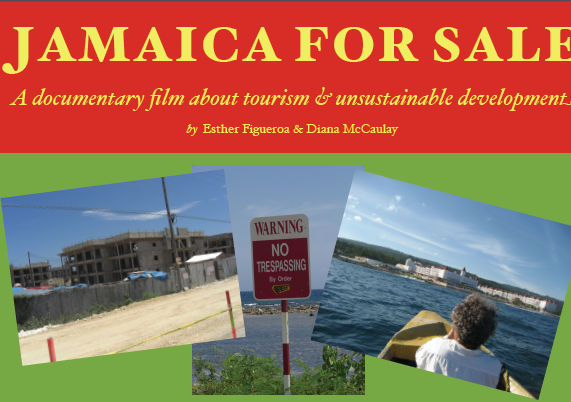
6. Jamaica for Sale (2006)

Director: Esther Figueroa

Examines the impact of tourism and resort development on Jamaican society.

7. Bob Marley: Roots of the Man (2018)

Director: Finn White-Thomson

Documents Bob Marley’s rise and his influence on reggae and Rastafarianism.

8. Bad Friday: Rastafari After Coral Gardens (2011)

Directors: Deborah A. Thomas & John L. Jackson Jr.

A powerful account of the Coral Gardens incident and its aftermath.The history of violence against Rastafari through the eyes of a Rasta community of in western Jamaica who annually commemorate the 1963 Coral Gardens "incident".

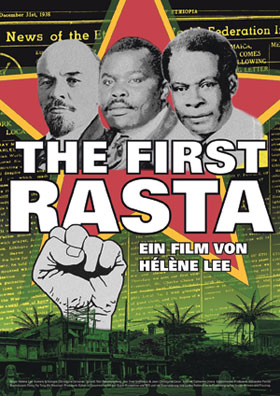
9. The First Rasta (2011)

Directors: Hélène Lee & Christophe Farnarier

Explores the life of Leonard Howell and the founding of Pinnacle. Going far beyond the standard imagery of Rasta-ganja, reggae, and dreadlocks-this cultural history offers an uncensored vision of a movement with complex roots and the exceptional journey of a man who taught an enslaved people how to be proud and impose their culture on the world. In the 1920s Leonard Percival Howell and the First Rastas had a revelation concerning the divinity of Haile Selassie, king of Ethiopia, that established the vision for the most popular mystical movement of the 20th century, Rastafarianism.

10. Stepping Razor: Red X (1992)

Director: Nicholas Campbell

A compelling portrait of Peter Tosh using his autobiographical recordings. Archival interviews with Tosh and rare concert footage fill out this picture of the Rasta visionary.


🎖️ Honorable Mentions

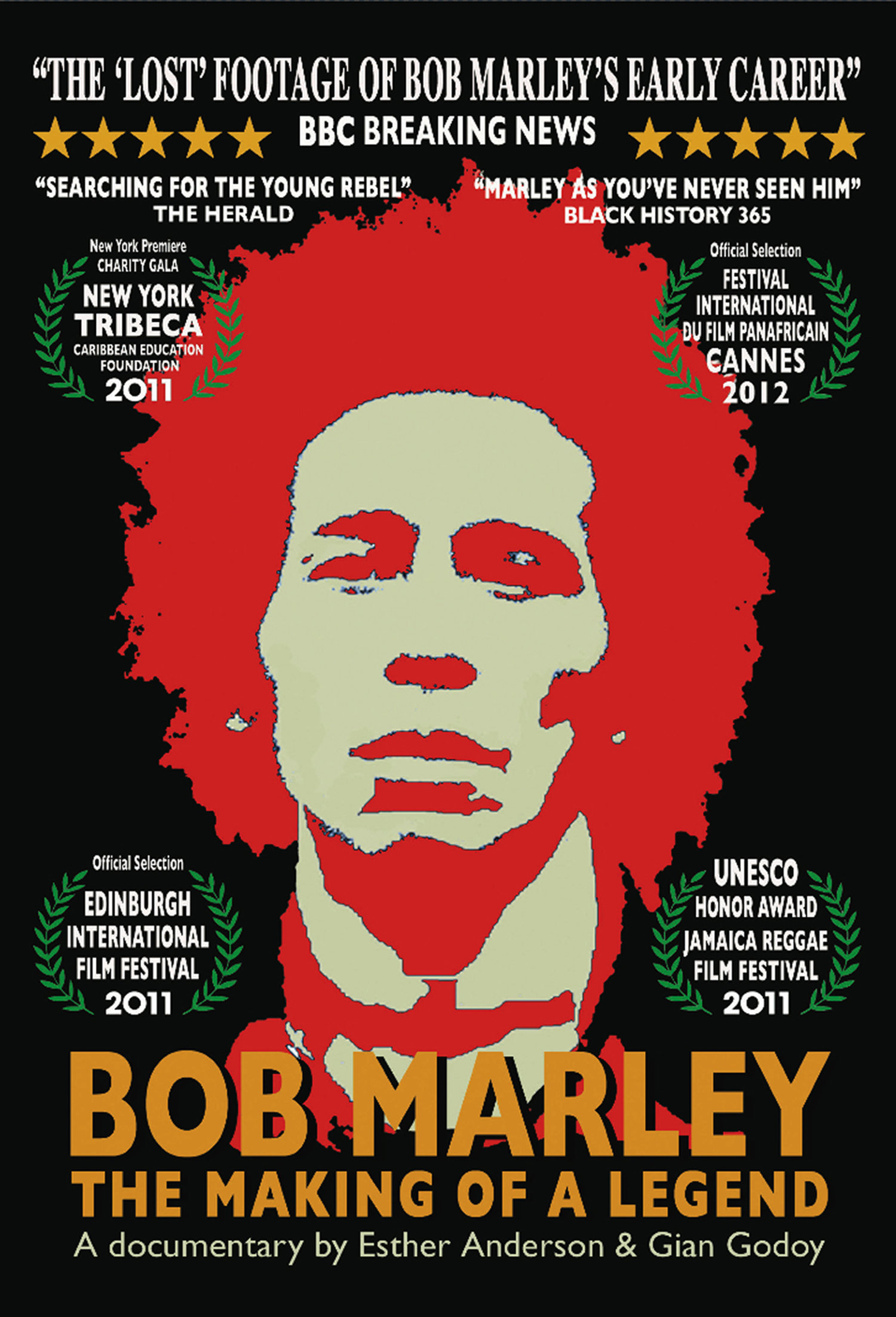
Bob Marley: The Making of a Legend (2011)

Director: Esther Anderson

A UNESCO Award nominated film charting the rise of Bob Marley and The Wailers to international stardom made from footage shot in the early 1970s and lost for more than thirty years, Esther Anderson takes us on a journey to Jamaica and into 56 Hope Road.

Black Mother (2018)

Director: Khalik Allah

A poetic visual ode to Jamaica’s spiritual and cultural landscape. In Black Mother, director Khalik Allah brings us on a spiritual journey through Jamaica. You will hear about and sometimes witness a dark Jamaican history, housing, physical violence, health problems, Rastafarianism, relationships and more.

Courage and Purpose (2022)

Director: PBCJ

Chronicles the legacy of Indian indentured laborers in Jamaica.

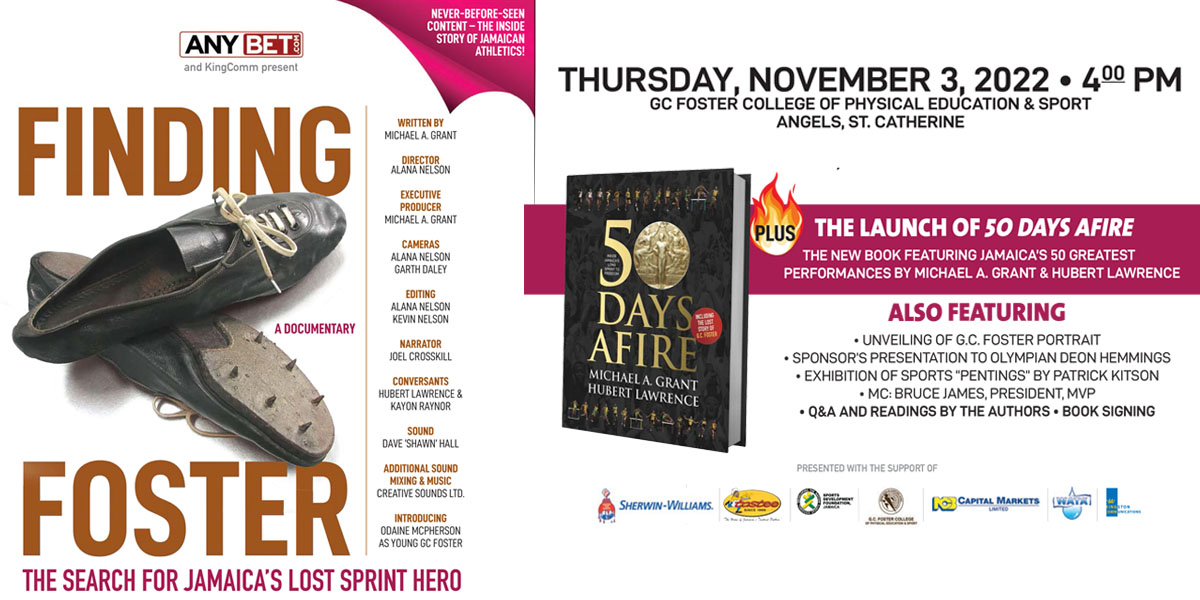
Finding Foster (2022)

Director: Alana Nelson

Explores the legacy of GC Foster and Jamaica’s sprinting heritage.


🇯🇲 Final Reflection

These documentaries collectively offer a layered perspective on Jamaica—from globalization and tourism to reggae music and Rastafari.

Jamaica’s documentary tradition stands as a powerful tool for truth-telling, cultural preservation, and social critique.

These films do more than document—they interrogate, celebrate, and challenge, shaping how Jamaica’s story is told globally.

Jamaica and Rastafari's Debt to Cuba


On clear days from Montego Bay, you can sense Cuba just ninety miles north. Close enough to swim, if desperation or love demanded it. Close enough that between 1900 and 1930, 150,000 Jamaicans crossed that water to work, to live, to die. My grandmother's father rests in Cuban earth. Mortimo Planno, one of our most important Rastafari elders, was born there. The line from Cuba to Trench Town to the world runs through him—he walked up the gangplank in 1966 to escort Haile Selassie to the ecstatic crowd, he mentored Bob Marley, he taught us to see spirituality and justice as one struggle.

Cuba gave my neighbours in Norwood their sight back. The Jamaica-Cuba Eye Care Programme flew ordinary Jamaicans—many on their first airplane ride—to Cuba for free surgery. Over 3,400 sight-saving procedures. Acts of love between neighbours.

Cuba gave the world Ebola treatments when wealthy nations sent soldiers. Cuba developed five COVID vaccines while under blockade, a lung cancer vaccine America bought in secret, treatments for vitiligo that plague our people. Cuba gave us the Buena Vista Social Club, refuge for Hemingway, revolutionary spirit that moved my father to name my brother Ernesto Che.

And now? Now our Prime Minister offers "constructive dialogue" and "humanitarian concern"—mealy-mouthed platitudes—while Cuba starves, while her lights go out, while the United States tightens a sixty-year blockade. Now the eye programme ends March 20 because we fold under Washington's pressure.

I remember 2022, when Jamaica sent medical supplies to Matanzas after that devastating fire. We know how to be generous. So where is our flotilla now? Where are the small boats loaded with food and medicine crossing those ninety miles? Where are our artists, our churches, our elders demanding solidarity?

Rastafari has always understood that Babylon is one and resistance must be one. Mortimo Planno, born in Cuba, buried in Jamaica, knew the struggle doesn't stop at the water's edge.

So I ask my fellow Jamaicans, I ask the Rastafari brethren: Are we fairweather friends? Do we only love Cuba when it costs us nothing? When Cuba gave us sight, gave us prophets, gave us medicine and music and revolutionary hope—we celebrated. Now Cuba needs us, and we offer statements.

Lions do not watch family starve while issuing press releases. What are we waiting for?