Showing posts with label st. james. Show all posts

Wednesday, January 01, 2025

Out Here On A Limb!

The Great Renaming: A Humorous Yet Thought-Provoking Musing on Animal Anatomy and Evolution 


Ladies and gentlemen, hold onto your hats—or your fins, wings, and webbed fingers, as the case may be—because I am here to challenge the very foundations of zoological nomenclature with the audacity of a squirrel challenging gravity during a leap of faith. It's time we reexamine what we *think* we know about our animal kin. Let me present to you a thesis that is as witty as it is scientifically provocative: Animals are mislabeled, misunderstood, and dare I say, misrepresented in the great book of life.  

All the data presented here is based on my own HANDS ON experience!

The Case Against "Four-Footedness"  

Let’s take a moment and truly consider the so-called "four-footed" animals. Cats and dogs—pardon, *puss and dawg*—are among the most egregious victims of this anatomical propaganda. Anyone who has spent years sketching their skeletal frames (as I have, with the fervour of a Renaissance anatomist) will tell you: the front "legs" of these creatures are not legs at all, but rather arms. Yes, arms! The bone structure is nearly identical to the human arm—humerus, radius, ulna, and let’s not even get started on the wrist-like carpus.  

And those paws? They’re hands in disguise, my friends. Hands! Observe a cat batting at a toy or a dog digging a hole with surgical precision, and tell me that isn’t a form of manual dexterity. If these creatures are walking on all fours, they are, in fact, walking on their hands. Ponder that the next time you see a Labrador sauntering down the street with regal nonchalance.  

Kangaroos are fascinating creatures, particularly when you examine their front limbs, which resemble human arms in both structure and function. These "arms" are equipped with powerful pectoral muscles that enable them to deliver impressive punches during their unique form of boxing. When kangaroos engage in this sparring behavior, their muscular build and the ability to extend their limbs showcase a remarkable similarity to human upper-body mechanics. The kangaroo’s forelimbs are not just for balance or support; they are adept at striking, allowing these marsupials to assert dominance and communicate through physical displays. This anthropomorphic quality in their anatomy highlights the evolutionary adaptations that allow kangaroos to thrive in their environment while also captivating our imagination with their human-like strength and agility. Don't you think it is something to think about or consider?


Birds Do Not Have Wings—They Have Hands That Fly  

Now, let us turn to the aviators of the animal kingdom: birds. The so-called "wing" is nothing more than a glorified hand wearing a particularly fashionable feathered cape. Anatomically speaking, the avian wing comprises the same basic structure as your own arm—shoulder, elbow, wrist, and fingers. Yes, fingers! Those feathers are just the avant-garde extensions of what evolutionarily amounts to jazz hands.  

Bats, of course, have taken this concept to its logical extreme. Their "wings" are merely webbed fingers stretched to improbable lengths, like something out of a Tim Burton sketchbook. They don’t flap wings; they high-five the air.  


The Aquatic Ape Theory: Humans, Seals, and the Ghosts of Our Webbed Ancestors  

Now that we’ve established the hand-walking, hand-flying reality of terrestrial and aerial creatures, let’s dive—literally—into the aquatic realm. There’s a theory, whispered among the more rebellious anthropologists, that humans are not merely distant cousins of the chimpanzee but rather the offspring of an aquatic ape. Think about it: humans are oddly suited for water. We have subcutaneous fat (blubber, if you will) much like seals and whales, and our babies, when submerged, instinctively hold their breath and perform a rudimentary doggy paddle. Could it be that we are the web-fingered descendants of some long-forgotten coastal ape that decided to take a swim and never stopped?  

Seals, of course, are the obvious sea-dog analog. Their skeletal structure screams "canine cousin," and their vocalizations—those charming *arfs*—are but a watery echo of their terrestrial counterparts. Meanwhile, the walrus, with its saber-toothed maw, could very well be the aquatic equivalent of a prehistoric lion forced to adapt to icy oceans.  

Whales, Wolves, and Porpoise-Pigs  

And what of the great leviathans of the sea? Whales are often said to have evolved from wolf-like ancestors, and dolphins, in ancient times, bore the name "porpoise," a term derived from the Latin *porcus piscis*, meaning "pig fish." While I admit I have yet to personally compare dolphin and pig bones in the manner of a Victorian naturalist, the linguistic and behavioral parallels are uncanny.  

Dolphins are social, intelligent, and occasionally mischievous—traits they share with pigs. Perhaps they are the aquatic swine of yore, frolicking in the waves instead of rooting in the dirt.

Lobsters, Scorpions, and the Arthropod Ancestry  

Finally, let us consider the crustaceans and their terrestrial doppelgängers. Is a lobster not but a scorpion in a diving suit? And what of the crab, with its spider-like gait and penchant for scuttling sideways? Shrimp and roaches, too, seem to share a common lineage, their exoskeletal forms suggesting a family reunion that spans both land and sea.  

A Call to Action (and Renaming)  

Time for a New Nomenclature

So, my fellow thinkers, artists, and amateur anatomists, I propose that we abandon outdated labels like "four-footed" and "winged" in favor of terms that reflect the reality of these creatures’ anatomy and evolution. Let us celebrate the hand-walking, hand-flying, web-fingered wonders of our world. And while we’re at it, let’s give some thought to the connections that bind us all—from the scuttling lobster to the soaring bird, from the barking dog to the blubbery seal.  

After all, in the grand tapestry of life, we are all but variations on a theme, our bones echoing the same ancient melodies, our forms shaped by the whims of evolution. And if that’s not worth a hearty *arf* or a jubilant high-five, I don’t know what is.  


References:  

- Darwin, C. (1859). *On the Origin of Species by Means of Natural Selection.* (Also, a great read if you like long sentences and Victorian drama.)  

- Shubin, N. (2008). *Your Inner Fish.* (Or, why your hand is also a fish fin.)  

- Ancient sailors who mistook dolphins for pigs and seals for sea-dogs. (Unpublished anecdotes but undeniably compelling.)  

And with that, I leave you to ponder the marvels of the natural world, one humorous bone structure at a time.

Tuesday, February 22, 2022

Introduce Universal Basic Income in Jamaica


I believe it is time that Jamaica takes radical and new approaches to solving its socio-economic issues. One new and radical approach being explored in many cities, states, and nations globally is universal basic income (UBI), which is a no-strings-attached stipend from the Government.

Cities in England, like Bristol, and Los Angeles (LA) in the USA have launched UBI programmes.

The UBI test run in LA gives over 3,000 families under the poverty line US$1,000 every month to supplement income. UBI was a major part of former candidate Andrew Yang's platform in the 2020 Democratic primaries, reigniting the conversation about UBI in the mainstream.

Predicting the impact of such an unprecedented upheaval in the relationship between the State and the individual is unsurprisingly difficult, though, as is gathering evidence for or against it. There have been several small-scale trials, but the most ambitious to date took place in Finland from 2017 to 2018, and the final report was published in The Guardian a few years ago.

The study selected 2,000 unemployed people at random and gave them unconditional monthly payments of €560. Their outcomes were then compared against 173,000 people on Finland's standard unemployment benefits.

The headline finding was that those who received the unconditional payments reported significantly improved financial and mental well-being. They also saw a slight improvement in employment, with recipients working an average of six more days between November 2017 and October 2018 than the control group. This would seem to contradict fears that such a scheme would demotivate people from seeking work.


Aside from the raw economic outcomes, though, surveys of the participants found that they scored better on measures of well-being, financial security, and confidence in the future. The authors of the report told The Guardian that the recipients felt more empowered to take on voluntary work or attempt to start new ventures.

The study can only tell us so much, though. Despite being the largest trial to date, it's hard to extrapolate the results up to the scale of a nationwide programme, and it's also impossible to predict what impact similar interventions would have in countries with very different cultures and governmental systems.

Nonetheless, falling in the middle of the biggest global disaster of this century, the study's release was a timely reminder that it might be time for politicians around the world to re-evaluate their relationship with the welfare State.

So now that we know UBI has been trialled throughout the world, yet remains out of Jamaica's public and political discussions, it is time to embrace its possibilities and begin to examine the introduction of a universal basic income grant (BIG) and drop austerity measures amid crippling inflation, poverty, and rising unemployment levels and a health-care crisis.

A recent survey found that 71 per cent of Europeans now support UBI, and Pope Francis pushed the idea in his 2020 Easter address.

Spain's minister for economy and digitalisation Nadia Calvino Santamaría said the Government would soon roll out some form of basic income that would stay in place past the end of the novel coronavirus pandemic.

I am also disappointed with civil society movements in Jamaica as they have not entertained or campaigned for the implementation of a UBI. I contend that $15,500 per month, roughly the average or equivalent of most UBI programmes internationally, for all unemployed between the ages of 18 and 59, for starters, would do much to stimulate our stagnant economy. In time the programme can be expanded to include caregivers, home-based workers, and workers who earn below the national minimum wage, till an eventual national roll-out.

This will bring much-needed relief to millions of Jamaicans who are languishing in poverty.

Yannick Nesta Pessoa

yannickpessoa@yahoo.com


https://www.jamaicaobserver.com/editorial/introduce-a-universal-basic-income-grant-_244558?profile=1234


Tuesday, January 11, 2022

Enemy of the State: The Lampooned Maroons

Definition:
1- a person who is marooned
2- capitalized : a Black person of the West Indies and Guiana in the 17th and 18th centuries who escaped slavery also : a descendant of such a person

The Present Maroon Conundrum

Statehood and Sovereignty

It is time for us to uncritically accept that Maroons played a vital role in the continuation of slavery as an institution. What is even more whimsical is that Jamaica currently enjoys amicable relations with governments that were directly responsible for slavery as an institution. What a conundrum!


There are five Maroon groups in the country, one of which has become a secessionist voice for social upheaval and that is the Accompong strand or branch. Thy have been purporting unsubstantiated claims of being a sovereign State, is being heard through its colonel, Mr. Richard Currie. These utterances have no legal standing, according to several legal minds. The most obvious demonstration of this is the fact that all Maroons travel on Jamaican-issued passports. The reality is that in the 12th year of his reign an edict of King George II of Great Britain and Jamaica empowered John Gutherie and Francis Sadler “to negotiate and finally conclude a treaty of peace and friendship” with Colonel Cudjoe and his captains. This would be known as the First Maroon Treaty of 1739.


An examination of the Treaty of the Leeward Maroons has indicated up to eight instances that speak to and against the authority and nationhood of the Maroons. The treaty acknowledges the leadership of the colonel by referring to his people as his “subjects” who, being in a “perfect state of freedom and liberty” (Article II)… will enjoy and possess, in perpetuity, land of 1,500 acres “between Trelawney Town and The Cockpits” (Article III). They have the right to trade outside of their bounds, but must do so under a license (Article IV).


According to a news item in the Jamaica Observer, the Cabinet has ordered the withholding of funds and support to any entity which claims to be a sovereign State. On Sunday BroGad played bad cop and stomped his foot down by declaring that Jamaica is a unitary State, and as such Accompong falls under the Government of Jamaica's legal ambit and, by extension, the Jamaica Constabulary Force and every government body there is.

Maroons are considered by some in academia to be Indigenous Peoples and that they should have rights under the UN Declaration of the Rights of Indigenous Peoples. But that paradox raises interesting questions as how can Maroons be both indigenous and  descended from Africa. I understand indigenous to refer to Native Americans and Aboriginal who are located at a place before our collective or maybe European history has record for. We know maroons are not even unique to Jamaica so how indigenous is it really?

There needs to be a consensus as to whether the Maroon communities are either a sovereign proto-state within a State, Imperium in imperio as it is known. Or maybe an indigenous reserve (much like the native indians in the US), or the average town flying the Jamaican flag? Vatican City and Eswatini are examples of this state within a state concept. It is a thing that can be done but Currie needs to be realistic and get about charting a course to statehood rather than proving a lack of legal and historical knowledge. Let us hope Brogad learnt from Busta's lessons and wont be blinded and create another Coral Gardens Massacre so close to our nation's special anniversary of independence.

Wednesday, August 21, 2019

The New Socialist and the Pillars of Modern Socialism


Just a decade ago, “socialism” was a dirty word in politics. Debates over its merits were mostly limited to obscure blogs, niche magazines and political parties on the other side of the Atlantic and a few in Latin America. But more recently Bernie Sanders in 2016 and then in the New York district last year by Alexandria Ocasio Cortez is indicative of socialism trending and being trendy. In 2017, fifteen members of the Democratic Socialists of America won seats in local elections in thirteen different states, in addition to the 20 members already holding elected office nationwide in the U.S.. It has been especially appealing in the wake of Trump's narcissism... an ethos that speaks to more than individualism which capitalism and fascism speak solely and exclusively to while touting meritocracy and backhandedly being nepotistic. Jeremy Corbyn in the UK has been a socialist boon and if we look at Finland, socialism is doing wonders. I began learning of socialism not through politics but through one Mr. Reverton Bailey’s Sociology class in 12th grade at Cornwall College. From then on I fell in love with a concept that was out of fashion, but stuck with it and have been watching and following socialist pages and memes on Social Media and have watched its global resurgence. Today’s new Socialists are more progressive Democrats than “Castros” in waiting—and their rise poses more of a challenge to the national political discourse than to capitalism.

Modern Jamaican voters and politicians should remove the veil from their eyes and engage this new democratic socialism must apart of its redefinition within the 2019 local and international realities. People centeredness, people power, empowering people is what is being put to the fore in this new socialism. Socialism historically has been associated with the concept of public or collective ownership of property and natural resources and has long been associated with Marxism and communism. In 1949, with the Chinese Communists just having taken control of China, and with the Communist Soviet Union creating fear of an aggressive effort to spread their ideology around the globe, that compunded by the U.S.’s cold war with Communist Russia, Jamaicans' view of the term embraced the classic elements bound up in these types of movements; things like loss of freedom or state control. Now, decades later, Jamaicans' views of socialism have broadened.

Socialism, to me, means ensuring that our government policy puts human needs before corporate greed and that we build communities where everyone has a chance to thrive. It is the radically simple idea that democratic values should guide our economy toward the maximization of human flourishing, rather than the accumulation of capital. One way to implement socialism in Jamaica would be to emulate many of the economic institutions found in the Nordic countries of Denmark, Finland, Sweden and Norway. These countries, which consistently rank near the top of the world in happiness, human development and overall well-being, have highly organized labor markets, universal welfare states and relatively high levels of public ownership of capital.

To move in the Nordic direction, Jamaica would have to promote the mass unionization of its workforce, increase legal protections against arbitrary termination and allow workers to control some of the seats on the corporate boards of the companies they work in.

A practical form of socialism in the United States in the 21st century would occur when democratic ownership displaces and supersedes the current, dominant extractive corporate model. There is no single, ideal form of democratic ownership, but an enormous variety including full state ownership, partial state ownership, local/municipal ownership, multi-stakeholder ownership, worker ownership, consumer cooperative ownership, producer cooperative ownership, community ownership and sustainable local private ownership.


The lynchpin of the new and modern socialism are:
  1. Public ownership ,
  2. Citizens cooperatives ,
  3. Civil society organisations ,
  4. Open government ,
  5. Open source ,
  6. Universal basic income
  7. Social enterprise / social entrepreneurship.
A socialist Jamaica would be democratic, decentralized and participatory. It will be rooted in racial, gender and social justice, recalling Langston Hughes’ “and that never has been yet—and yet must be.” It will be about living safely, wisely and well within a flourishing commons. This will be actual socialism, because it will have socialized the means of production—although in plural forms that do not all center on the state. Instead of concentrated wealth, it will have broad dispersal of ownership. Instead of frictionless global markets, the rooted, participatory, recirculatory local economy. Instead of extractive multinational corporations, the worker, community and municipally owned firm. Instead of asset-stripping privatization, myriad forms of democratic public enterprise. Instead of private credit creation by commercial banks and rentier finance, the massive potential power of public banks and sovereign government finance.

The problem with capitalism is not just that a system fueled by a wealthy, profit-hungry elite is inherently unstable, or that it leaves whole layers of society starving in the streets. It is that it relies on the dictatorship of the rich. The fundamental difference we expect from a socialist society is that we will all have a voice in the decisions that impact our lives. It is social and sociable. Workplaces will be owned by the workers who run them, rather than an authoritarian boss.

The political system will be truly democratic, rather than run by those who have bought the politicians. Family life will be more democratic, and no one will have to depend on a breadwinner to survive because public services like health care will be available to all, and will be run with community oversight. Finally, government investment will be democratic, rather than decided by corporate donors or financial gamblers. In other words, we will have true freedom, not just survival—the choices available to us now that depend on the whims of the few.

I am about trying to create communities where the education you have access to, or the jobs you’re able to get, don’t depend on your complexion, last name, race or gender. People aren’t looking for a “progressive” or a “democratic socialist” representative, necessarily, but they also aren’t scared of those words—they’re just looking for a fighter who will put their needs ahead of corporate profits and never back down. I am fighting for public goods that make us all better off. I define myself through my own unique lens—I’m a father fighting for justice for all. Ultimately, I’m trying to build coalitions and inspire activists to create a society where everyone has a chance to flourish. That’s the socialism I’m interested in. Are you?

About the author: Yannick Nesta Pessoa B.A. is Jamaica’s first blogger, a Community Activist, an Artist and Entrepreneur. Follow Yannick on Twitter at @yahnyk | yannickpessoa@yahoo.com


Unpopular: Political Revamp


“Any realistic vision of change must be based on the notion of empowerment of people.”
Michael Manley

Today the People’s National Party’s position is quite unenviable. PNP’s elected officials have struggled to find a clear and compelling message that speaks effectively to the whole of the country. General principles and values are one thing; a succinct and up-to-date message is another. For too long the political mantra of the PNP though not explicitly said is that: “we're out to beat Jamaica Labour Party, and not help poor people.

The PNP hasn’t found the formula that both bridges these internal fissures and appeals more broadly to a bigger electorate. If you look at it from the outside, it’s not so healthy. The People’s National Party is not very popular today with a lot of people, and that is truly a problem. If you look at it in absolute terms and just look at where the PNPs stand today: not very good. You look at where the leadership stands, you look at where the party stands in terms of the public, it’s just not good. There’s no way to call it good.

Party leaders and stalwarts are always fearful of leadership contests, as they know the vitriol, malice and even violence normally reserved for rival political parties will turn inwards and the true nature of party politics will be revealed. There are those in the PNP who would say it’s an overstatement to suggest the party is in the midst of an identity crisis. Yet after years of political observation and watching strategists, elected officials at many levels and grass-roots activists, it’s clear to me that for all the anti-JLP energy that exists, especially on Facebook — is energy that will invariably help to bind PNPs in common cause come 2020. However, the party’s challenges are serious. Ideological differences are only part of it. This is a party of rising constituencies demanding not just to be heard but to be at the table of decision-makers. It is a party in flux, moving from one era to another, with no obvious leader and an identity yet to be fully shaped.

One reason factions of the party and electorate has moved left is that much of the power and energy has shifted from establishment leaders toward the grass roots, whose strength was highlighted by the presence of FHI360, COMET ii and USAID, programs and grants that are boosting Civil Society Organization as well as community based groups. Hence through their own cooperation and movements people have seen the value or socialist ideology, but not necessarily the value of political groups, which are subject to the whims and fancies of Delegates, political hierarchies and bureaucracies. So as communities see viable alternatives in forming Social Enterprises, Social Entrepreneurships, CDC’s, Benevolent Societies, Neighbourhood Watches, conversely political groups which are reliant on hand out and scraps or scarce benefits and spoils. It then seems incumbent on the party to engage these groups, join them, boost them, rather than solely or explicitly soliciting hands and hearts to your individual political aims or goals.

If one failed to notice globally, Jeremy Corbyn, Bernie Sanders, Alexandria Occasio Cortez and Kshema Sawant prove that socialism is alive and well even in the heart of world superpowers. It is fervent in Latin America. The Nordic countries of Denmark, Finland, Sweden and Norway have implemented socialism in their economic institutions. The Norse countries consistently ranked near the top of the world in happiness, human development and overall well-being, have highly organized labor markets, universal welfare states and relatively high levels of public ownership of capital. Yet the PNP drifts ideologically and philosophically here in this 21st century. Then when we see candidate choice and selection for both local and central government elections are riddled with egomaniacs on both sides who treat the electorate as secondary or non-essential till election day while always courting the delegates of both parties who are stuck as die hearts to each party or victims of some kind of political Stockholm’s syndrome.

Here are 7 topics which are hot globally and in the streets of Jamaica with civil society organizations, community activists, USAID, the youth and the Rastafari community, yet I have never heard PNP mention:
  1. Public ownership ,
  2. Citizens cooperatives ,
  3. Civil society organisations ,
  4. Open government ,
  5. Open source ,
  6. Universal basic income
  7. Social enterprise / social entrepreneurship.

These questions of leadership, identity and philosophical outlook unnerve the PNP, because the party has no scaffolding. All the dominant leaders of the last two generations—the Manleys, PJ Patterson and Portia Simpson Miller—have receded. The myth of PNP country is discredited and defeat has shaken the party’s foundational strategy—or, at the very least, exposed it as a wishful description of a more distant future, rather than a clear plan for victory in the present. The PNP has in opposition an illusion of unity, but the reality is deeply conflicted. The establishment in the party want the disgruntled to disappear, but reality doesn’t work like that. Two of the party’s largest concerns—race and class—reside in an increasing state of tension, a tension that will grow as the party turns toward the next election. To produce a governing majority, the party will need to survive an unsettling reckoning with itself. The JLP didn’t just prevail over the PNP; they called into doubt their old truths.The party’s must begin sensing the emotional landscape of the people they are selling the vision to, not delegates, but its general membership and the wider electorate.

About the author: Yannick Nesta Pessoa B.A. is Jamaica’s first blogger, a Community Activist, an Artist and Entrepreneur. Follow Yannick on Twitter at @yahnyk | yannickpessoa@yahoo.com


Thursday, April 28, 2016

Musings on Identity!

Identity... In community life and wider Montego Bay l was Ms. Thompson grand son, during various stages of school life I was Dax brother, with the advent of my Dawta, the new ID is Kee-kee Faada... Did Yannick Pessoa ever exist???

Do you know him? I don't think anyone has ever really employed that name... It seems a vague thing I hold dear for some reason I forgot. I know I am called Yaneek by the average Jamaican, Johnick by caucasians, a Hebrew name lost in so many translations, I am the oldest birth certificate holder in the island with that name, maybe one or two women inspired me with the way they said it in my ear, I am Yanni to many in Paradise, Yanni-man to another section of Paradise, Jesus to quite a few in Paradise, my mother calls me 'come here mi big son or handsome son', my grandma said 'maah-yan' and 'Maas yan' that one would kill school mates who bore witness to it in use, it was one I was terribly afraid of people discovering, I am Yannicky-pooh and pooh bear can you believe that to the most serious and morose spirit on earth my father, my sister says 'nick', at least that one seemed cool, bin Laden's to my uncle Tommy, yan to my wife... Yah Neck when she upset, Piss power to Camara Brown who would discover that name I received in 7th grade... Trooper and troops to Dax, Poppy, Thura... No no no mi nuh sure mi ever meet Yannick Pessoa!

Tuesday, May 06, 2008

Top Ten Jamaican Films

Seeing that I'm back on the blog roll, I'm doing list and trying to bring back all original fresh sexy Yannick content so just check it out maaaaaaaaaaan.


1. The Harder They Come (1972)
This book is in every authentic Jamaican's DVD catalogue, or had it on VHS

2. Shottas (2002)
The Jamaicanified City of God

3. One Love (2003)
Hmmm I'm not Mr. Romantic but...

4. Goat Head
Paul Bucknor started production on 'Goathead', a romantic comedy, written and directed by Bucknor, set in rural Jamaica.

5. Dancehall Queen (1997)
Oh well... Betweenie had to get a buss

6. The Lunatic (1991)
The story of a village madman, Aloysious, who has the amazing ability to talk to anything, including trees, cows and cricket balls. Portrayed from a Jamaican prospective with an acute eye for the authentic dialect of the land. Aloysious meets Inga, a German nymphomaniac, who uses her 'pum pum power' to capture his heart.

7. Glory to Gloriana (2006)
"Mi Haffi put a MOBAY show on the list (duh)"
The rags to riches story of a young country girl, Gloria Minto who was determined to makes the most of life. She came from humble beginnings and with the help of those around her and the will of only a Jamaican woman, she fought her way to success and prosperity.

8. Smile Orange (1976)
"Orange wi rotten yuh seed"

9. Third World Cop (1999)
Loose cannon cop Capone returns to his home town of Kingston to join a group of officers fighting organised crime in the area. On his first day he uncovers gun smuggling operation that may be connected with lead criminal Oney. However his old crew, led by Ratty, also are involved leading Capone to a choice between his job and his old crew.

10. Rude Boy: The Jamaican Don (2003)


Noteworthy mentions from recent times (or maybe not so recent) are:

**Foreign
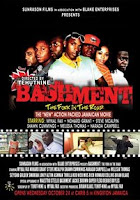
**Bashment
**Clash
New Local Shows New Local Shows

Other Popular and Jamaican Movies:

-Belly (1998)
-Black Kissinger (2008)
-Bongo Man (1981)
-Children of Babylon (1980)
-Countryman (1982) 
-It's All About Dancing: A Jamaican Dance-U-Mentary (2006)
-Lovers Flex (2006) 
-No Place Like Home (2006/I)
-Rockers (1978)
-Roots Time (2006) 
-Runt (2005)
-Shottas for Life (2007)
-Third World (1980) ...aka Prisoner in the Streets (1980)

Sunday, August 19, 2007

Yahnyk TV: Tickle Puss vs the Labourite

Old man Tickle Puss, is on a tirade about the debates, the "chiney man" aka Dr. Horace Chang, plus lots of anti JLP rhetoric aimed at the store patron a JLP advocate... all at Lime Tree Lane-esque, Paradise Acres (Norwood's peaceful sister), Montego Bay, Jamaica.

Starring: Ashton "Tickle Puss" Beckford as Tickle Puss
Directed & Produce by Yannick Nesta Pessoa of Rastar Studios
Camera Man: Yannick Nesta Pessoa

Tuesday, March 13, 2007

Who dem all a quote inna Observer...? ...nuh YANNICK!!!

Music - The Royal Road to Our Consciousness

Sunday, January 28, 2007

"Wisdom is the breath of the power of God, and in all ages entering into holy souls she maketh them friends of God and prophets."
- Ralph Waldo Trine, In Tune with The Infinite

The Right Reverend Alfred Reid used the following quotations in the sermon at the funeral service for Viola Simpson, a former educator and choir director of the St James Parish Church in Montego Bay, on 2006 December 11:

"Music is the royal road to our consciousness/to our psyche"
and "Let me write the music of a nation, then I care not who writes its laws".
Writing in his column, The Montegonian, published in the 2007 January 13 issue of the Western Mirror, Yannick Pessoa described the heralding of 2007 by the garrisons of Montego Bay as follows:

"Bam bam bam bloiy bloiy bloiy chk chk chk thoom thoom pieee pieee blam balm bookam bookam.no amount of onomatopoeia could convey to you the grand gun orchestra that played in Norwood, Gulf, Glendevon, Canterbury, Albion and Gully (all inner-city communities of the city of Montego Bay, Jamaica) to commence the New Year. Literally the year in St James started with a BANG!

At the stroke of midnight December 31, 2006 or the morn of January 1, 2007, I was at the yellow night owl's outpost in Paradise, Glen Skeng's shop, only to see the whole Paradise pull to a halt and I watched as multitude of people stopped what they were doing to come outside and listen to the barrage of bullets in what seemed like gangsters singing their own anthem. I watched people listen, and listened as well to gunshots on rapid from 12 (midnight) to 12:30 am and I counted somewhere in the region of near 500 rounds and can only imagine what I missed..The year has begun, the garrison has spoken."

Yannick Pessoa then invited readers to listen to the lyrics of a hit record by Mavado and Busy Signal (Kingston-based singers) called Badman Place that contain phrases such as "fools get kick inna face. get erase we nuh quarrel, inna bwoy head lead a rest.inna badman place.shot brush off yu face like napkins, thugs dem ready fi go rise the Gatling(s). tings wey talk yu cyan repeat or yu get delete.".

Shocking! These are the lyrics and others that I refer to as verbal pornography, accompanied by real pornography shown on DVDs, that our children listen to in minibuses on their way to and from school, at parties and at the big dancehall shows. These are the lyrics that are played daily on sound systems in hundreds of communities all over Jamaica. Who produces these records and to what end?

'Let me write the music of a nation, then I care not who writes its laws.' All of the crime plans will continue to fail if lyrics like those of Mavado and Busy Signal, and so many others, are what our children experience on the royal road to their consciousness.

Jamaican musicians have given many songs of freedom to the world. And so we can exchange the songs that celebrate death with our own songs of freedom. Our foreparents died to secure our future and sang songs of freedom as they did - songs of engagement and action! Leading us to what we are emancipated for!

A Quiet Heart
Meditation for your quiet time. Those quiet moments in your special silent place.

"So freedom sings what Freedom brings. Human freedom sings what Divine Freedom brings. It sings because it acknowledges the glory with which God continues to create human life with dignity, beauty, and freedom. It sings because it is not simply absorbed with what we are emancipated from but, rather, by what we are emancipated for. It sings because freedom brings not only creative empowerment but also creative hope.

The song of freedom is no song of abandon or illusion; it is a song of engagement and action..We act out our doxology in the context of our freedom, for we hold to the confidence that only in the service of God is perfect freedom assured. As freedom sings, no one is excluded or alienated, but no one is elevated either - for God shows no partiality."

- Kortright Davis, Emancipation Still Comin

Marjorie A Stair can be contacted at 601-3841; e-mail loyal@cwjamaica.com.


TO SEE THE ORIGINAL AT THE OBSERVER SITE CLICK HERE