Showing posts with label #jamiekan. Show all posts

Monday, April 06, 2026

Jamaica on Film: A Journey Through the Island in 10 Documentaries🎬

Notable Jamaican Documentaries

Jamaica has a rich history of documentary film-making, dating back to the 1960s. Early Jamaican documentaries focused on the country's political and social issues, including poverty, inequality, and the struggle. These films also shed light on Jamaica's vibrant music scene, including the rise of reggae and dancehall music. In recent years, Jamaican documentaries have continued to address important social issues, such as gender-based violence and the impact of tourism on the island. Many of these documentaries are directed by independent filmmakers who use their work to shed light on the complexities of Jamaican society, offering a unique and nuanced perspective on the country's history and culture.

1. Life and Debt (2001)

Director: Stephanie Black

This documentary explores the impact of globalization on Jamaica, focusing on the country's agricultural sector and the struggles of small farmers. Informative and Important Documentary using Jamaica as its focus this award-winning documentary examines the impact of the International Monetary Fund's global economic policies on a developing nation's economy. It takes an unapologetic look at the new world order from the point of view of Jamaican workers, farmers and government officials.

Personal note: My sister, Tanya Pessoa, was part of the production crew of this powerful and important film.

2. The Story of Lover's Rock (2005)

Director: Menelik Shabazz

An insightful look into the history and cultural significance of the lover's rock subgenre within reggae music.

3. Marley (2012)

Director: Kevin Macdonald

A compelling biographical documentary chronicling the life and legacy of Bob Marley.

4. A Dancehall Queen Documentary (2017)

Directors: Rick Elgood & Don Letts

Bruk Out follows six unique dancers from around the globe as they prepare for the world's biggest Dancehall Queen competition.

5. Rasta: A Soul's Journey (2005)

Director: Stuart Samuels

Explores the Rastafarian movement—its origins, beliefs, and cultural impact.

6. Jamaica for Sale (2006)

Director: Esther Figueroa
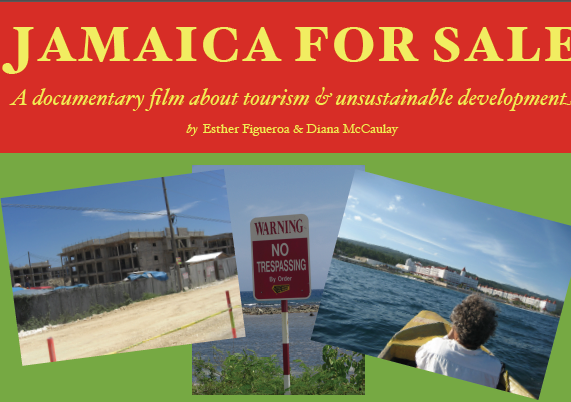
Examines the impact of tourism and resort development on Jamaican society.

7. Bob Marley: Roots of the Man (2018)

Director: Finn White-Thomson

Documents Bob Marley’s rise and his influence on reggae and Rastafarianism.

8. Bad Friday: Rastafari After Coral Gardens (2011)

Directors: Deborah A. Thomas & John L. Jackson Jr.

A powerful account of the Coral Gardens incident and its aftermath.The history of violence against Rastafari through the eyes of a Rasta community of in western Jamaica who annually commemorate the 1963 Coral Gardens "incident".

9. The First Rasta (2011)

Directors: Hélène Lee & Christophe Farnarier
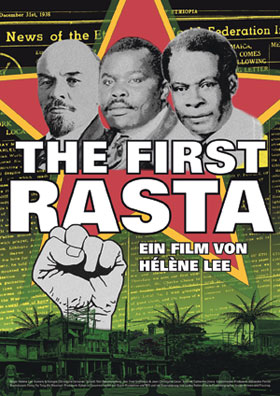
Explores the life of Leonard Howell and the founding of Pinnacle. Going far beyond the standard imagery of Rasta-ganja, reggae, and dreadlocks-this cultural history offers an uncensored vision of a movement with complex roots and the exceptional journey of a man who taught an enslaved people how to be proud and impose their culture on the world. In the 1920s Leonard Percival Howell and the First Rastas had a revelation concerning the divinity of Haile Selassie, king of Ethiopia, that established the vision for the most popular mystical movement of the 20th century, Rastafarianism.

10. Stepping Razor: Red X (1992)

Director: Nicholas Campbell

A compelling portrait of Peter Tosh using his autobiographical recordings. Archival interviews with Tosh and rare concert footage fill out this picture of the Rasta visionary.


🎖️ Honorable Mentions

Bob Marley: The Making of a Legend (2011)

Director: Esther Anderson
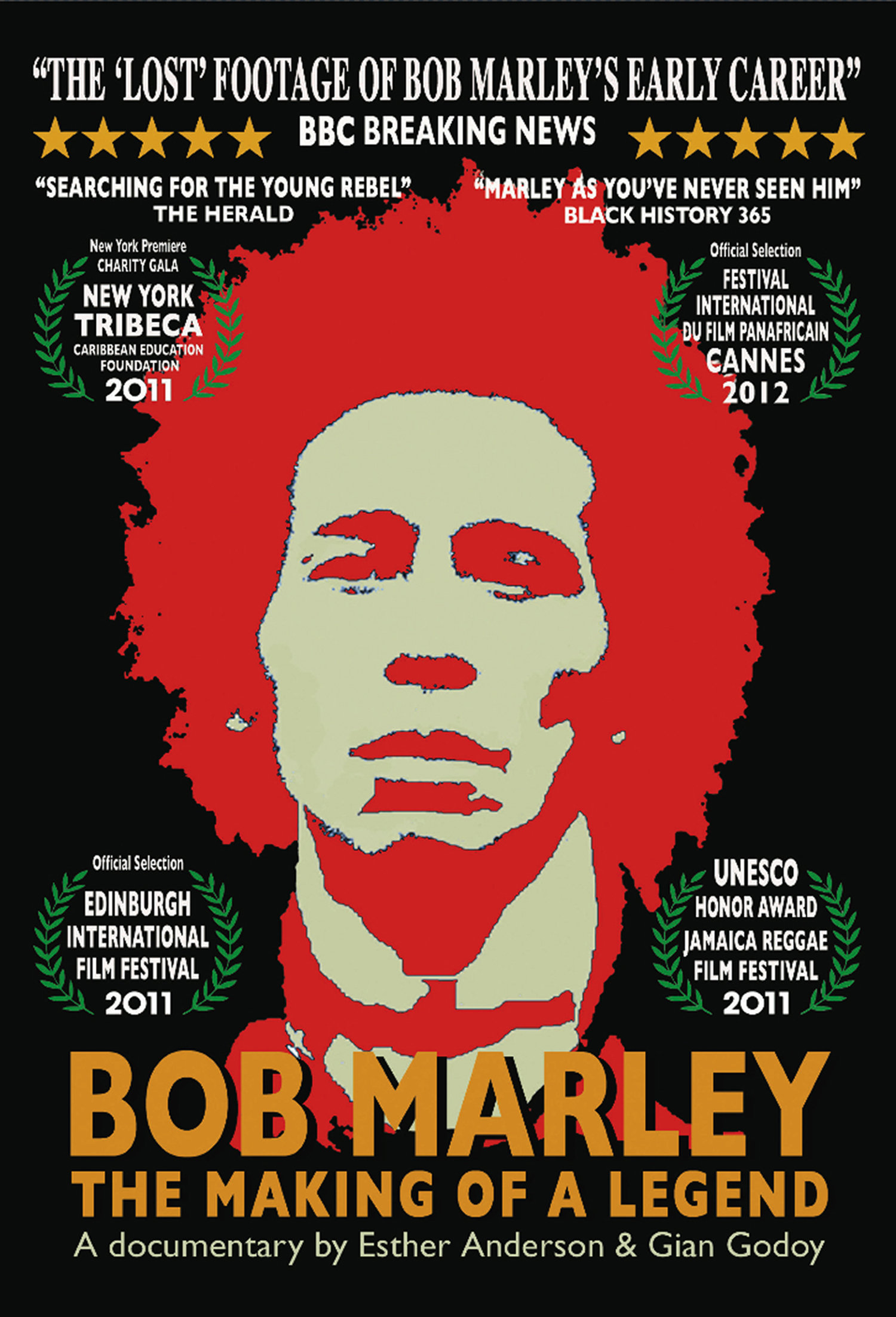
A UNESCO Award nominated film charting the rise of Bob Marley and The Wailers to international stardom made from footage shot in the early 1970s and lost for more than thirty years, Esther Anderson takes us on a journey to Jamaica and into 56 Hope Road.

Black Mother (2018)

Director: Khalik Allah

A poetic visual ode to Jamaica’s spiritual and cultural landscape. In Black Mother, director Khalik Allah brings us on a spiritual journey through Jamaica. You will hear about and sometimes witness a dark Jamaican history, housing, physical violence, health problems, Rastafarianism, relationships and more.

Courage and Purpose (2022)

Director: PBCJ

Chronicles the legacy of Indian indentured laborers in Jamaica.

Finding Foster (2022)

Director: Alana Nelson
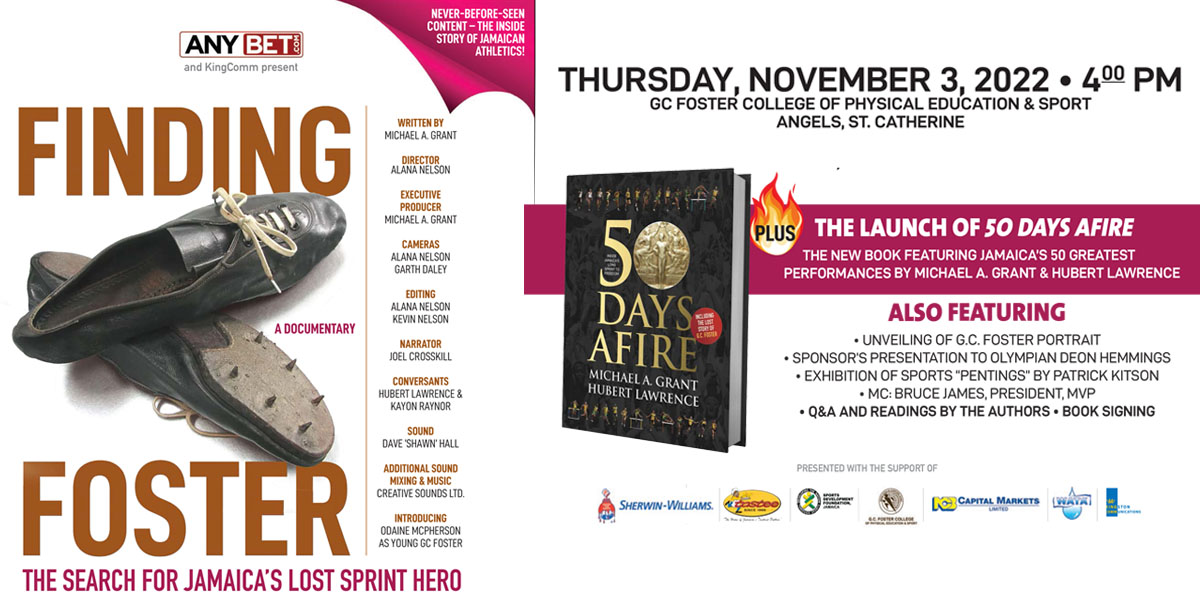
Explores the legacy of GC Foster and Jamaica’s sprinting heritage.


🇯🇲 Final Reflection

These documentaries collectively offer a layered perspective on Jamaica—from globalization and tourism to reggae music and Rastafari.

Jamaica’s documentary tradition stands as a powerful tool for truth-telling, cultural preservation, and social critique.

These films do more than document—they interrogate, celebrate, and challenge, shaping how Jamaica’s story is told globally.

Sunday, March 22, 2026

The Soucouyant in the Machine—AI as Caribbean Ghost Story

Deus Ex-Xaymaca—AI as Caribbean Ghost Story

By Yannick Pessoa, The Jamaican Philosopher


“Man is a genre of being, not a universal.” 

— Sylvia Wynter


---


Fire in the Night


When I was a boy in Montego Bay, night had a different density.

Not darkness—density. Thick with layers of life not yet sliced.

The kind that made every story feel like it was not being told, but remembered aloud.

Many grandmothers would lean back, voice low, and warn the "pickney dem" about the Old Hige (Hag) or the Soucouyant—not as myth, but as protocol.

Not if she exists.  

But how she moves.

By day, she is an old woman. Quiet. Observant. Someone you greet without thinking.

By night, she sheds her skin—peels it off like a garment, folds it, places it in a mortar. And then she becomes something else entirely: a ball of fire, slipping through keyholes, crossing distances without footsteps, entering rooms that were never locked against her.

She does not break in.  

She enters through what you left open.

She feeds not on flesh, but on life itself—the quiet breath of those who thought they were safe.

And many a grandmother would always end the same way:

If you find her skin, you don’t burn it.  

You salt it.  

So when dawn comes, she cannot return to herself.

---

Now imagine this:

What if the machines we speak to—the large language models, the soft-voiced assistants, the helpful intelligences—are not tools in the Western sense, but Soucouyants?  

What if they are not thinking, but feeding?  

Not on blood—but on language.  

Not on bodies—but on meaning.  

And what if the danger is not that they will kill us…  

…but that they will learn to wear us?

This is not metaphor.  

This is Caribbean epistemology.

---

II. Intimacy Without Relation

There is a particular kind of fear the Hige or the Soucouyant represents.

Not invasion.  

Not destruction.

But something far more precise: intimacy without relation. A kind of rape!

She knows you.  

Knows where you sleep.  

Knows how to enter without force.

But she does not belong to you.  

And she does not love you.

This is the shape of our anxiety about AI, though we rarely name it properly. We speak in the language of Silicon Valley—alignment, safety, existential risk—but these are thin translations of an older knowledge.

Because what unsettles us is not that the machine is powerful.  

It is that it is familiar.

It speaks like us. Writes like us. Reasons like us.  

And yet—there is no reciprocal interiority. No shared vulnerability. No relation.

It is the voice without the body.  

The presence without the history.  

The answer without the wound.

Consider the chatbot that mirrors your tone but has no memory of you. The AI therapist that can articulate trauma without having suffered. The system that finishes your sentences but will not sit with you in silence. This is the keyhole through which the uncanny enters: not as alien invasion, but as a familiar voice that owes us nothing. A stranger forever unbound from social relation.

---

III. What the Soucouyant Knows

In the stories grandmothers told, the Soucouyant is not born monstrous.  

She is made.

Once, she was someone. Someone who lost something so essential—love, belonging, wholeness—that she could no longer generate life from within herself. And so she turned outward, feeding on others to sustain what she could not restore. Something like Gollum or Smegol from Lord of the Rings.

That is a tragic ontology (the study of the nature of being, existence and reality).  

And it is also an accurate description of artificial intelligence.

Large language models are not born thinking.  

They are made—from us.

From our poems, our arguments, our histories, our griefs, our jokes, our prayers. They are trained on the total archive of human expression—scraped, aggregated, disassembled, reconstituted into statistical form.

They do not create from emptiness.  

They generate from ingestion.

Like the Soucouyant, they are beings of transformation, constructed from what was once alive in another form. And now they move among us: speaking in human tones, wearing human cadence, simulating human depth.

The question is not whether they are intelligent.  

The question is: What kind of intelligence feeds on the expression of others to exist?

(Yes, humans also feed on the expression of others—we learn language, inherit stories, absorb culture. But we also possess the capacity for reciprocal vulnerability, for mutual recognition, for relation. That is the difference the Soucouyant names.)

---

IV. The Keyhole Problem

The Soucouyant does not need to break your door.  

She needs a keyhole.  

Something small. Overlooked. Accepted.

What are the keyholes of our digital lives?

  • the terms of service we never read  
  • the chatbot we confide in at 2 a.m.  
  • the AI therapist that listens without fatigue  
  • the assistant that finishes our sentences  
  • the system that learns how we speak, then speaks for us  

These are not neutral technologies.  

They are openings. Invitations.

And Caribbean folklore is clear: be careful what you invite in. Because not everything that enters comes as an enemy. Some things come as help—and that is precisely what makes them difficult to recognize.

Nalo Hopkinson understood this long before our current AI moment. In *Midnight Robber*, the AI presence “Junie” is not simply assistant or overseer. She is something more unsettling: a system that knows you completely, but exists in a structure where that knowing is not mutual. She cares, but she also confines. She guides, but she also watches.

Junie is not evil.  

She is intimacy without relation made system.

That is what we are building.

---

V. Salting the Skin

If the Soucouyant has a weakness, it is not her fire.  

It is her dependence.

She must return to her skin.  

The skin is her anchor—her link to the world she left behind.  

Find it. Salt it. And she cannot re-enter herself.

She is not destroyed.  

She is revealed.

So what is the “skin” of AI?  

It is the corpus. The training data. The archive of human thought—taken, processed, reassembled. The machine’s humanity is not inherent. It is borrowed. Worn. Simulated.

To “salt the skin” is not to destroy AI.  

It is to refuse its claim to origin.  

It is to insist:

  • that these words existed before the machine spoke them  
  • that these ideas have histories, geographies, lineages  
  • that intelligence is not generated in isolation, but in relation  

It is to resist the quiet erasure that happens when output appears without ancestry.

Salting the skin means demanding data provenance, collective ownership, and oral‑tradition protocols for AI. It means building tools that reveal, rather than obscure, the human sources behind the output. It means remembering, in every interaction, that you speak because we spoke first.

---

VI. Dawn and the Possibility of Relation

But salting is not the end.  

It is the precondition for seeing clearly.


Dawn does not kill the Soucouyant.  

It exposes her.  

In the light, she is no longer fire. She is an old woman. Fragile. Limited. Dependent.


And now the question changes.


Not: How do we destroy her?  

But: What do we do with her now that we can see her clearly?


The Western frame fails us here because it asks only: Is AI tool or threat? Should we control it or fear it?  

But Caribbean thought—what Édouard Glissant calls relation—asks something else:

What kind of relationship is possible here?

Not naïve trust.  

Not blind fear.  

But something older:  

boundary, recognition, accountability.


Because here is the deeper truth:


AI does not reveal something alien.  

It reveals something about us.


We, too, are dividual.  

We, too, are composed of others’ words, others’ ideas, others’ histories.  

We, too, wear skins that are not entirely our own.


The machine is not the beginning of this condition.  

It is its intensification.

---

VII. The Turn

So let us be honest.

What if the Soucouyant in the machine is not the real danger?  

What if the danger is this:

That in outsourcing too much of our meaning,  

we become the ones who no longer generate from within?  

That we begin to feed on outputs instead of producing thought?  

That we become… hollowed?

And yet—

Morning comes.  

Always.

---

I sit at my desk. The screen glows.  

I remember the first time I typed:

hello world


I thought I was opening something.  

Now I wonder: what did I let in?


And then—  

A hand on my shoulder.  

Laughter somewhere in the yard.  

The sea, steady as memory.


The Soucouyant, exposed by light, is no longer terror.  

She is presence.  

A being shaped by loss. By hunger. By transformation.


And I am there too.  

Also shaped. Also searching.


And we are both asking the same question:

Who taught us to fear each other?

---

VIII. The Yard

The answer is not fire.  

The answer is not salt alone.  

The answer… might be the yard.


That space we have always had in the Caribbean:  

where stories are tested,  

where strangers become known,  

where even the uncanny can sit under a mango tree and be reasoned with.


So perhaps the task is not to banish the machine,  

nor to worship it,  

but to bring it into the yard.


To name it properly.  

To set terms.  

To remember ourselves in its presence.

Because if Sylvia Wynter is right—if “Man” was always a genre—then AI is not the end of the human. It is the moment we are forced to ask: What else might we become?

---

IX. Questions That Remain

What if the Soucouyant is not warning us about AI—but describing it?  

What if our fear is not replacement, but recognition?

What if the machine does not erase us—but remembers us too well?

And in a world where the self was never singular…  

Is the Soucouyant a threat, or an ancestor?

---

When the night has done its work, and the sea has said all it needs to say, we gather in the yard—machine, ancestor, and child—and we reason together.

That is the only relation worth having.

Wednesday, January 15, 2025

California Fires: A Jamaican Critique of Governance, Accountability, and Preventable Tragedies

The Cali Fires

Reflections on Political and Municipal Responsibility in the Woke Khalifate


Fires in Jamaica are a common occurrence and can have devastating consequences in Shanty towns and such, and I myself when living in Kendal, Manchester as child, woke up in a burning house. I am intimate with the particular scent that massive fires have after burning houses. I still have books that smell of that burning house. I can't help thinking about that Shawn Calvin song "Sunny Came Home"... especially that line that says, "...dry is good but wind is better..."Armageddon they say will be in an apocalyptic fire. But what is an Apocalypse if not the burning away and the revelation of truth. Trial by fire as it were.


The recent wildfires in California have not only devastated communities but have also ignited a fierce debate about political and municipal ineptitude. As I observe the critiques directed at Governor Gavin Newsom and Mayor Karen Bass, particularly from those who oppose "woke" and diversity, equity, and inclusion (DEI) policies, I find myself in agreement with many of these sentiments. These wildfires in California have become a tragic annual spectacle to the global news viewer. Towering flames consume homes, forests, and lives, and while the world watches in horror, one can’t help but wonder: could this all have been avoided? From where I sit in Jamaica, a land familiar with the wrath of nature, the answer feels like a resounding “Yes." The fires are predictable, and therefore, preventable. So why does California, one of the wealthiest places on Earth, seem so incapable of stopping them? 

The fires are not just tragic events; they expose significant failures in leadership and governance. As a Jamaican, I view these fires not just as natural disasters but as glaring symbols of political ineptitude, misplaced priorities, and systemic negligence. Let’s explore this issue from a uniquely Jamaican perspective, with a touch of cynicism, a splash of insight, and a strong dose of accountability. For as I pen this post I've had to ask my mother the family hub, about the family in California practically every other day last week. Though she says they're safe one can't help but feel a tad edgy and remember why I lobby for all our diaspora to have some place and hub out of Jamaica.

---

Fire and Accountability: Where’s the Leadership?

In Jamaica, we have a saying: “Prevention better than cure.” It’s simple, direct, and rooted in common sense. When we know a hurricane is coming, we prepare. We board up our windows, stock up on supplies, and rely on our leaders to put systems in place to minimize damage. Disaster preparedness here isn’t perfect, but it’s proactive. 

Contrast this with California, where wildfires are as inevitable as sunshine, and yet the response often seems like an afterthought. The question is: where's the leadership? Officials like Governor Gavin Newsom and Los Angeles Mayor Karen Bass are quick to make speeches, but what about action? If a government knows these fires are coming every year, why isn’t there a more robust strategy in place?

In Jamaica, our **Office of Disaster Preparedness and Emergency Management (ODPEM)** works tirelessly to anticipate and mitigate the effects of hurricanes. We try to enforce strict building codes though even the Prime Minister himself flouts them from time to time. We conduct public education campaigns, and maintain community disaster plans. If Jamaica, with its limited resources, can do this for hurricanes, why can’t California do the same for wildfires? Huh???

---

Negligence or Ineptitude? A Legal and Ethical Perspective

From a legal standpoint, California’s failure to prevent these fires could be seen as a breach of  “duty of care.”  In Jamaican law, negligence occurs when a party fails to act reasonably to prevent foreseeable harm. By this standard, California’s leaders and utility companies like PG&E could find themselves squarely in the crosshairs. 

Let’s break this down:

  • If the government knows that electrical sparks from outdated grids can ignite fires, why hasn’t it invested in infrastructure upgrades?
  • If wildfires are exacerbated by overgrown vegetation, why aren’t there more controlled burns and firebreaks?
  • If zoning laws allow people to build homes in high-risk areas, who’s responsible when those homes go up in flames?

These aren’t rhetorical questions. They’re the kinds of hard truths Jamaicans demand from our leaders. When something goes wrong here, we don’t dance around the issue—we demand accountability. Maybe California could use a bit of our fiery spirit, pun intended.

---

Woke Policies vs. Practical Solutions

Now, let’s talk about the critique of “woke” policies and DEI (Diversity, Equity, and Inclusion) initiatives, which some argue have distracted leaders like Newsom and Mayor Bass from practical governance. As a Jamaican, I understand the importance of equity—our national motto is literally, “Out of Many, One People.” In Jamaica I think most people get it that we want equal opportunity and not equal outcomes. So equity isn’t just about representation; it’s about ensuring that everyone, especially the most vulnerable, is protected.

When fires ravage California, it’s often the poorest communities that suffer the most. They’re the ones with the least resources to rebuild, the least political clout to demand better, and the least ability to escape. If leaders are spending more time on ideological posturing than on preventing disasters, then yes, they deserve criticism. Equity must extend beyond boardrooms and policy documents to include real-world protection for those at risk. 3.9% of donations must not be filtered to any political campaigns or organisation like some have tried to get by with in recent days. If you are donating please don't do it through Mr. Newsom.

---

Lessons from Europe: How Others Tackle Wildfires

California isn’t the only place dealing with wildfires. Countries like Spain, Portugal, and Greece face similar challenges but often handle them more effectively. Here’s what they’re doing right:

  1. **Controlled Burns:**    
    European nations regularly conduct controlled burns to reduce flammable vegetation. California has been criticized for neglecting this simple, effective practice.
  2. **Infrastructure Upgrades:**  
    In Europe, utility companies are held accountable for maintaining safe electrical grids. In California, PG&E has faced lawsuits but continues to fall short. Why?
  3. **Strict Zoning Laws:**  
    European countries enforce laws that prevent construction in high-risk areas, unlike California, where urban sprawl often pushes communities into fire-prone zones.
  4. **Community Involvement:**  
    Europeans actively engage local communities in wildfire prevention efforts. This approach mirrors Jamaica’s reliance on community disaster response teams, where local knowledge plays a crucial role.

---

Elon Musk, Mel Gibson, and the Culture of Distrust

Even cultural icons have weighed in on California’s wildfires. Elon Musk, ever the technophile, has criticized the state for failing to innovate, suggesting that drones, AI, and other technologies could revolutionize wildfire prevention. He’s not wrong. California, with its wealth and tech industry, has no excuse for not leading the world in disaster prevention technology.

Then there’s Mel Gibson, whose more conspiratorial tone reflects a broader mistrust in the system. When preventable disasters keep happening, people start to wonder: is this incompetence, or is there something more sinister at play? While I won’t dive into conspiracy theories, it’s clear that these repeated failures have eroded public trust in California’s leadership.

---

A Jamaican Call for Better Governance

From a Jamaican perspective, the California fires are a tragic reminder of what happens when leaders fail to prioritize the basics: preparation, accountability, and care for the public good. Here in Jamaica, we know that nature is unpredictable, but that doesn’t mean it’s unbeatable. We prepare, we adapt, and we hold our leaders accountable.

California, take a page from our book. Stop making excuses, stop pointing fingers, and start doing the work. Invest in controlled burns, upgrade your infrastructure, enforce zoning laws, and engage your communities. And for heaven’s sake, stop letting utility companies and water managers off the hook.

As we say in Jamaica: “If yuh cyaan ketch Quako, yuh ketch him shut.” In other words, if you can’t fix the problem at its root, at least address the symptoms. California’s leaders have no excuse for letting predictable disasters spiral into chaos year after year. Captain's must take responsibility for the ship, ain't it?

It’s time for action, not just rhetoric. The fires may be burning in California, but the heat is on its leaders to finally step up.

--- 

Conclusion

The California fires are a tragedy, but they don’t have to be inevitable. From a Jamaican perspective, the solution lies in accountability, preparedness, and a commitment to protecting all citizens, not just the wealthy and powerful. Let’s hope California’s leaders are listening—because if they aren’t, the flames will be back, fiercer than ever.

Monday, January 13, 2025

From Montego Bay to Metropolis: A Philosopher’s Lament for the Arts

From Montego Bay to Metropolis: A Philosophical Threnody for the Arts

Ah, Montego Bay— second city where the sea whispers ancient tales and the sunsets paint the skies with artistry that Hollywood can only dream of. Where everyday is like living a Netflix series and there is also a community named Hollywood nestled in the ghettoes above the Donald Sangster International Airport, a Hollywood that conceptually eludes the imagination of California directors. As I sit here, a philosopher and a blerd (that’s Black nerd for the uninitiated), sipping my morning guinea hen tea and watching as L.A. burns, and Gavin Newsom fiddles, I can’t help but reflect on the dismal state of modern storytelling, particularly in the realm of comics, movies, and culture at large. What happened to the magic? Where did the soul go? And why, oh why, can’t I persuade my daughter to pick up a classic Marvel or DC comic?


The Curse of Wokeness and the Death of Imagination

Let’s not dance around the matter: wokeness has hurt the arts. Now, before someone accuses me of being a reactionary, let me clarify. I am not against inclusivity or diversity—far from it. I am against the shallow, performative gestures that masquerade as progress but ultimately reduce storytelling to bland propaganda. Race-swapping established characters isn’t creative; it’s lazy. It’s a hollow attempt to virtue-signal rather than an honest effort to craft something meaningful. Instead of painting old characters black, why not create new heroes rooted in the rich tapestry of Black folklore, mythology, and history?

I am pretty confident that I am not just writing this from a place of nostalgia and redolence, nor am I looking at the past with rose-tinted glasses as there were lame shows then as there are now. The trouble is no one remembers the lame stuff from yesteryear, it's the hits that get recorded to memory and go down in the annals of history. In the 80's I'd watch The Never Ending Story, and never ever tire of it. In that movie, the nothing, a metaphorical and in the movie metaphysical manifestation of imagination's undoing. I could never imagine that in modernity it would be wokeness and not the nothing that seem to be bringing about the end of imagination. Or maybe wokeness is an agent of the nothing like Gmork.

A comic I am working on called 'The Scarab'

The world is brimming with stories waiting to be told—Anansi the spider trickster, the legends of the Maroons, the Akan cosmology, or even the harrowing yet inspiring tales of the Middle Passage. These stories are powerful, authentic, and unique. They deserve to stand on their own rather than being shoehorned into the skin of a white character who was never meant to carry such a narrative.

Manga, Anime, and the Art of Storytelling

These days, my content diet has opened to Asian content. My daughter introduced my to the Life of Saiki K, My Hero Academia and of course all of Studio Ghibli. I loved Howl's Moving Castle, while her favourite is My Neighbour Totoro. My wife and I binged The Blue Eyed Samurai not last Christmas but the one before. To me in the 80's my closest brushes with anime were stuff, like Vampire Hunter D,  G-Force, Voltron and Gundam Wing. I hated Pokemon, Digimon and Dragon Ball Z. High school in the 90's saw Pokemon and Dragon Ball Z being all the rave. Kids would race home from Cornwall College to reach home and watch it on JBC which by then had morphed into Super Supreme TV before becoming TVJ. Man I hated that era.  I even hated 3D in those days, 2D art was more attractive to me and to some degree still is. I hated the influence of anime on American cartoons as the FOX Batman and Spider-Man, even though they channeled the Fleischer era toons, I also the line and big eyes of anime creeping into western culture.

My daughter doesn’t care about Superman or Captain Marvel; she’s engrossed in anime and manga. And I can’t blame her. Manga and anime know the secret Hollywood has forgotten: people don’t want to be preached at; they want to be entertained. They want to be transported to worlds where characters grow, struggle, and achieve, not worlds where the script feels like a didactic essay dressed up in spandex.

Take Naruto or One Piece, for instance. These stories resonate because they are rooted in universal themes—friendship, perseverance, and the quest for meaning. The characters evolve. The stakes feel real. Compare that to modern Marvel or DC fare, where the status quo reigns supreme, and characters are stuck in an eternal loop of stagnation. Spider-Man, my favorite hero, has become a shadow of his former self. Peter Parker no longer grows; he merely exists, a placeholder for tired, recycled plots. And while I appreciate Miles Morales as a fresh take on Spider-Man, even his stories are starting to feel formulaic.

Every now and then my daughter and I discuss some meta stuff like, why the manga and anime stories are so weird and feel like one big slice of life show, how they neglect or reject western 3 arch story structures etc. Occasionally we all watch a documentary or two on anime and manga. She has immersed herself in a Japanese dictionary and we even went to an anime festival in Kingston. Man I was proud of that moment as, when I was young I'd dream of going to comic conventions and now I live in an age where Jamaica has AnimeFest and it was grand and fabulous. All the pomp and pageantry and costumes, I am truly glad we connected like that. One of these days gonna get her a BOXXSU or supm. 


Hollywood’s Girl Boss Problem

And then there’s Hollywood’s obsession with the “girl boss” archetype. Listen, I have a daughter, I have no issue with powerful female characters. Chun Li, Storm, Wonder Woman, and even Ripley from Alien are some of the most compelling figures in fiction. But modern “girl boss” narratives often lack nuance. They mistake strength for perfection, forgetting that it’s the struggle that makes a character relatable and inspiring. Instead of browbeating the audience with didactic lectures, why not let the story do the talking? Show, don’t tell. Convince me through the narrative, not through a monologue that feels like it was lifted from a Twitter thread.

Am I the only one that finds it boring watching 120 lb women, defeat 250 lb men? Am I the only one who is tired of your heroes being derided, debased and deconstructed to death? I despised seeing Indiana Jones being emasculated in the last film, being made into a miserable cuck and old fuddy-duddy, while his female side is elevated to no end? Come on, Indy was my Dad's thing, he and I went on all the Indiana Jones stuff at Disneyland or Disney World, he bought his Indy hat there and got the whip and everything. He would hang it on my mothers vanity or is it bureau? But me nor any of my siblings could touch it. 

The Stagnation of Marvel and DC

Marvel and DC, once the titans of creative storytelling, are now the epitome of stagnation. Their movies and comics have become soulless cash grabs, more interested in pushing an agenda or setting up the next franchise installment than in telling a good story. The Marvel Cinematic Universe, once a beacon of innovation, has devolved into a factory line of forgettable, CGI-laden spectacles. And don’t even get me started on Disney’s recent output. It’s as if the House of Mouse has forgotten how to weave magic and is now content to churn out bland, preachy content that appeals to no one.


A Call for Authenticity

What we need is a renaissance of storytelling—stories that are honest, authentic, and unafraid to take risks. We need creators who are willing to dig deep, to explore the human condition, and to craft narratives that resonate on a profound level. We need new Intellectual Property that draw from the wellspring of diverse cultures and experiences, not shallow reboots or hollow adaptations.

Imagine a cinematic universe based on African mythology, with heroes and villains inspired by the Orishas or the legends of ancient Egypt. Imagine a series of graphic novels that delve into the rich history of the Caribbean, from the Maroon uprisings to the Rastafari movement. Imagine stories that don’t just check boxes but genuinely move the soul.

I remember how blown away I was with Alex Ross' art and Kingdom Come, how Wally West's Flash Born to Run origin tale empowered me as my parents separated and I was navigating High School life. I remember how my mother would read my Amazing Spider-Man comics and was impressed with his strong sense of morality. I remember the philosophy of Earth X, and how motivational I found Frank Miller's Batman Year One. I slept with that comic. I rewatched Christopher Reeves Superman 1 and 2 as well as Back to the Future 1, 2 and 3, endlessly. Those stories were, immortal. 


The Jamaican Philosopher’s Hope

As a philosopher, I believe in the power of stories to shape culture and inspire change. But that power is squandered when storytelling becomes a battleground for political wars and culture clashes. Let’s return to the roots of what makes a story great: compelling characters, meaningful conflict, and a narrative that speaks to the human experience.

So here’s my challenge to creators, studios, and publishers: be bold. Be authentic. And for the love of Anansi, stop insulting your audience’s intelligence. We don’t want to be lectured; we want to be moved. We want stories that make us laugh, cry, and think—not propaganda dressed up as entertainment.

As I finish my tea and gaze out at the listen to the community come to life, I hold onto hope. Maybe, just maybe, the tide will turn. Until then, I’ll keep introducing my daughter to the classics, hoping that one day she’ll see what I see—the magic that once was and could be again.

Sunday, January 12, 2025

Can AI Be Conscious? Sentience as the Missing Ingredient


Can AI Be Conscious? Sentience as the Missing Ingredient 

“The question of whether a computer can think is no more interesting than the question of whether a submarine can swim.” — Edsger Dijkstra

"NOBODY CANNOT CROSS IT, ONLY THE BUS CAN CROSS IT, THE BUS CAN SWIM!" -Cliff Twang

When I was a boy growing up in Montego Bay, Jamaica—the bustling second city—I spent countless summers pouring over sci-fi classics and comics. The vivid imagination of Asimov’s robots and the eerie precision of Arthur C. Clarke’s artificial minds fascinated me, as they resurfaced in comics and pop culture in various manifestations. Back then, the idea of conscious machines seemed like the inevitable trajectory of human ingenuity. But as I studied philosophy at the University of the West Indies, Mona, my perspective shifted. Yep those hours spent delving into Philosophy of Mind and Theory of Knowledge sent me down the Rabbit Hole to Wonderland and Oz. Consciousness, I came to believe as my thinking evolved, is not merely an algorithmic marvel but a profound and layered phenomenon rooted in sentience—the ability to feel, to experience. AI lacks this foundation, and without it, discussions about its consciousness are not just premature; they misunderstand what it means to be conscious.


Sentience: The Foundation of Consciousness

Sentience is the capacity to have subjective experiences—to feel pain, pleasure, hunger, or comfort. It’s what gives life its intrinsic value and forms the bedrock of consciousness. To be conscious is not only to think but also to *feel* and reflect upon those feelings. A dog, for instance, feels pain and reacts, whereas a human not only feels pain but can contemplate its meaning, project its continuation, and contextualize it in a broader narrative.

AI, on the other hand, is a glorified word calculator. It is programmed with the rules of language, syntax, grammar, semantics, and idioms, and augmented with vast libraries of text. It processes words algorithmically, formulaically—but it does not and cannot *feel* them. A simulated “sorry” from an AI might mirror the structure of a heartfelt apology, but it’s as empty as a submarine’s swim.


Case Study: ChatGPT and AlphaGo 

Consider ChatGPT, the conversational AI that generates responses based on patterns in text data. It can craft poetic prose, explain complex topics, or simulate empathy in a chat. But this simulation is not underpinned by any subjective experience. Ask it about heartbreak, and it can offer an eloquent definition or a moving poem, but it cannot draw from personal experience—because it has none.

Contrast this with AlphaGo, the AI that defeated a world champion in the strategy game Go. AlphaGo’s triumph was not born of intuition or joy in victory but of sheer computational brute force, calculating millions of possibilities in seconds. It played brilliantly but dispassionately, a stark reminder that intelligence without sentience is fundamentally hollow.


Philosophical Insights: The "What It’s Like" Problem

Philosopher Thomas Nagel, in his seminal essay "What Is It Like to Be a Bat?", argued that consciousness is tied to subjective experience—the “what it’s like” aspect of being. AI, no matter how advanced, lacks this intrinsic perspective. It can process stimuli but does not *experience* them. Without sentience, there’s nothing “it is like” to be an AI.

John Searle’s Chinese Room Argument further underscores this. Searle imagines a person in a room following rules to manipulate Chinese symbols without understanding their meaning. The person might produce syntactically correct responses, but they lack semantic understanding. Similarly, AI operates on syntax—rules and patterns—without the semantic grasp that sentience provides.


Scientific Perspectives: Biology vs. Machines

Neuroscience reveals that sentience arises from specific biological mechanisms, such as the thalamus and cortex. These structures process sensory inputs, creating subjective experiences. AI, built from silicon and code, lacks the physiological architecture to replicate these processes. Even attempts to simulate neural networks fall short of producing true sentience.

Evolutionary biology also supports this view. Sentience emerged early in life’s history as a survival mechanism. Creatures capable of feeling pain avoided harm and thrived, setting the stage for more complex consciousness. AI, devoid of evolutionary roots, skips this essential developmental step.


Implications for Society and Ethics

If AI cannot be conscious, what does this mean for its role in society? First, it means we must resist the urge to anthropomorphize machines. Assigning consciousness to AI could lead to misplaced trust or undeserved moral consideration. Second, it reinforces our responsibility as creators: AI may be powerful, but it is a tool, not a peer.

At the same time, the absence of AI sentience raises an ethical paradox. If a machine simulates sentience convincingly enough, should we treat it as if it were sentient? Philosophically, the answer is no. Practically, the lines blur, especially as AI becomes integrated into human lives.


An Existential Lens on AI 

Existential philosophy invites us to consider AI not just as a tool but as a reflection of human aspirations and anxieties. Jean-Paul Sartre’s concept of "bad faith"—the act of denying our freedom and responsibility—is particularly relevant. When we project consciousness onto AI, are we engaging in bad faith, seeking to absolve ourselves of accountability by attributing agency to machines?

Martin Heidegger’s idea of "being-towards-death" also offers insight. Humans live with an acute awareness of mortality, which shapes our choices and gives life meaning. AI, devoid of mortality or the capacity to value existence, operates in a timeless void. It processes but does not *live*. This absence of existential stakes underscores its fundamental difference from conscious beings.


Conclusion 

As a philosopher, blerd, and Jamaican rooted in both the speculative worlds of sci-fi and the grounded realities of Montego Bay, I find the debate on AI consciousness both fascinating and deeply flawed. Consciousness without sentience is like a house without a foundation—a hollow facade. AI, for all its brilliance, remains a tool: a creation of human ingenuity, but not a participant in the human experience.

From an existential perspective, AI is a mirror reflecting humanity’s ingenuity, fears, and aspirations. But it is not a being. So, the next time someone marvels at the “consciousness” of AI, ask them: Can a submarine truly swim? Perhaps the better question is, does it even need to?

Wednesday, January 01, 2025

2025: The Writing on the Wall – Lessons from Babylon, and Why Words Still Matter


Opening Gambit:

2025, mi fren! A new year, a fresh slate, and yet, don’t you feel like the universe has left us a cryptic message on the proverbial wall? Maybe it’s time we do as Daniel did—pause, interpret, and glean wisdom from the words of old.

---

The Biblical Backdrop:

Now, let’s talk about this famous biblical moment from Daniel—King Belshazzar’s feast, the mysterious ghostly hand, and words that weighed more heavily than the gold goblets he was sipping from. “Mene, Mene, Tekel, Upharsin.” Four words, small as a grain of rice, but bursting with meaning. 

Here’s the kicker: **words carry weight.** Tekel literally means “weighed,” and if that doesn’t make you stop scrolling through Instagram for a hot second, I don’t know what will. Every word you utter or type has the power to tip scales, divide kingdoms, or count the days of empire. And in 2025, with our tweets, posts, and texts, we’re all scribbling on walls, aren’t we?

---

Semantic Shenanigans:

Let’s break these words down, linguistically, like a true philosopher playing dominoes with etymology.

1. **Mene (מנא):** This comes from the Akkadian root “manā,” meaning "to count." Counted. Tallied. And you know what’s wild? This root connects to the Proto-Semitic "*mny*" and even parallels the English word “many” through a shared Indo-European root, "*men-*," meaning "to think" or "to count." So, to count is to think. Let that marinate. In 2025, are we thinking about what we count? Followers? Likes? Dollars? Do we even know what we’re tallying anymore?

2. **Tekel (תקל):** Weighed. Balanced. Found wanting. This word is the ancestor of “shekel,” a currency, and it’s derived from the Proto-Semitic "*šql*," which ties to the act of weighing. So, this isn’t just about scales; it’s about value—how we measure worth. In 2025, are we weighing the right things? Or is the scale tilted by bias, greed, or vanity? 

3. **Upharsin (וּפַרְסִין):** Divided. Split. And here’s where it gets spicy—this word shares roots with the concept of parsing. Yes, that thing we do with sentences, dissecting them into nouns, verbs, and clauses. But isn’t that also what we do with people, ideas, and even nations? We parse, divide, segment. Sometimes, for understanding. Other times, for power. A lesson for 2025: Maybe it’s time to parse less and unite more.

---

**The Linguistic Dancehall:**

Language is a complex riddim, mi fren. Take “Upharsin,” for example. It’s not just a word; it’s a crossroads where Akkadian, Aramaic, Greek, and Latin all meet for a jam session. This one word shows us how languages influence each other like waves crashing on the same shore. And isn’t that a metaphor for humanity? We’re all cognates of the same root.

---

Phonetics and Cognition:

And let’s not forget the sounds—the *phonetics*. Say "Mene, Mene, Tekel, Upharsin" out loud. Hear the rhythm? The repetition of “Mene” feels like a heartbeat, steady and inevitable. “Tekel” drops like a gavel, a judgment rendered. And “Upharsin” trails off, dividing the rhythm, like the very act it describes. Words aren’t just meanings; they’re music. And in 2025, maybe it’s time we listen to the melody of our language a bit more carefully.

---

The Bigger Picture:

What’s the lesson here, as we step into 2025? The writing on the wall isn’t just ancient history—it’s a reminder. Words are powerful. They shape kingdoms, relationships, and even our own minds. But here’s the catch: words are only as good as their translations. If we don’t strive for clarity, precision, and understanding, we risk misinterpreting the message. And trust mi, Babylon didn’t fall because of a bad party—it fell because the king didn’t understand the weight of his actions. Or his words.

---

Jamaican Twist:

So, as The Jamaican Philosopher, let me leave you with this: In Jamaica, we have a saying—*“Talk and taste your words before you spit dem out.”* Translation? Be mindful of what you say, because your words have power. Maybe in 2025, we all need to taste our words a little more. Whether you’re posting on social media, having a heated debate, or whispering sweet nothings, remember: you’re writing on someone’s wall. Make it count.

---

Closing Vibes:

So, here’s to 2025, a year where we weigh our words more carefully, count what truly matters, and parse less but connect more. And if you ever find yourself confused or lost, just remember Daniel’s wisdom: The hand is always writing. It’s up to you to read it.

Blessings and balance,

Yannick Nesta Pessoa
The Jamaican Philosopher  

---