Showing posts with label caribbean. Show all posts

Monday, April 06, 2026

Jamaica on Film: A Journey Through the Island in 10 Documentaries🎬

Notable Jamaican Documentaries

Jamaica has a rich history of documentary film-making, dating back to the 1960s. Early Jamaican documentaries focused on the country's political and social issues, including poverty, inequality, and the struggle. These films also shed light on Jamaica's vibrant music scene, including the rise of reggae and dancehall music. In recent years, Jamaican documentaries have continued to address important social issues, such as gender-based violence and the impact of tourism on the island. Many of these documentaries are directed by independent filmmakers who use their work to shed light on the complexities of Jamaican society, offering a unique and nuanced perspective on the country's history and culture.

1. Life and Debt (2001)

Director: Stephanie Black

This documentary explores the impact of globalization on Jamaica, focusing on the country's agricultural sector and the struggles of small farmers. Informative and Important Documentary using Jamaica as its focus this award-winning documentary examines the impact of the International Monetary Fund's global economic policies on a developing nation's economy. It takes an unapologetic look at the new world order from the point of view of Jamaican workers, farmers and government officials.

Personal note: My sister, Tanya Pessoa, was part of the production crew of this powerful and important film.

2. The Story of Lover's Rock (2005)

Director: Menelik Shabazz

An insightful look into the history and cultural significance of the lover's rock subgenre within reggae music.

3. Marley (2012)

Director: Kevin Macdonald

A compelling biographical documentary chronicling the life and legacy of Bob Marley.

4. A Dancehall Queen Documentary (2017)

Directors: Rick Elgood & Don Letts

Bruk Out follows six unique dancers from around the globe as they prepare for the world's biggest Dancehall Queen competition.

5. Rasta: A Soul's Journey (2005)

Director: Stuart Samuels

Explores the Rastafarian movement—its origins, beliefs, and cultural impact.

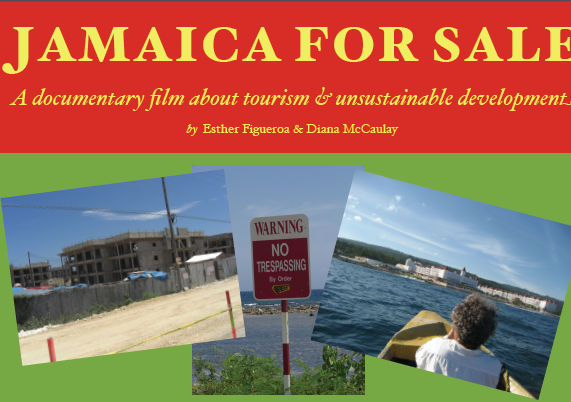
6. Jamaica for Sale (2006)

Director: Esther Figueroa

Examines the impact of tourism and resort development on Jamaican society.

7. Bob Marley: Roots of the Man (2018)

Director: Finn White-Thomson

Documents Bob Marley’s rise and his influence on reggae and Rastafarianism.

8. Bad Friday: Rastafari After Coral Gardens (2011)

Directors: Deborah A. Thomas & John L. Jackson Jr.

A powerful account of the Coral Gardens incident and its aftermath.The history of violence against Rastafari through the eyes of a Rasta community of in western Jamaica who annually commemorate the 1963 Coral Gardens "incident".

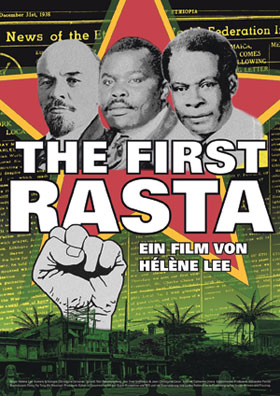
9. The First Rasta (2011)

Directors: Hélène Lee & Christophe Farnarier

Explores the life of Leonard Howell and the founding of Pinnacle. Going far beyond the standard imagery of Rasta-ganja, reggae, and dreadlocks-this cultural history offers an uncensored vision of a movement with complex roots and the exceptional journey of a man who taught an enslaved people how to be proud and impose their culture on the world. In the 1920s Leonard Percival Howell and the First Rastas had a revelation concerning the divinity of Haile Selassie, king of Ethiopia, that established the vision for the most popular mystical movement of the 20th century, Rastafarianism.

10. Stepping Razor: Red X (1992)

Director: Nicholas Campbell

A compelling portrait of Peter Tosh using his autobiographical recordings. Archival interviews with Tosh and rare concert footage fill out this picture of the Rasta visionary.


🎖️ Honorable Mentions

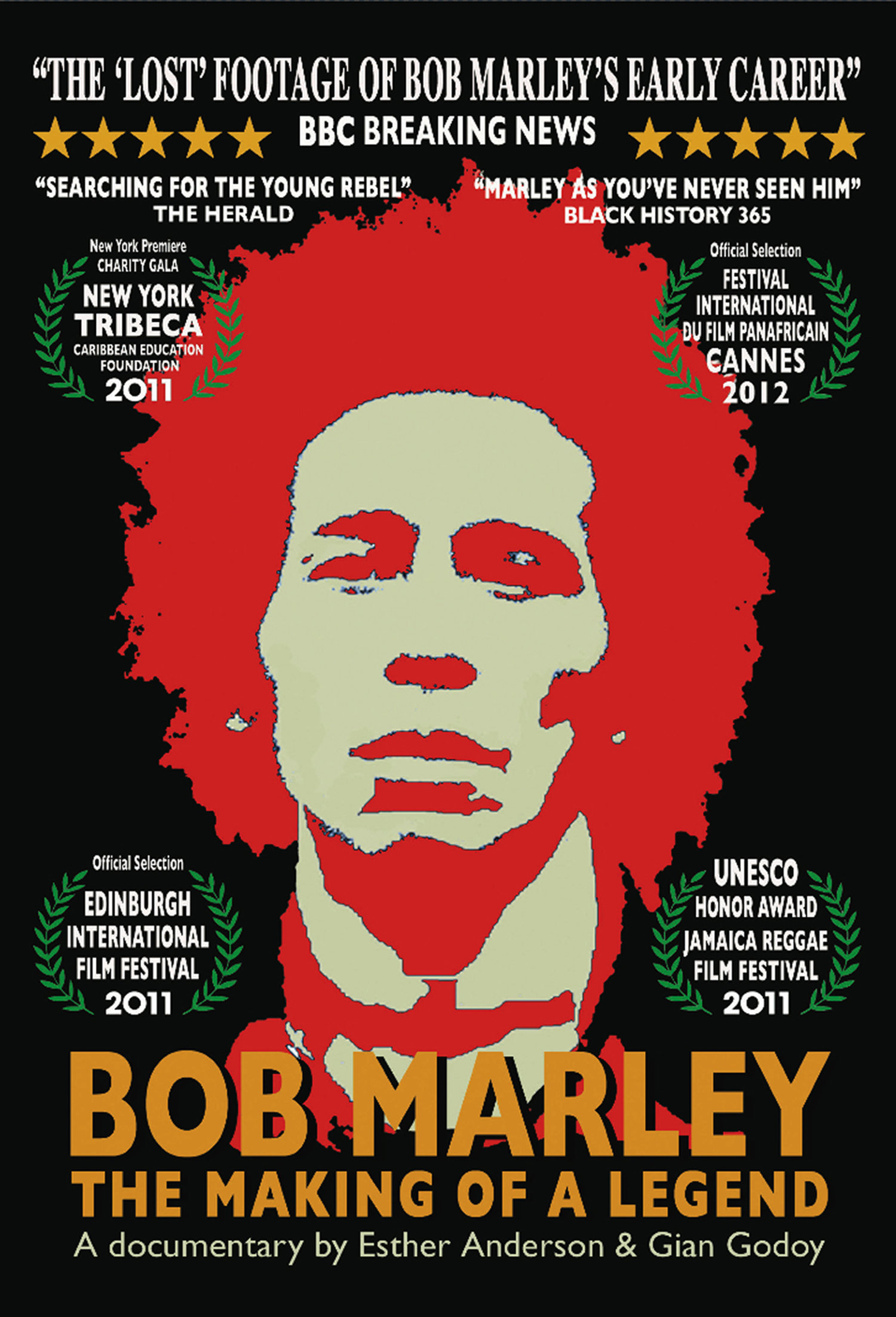
Bob Marley: The Making of a Legend (2011)

Director: Esther Anderson

A UNESCO Award nominated film charting the rise of Bob Marley and The Wailers to international stardom made from footage shot in the early 1970s and lost for more than thirty years, Esther Anderson takes us on a journey to Jamaica and into 56 Hope Road.

Black Mother (2018)

Director: Khalik Allah

A poetic visual ode to Jamaica’s spiritual and cultural landscape. In Black Mother, director Khalik Allah brings us on a spiritual journey through Jamaica. You will hear about and sometimes witness a dark Jamaican history, housing, physical violence, health problems, Rastafarianism, relationships and more.

Courage and Purpose (2022)

Director: PBCJ

Chronicles the legacy of Indian indentured laborers in Jamaica.

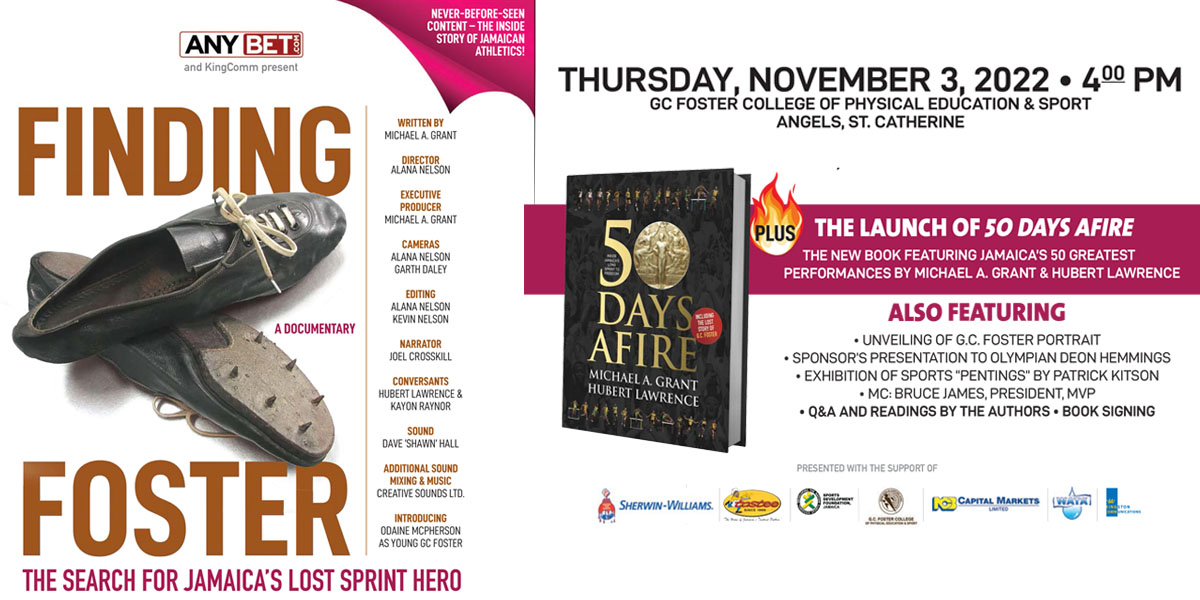
Finding Foster (2022)

Director: Alana Nelson

Explores the legacy of GC Foster and Jamaica’s sprinting heritage.


🇯🇲 Final Reflection

These documentaries collectively offer a layered perspective on Jamaica—from globalization and tourism to reggae music and Rastafari.

Jamaica’s documentary tradition stands as a powerful tool for truth-telling, cultural preservation, and social critique.

These films do more than document—they interrogate, celebrate, and challenge, shaping how Jamaica’s story is told globally.

Sunday, March 22, 2026

Quantum Dreams & Forty-Leg Prophecies: When Jamaican Reality Meets Schrödinger’s Riddim

The Jamaican Philosopher's Quantum Dreams: Exploring the Mysteries of Consciousness and Reality


"The most incomprehensible thing about the universe is that it is comprehensible." 
- Albert Einstein


"Everything we call real is made of things that cannot be regarded as real." 

- Niels Bohr


As a Jamaican philosopher, artist, and community activist, I've had experiences that have profoundly challenged my understanding of reality. These encounters have touched on deep questions about consciousness, the limits of science, and the nature of existence itself. Join me as we dive into the quantum rabbit hole and explore the implications of these mind-bending phenomena.

It all began with a dream - or rather, two dreams that were eerily prophetic. In the first incident, I dreamed of centipedes biting me, only to wake up and find them exactly where I had envisioned them in my sleep. My friend's swift action to eliminate the pests felt like a "collapse" of the potential danger, mirroring the quantum mechanical concept of "decoherence." Maybe that description is too vague, let me ratchet it up:

I. Midnight at Rock Top: When Dream Became Reality  

Rain was falling, but the vibes were right at Rock Top that night. I was there with two friends, a little rum in our systems, laughing about life—when suddenly, my head got heavy. I dozed off…  

In my dream: Two forty-legs (Jamaican centipedes!) crawled out of the nook where I was sitting, slid up the back of my shirt, bit me, and I plunged off the cliff. I woke up—frightened, heart racing! I told my friend: “Vinnin, I dreamed forty-legs were right here!”  

He looked at me, dead serious: “Rasta, if you dream that—*dem deh yah.” 

I was skeptical, but he whipped out his phone light, shone it into the crack in the rock—  

BAM. Two forty-legs, exactly where I saw them in my dream. He grabbed his machete—CHOP!—collapsing that prophecy into two pieces.  

II. University Walkway: The Shared Vision  

The second dream was even more uncanny. My friend and I both dreamed the same vivid scene, which unfolded the very next day just as we had envisioned it. This shared experience evoked a sense of "quantum entanglement" - a spooky connection between our minds that challenges the classical understanding of cognition... let me explain this amazing incident more clearly.

Years back, at UWI, a friend and I (Pole) were rivals for a St. Lucian woman’s (Drenia's) affection. She graduated, vanished for a year—no word. Then one night:  

I dreamed we were standing on a concrete walkway, looked up—and saw her.  

Next day, I bumped into him on the same walkway. Before I could speak, his eyes widened:  

“You dream it too? We saw Drenia!”

We both looked up—there she was. No call, no text—pure synchronicity.  

III. Schrödinger’s Cat… or Jamaican Forty-Leg?  

Those two experiences made me question: What is real?  

Enter quantum physics—the science of the invisible, where particles exist in multiple states at once. Like Schrödinger’s cat: locked in a box with poison, it’s both dead and alive until you open the box.  

But why do physicists care? 

- Decoherence: The moment quantum particles interact with reality (air, light, sound), they lose their quantum magic—collapsing into one state.  

  → Like how my forty-leg dream “collapsed” when my friend shone his light. 

- Prediction vs. Description:  

  • Prediction Camp (Einstein): “Science must forecast outcomes—shut up and calculate!”  
  • Description Camp (Bohr): “No—science must reveal reality’s true nature!”

My dreams challenge prediction. Value for money? Quantum physics gives us phones and MRI machines—but doesn’t explain prophetic centipedes.  

These encounters raise profound questions about the nature of consciousness and its relationship to the physical world. Are our dreams mere coincidences and byproducts of brain chemistry, or do they hint at deeper layers of reality that science has yet to uncover? The debate between the "prediction" and "description" camps in the philosophy of science is at the heart of this conundrum.

The physics of decoherence offers a fascinating perspective on this dilemma. It explains how quantum superpositions, like Schrödinger's famous cat, "collapse" into definite states not because of consciousness or measurement, but due to the scrambling of quantum information across the environment. This bridges the gap between the weirdness of the quantum realm and the classical world we experience.

Yet, my dream experiences seem to defy this neat explanation. If decoherence can so easily "collapse" the quantum state, how can my dreams, which appear to tap into a deeper layer of reality, remain unexplained by the predictive power of science?

IV. What the Quantum Riddim Teaches Us About Life**  

As Jamaicans—we know the unseen has weight. Ghost stories, spiritual warnings, dream signs… Quantum weirdness feels familiar!  

- Many-Worlds Theory: Every possibility happens somewhere. Maybe in another universe, I didn’t wake up before the forty-legs bit me.  

- Entanglement: Like how my friend and I dreamed the same scene—particles sync across galaxies too.  

But here’s the stake: If science only values prediction, it dismisses our dreams as “coincidence.” But if it seeks description? Maybe consciousness runs deeper than brain chemistry.  

This is where the soul-deep question arises: Is science about prediction or description? The "prediction" camp, represented by the Copenhagen interpretation and the instrumentalist view, would dismiss my dreams as mere statistical flukes or byproducts of brain chemistry. But the "description" camp, championed by the realist and many-worlds interpretations, might see my experiences as hints of a deeper reality that science has yet to fully grasp.

As a Jamaican philosopher, I'm drawn to the middle path - the idea that science can describe the predictable phenomena of the physical world, while also acknowledging the existence of "anomalies" that challenge our understanding. Perhaps my dreams are not glitches, but data points in the mystery of consciousness, waiting to be explored and integrated into a more comprehensive understanding of reality.

The stakes are high, both for the individual and for the scientific community. If science is only about prediction, then my dreams and other "unexplainable" experiences are relegated to the realm of the "unscientific." But if science is about describing the true nature of reality, then these phenomena demand investigation, potentially leading to breakthroughs in our understanding of consciousness, quantum mechanics, and the very fabric of existence.

V. Tying It to Our Jamaican Soul

Our ancestors navigated by stars, felt spirits in the breeze. They never reduced mystery to “fluff.”  

So what am I saying?  

1. Science as a Tool, Not a Tyrant: It explains how things work—but doesn’t own the why.  

2. Honor the Unexplained: My forty-leg vision? The shared dream? They are real experiences—demanding we stay humble.  

3. Our Culture is Already Quantum:  

  • When Bob Marley sang “Natural Mystic”...  
  • When your grandma warned you about dream-snakes...  

   → That’s our own theory of everything.  

---

As J.B.S. Haldane famously said, "The universe is not only stranger than we imagine, it is stranger than we can imagine." Perhaps it is time for science to embrace the wonder and mystery that lies beyond the boundaries of prediction, and to venture into the uncharted territories of the human experience.

Quantum physics confirms: reality is flexible. But Jamaican wisdom adds: respect the mystery.  

Those forty-legs? Maybe they were a warning... or maybe they were just there. But when my friend chopped them—that collapsed my potential futures.  

To my diaspora family: Our existence is already quantum—split between yard and foreign, memory and future. Our dreams? Maybe they’re messages from the multiverse.  

“Perhaps reality is a dance—the seen and unseen, the measured and dreamed, moving to one riddim. Stay open. Stay curious. The universe has more verses.”

In the end, the journey of the Jamaican philosopher is one of holding the tension between the known and the unknown, the measurable and the ineffable. To me it is a call to expand the horizons of science, to integrate the insights of philosophy, spirituality, and the arts, and to embrace the profound mysteries that lie at the heart of our existence.


(Share your dream stories below! Have you ever seen prophecy in your sleep?)


Sunday, May 26, 2024

G-Nomads Comic by Yannick Pessoa


As a writer and artist who struggles to make it in Jamaica my passion projects get put to the side in pursuit of what’s financially sound, viable and feasible. As such sometimes I feel my brain gets crammed up and crowded with unrealized, unreleased and yet to be unleashed ideas. Many days and months I feel my brain will explode with dreams and ideas yet to be manifested!

This is but one of my comic adventures…

Meet the G-Nomads!!!

In a world where a subset of humans known as Meta sapiens are emerging with extraordinary genetic mutations and abilities, fear and prejudice run rampant. Governments and private organizations seek to control or exploit these "enhanced" individuals, while extremist groups view them as abominations to be eradicated.

Enter Dr. Y, a charismatic and powerful Rastafarian leader who has established a clandestine network called the G-Nomads. Inspired by the Underground Railroad that aided escaped enslaved people, the G-Nomads rescue persecuted Meta sapiens and provide them safe haven in hidden compounds scattered across Bay City and the Caribbean island of "Xaymaca."

At the heart of the story is a diverse group of young Meta sapiens, each with their own unique abilities and personal struggles. Some have been forced into hiding, others exploited by nefarious forces, and many simply fear for their lives due to public hysteria. Under Dr. Y's guidance and the G-Nomads' protection, they must come to terms with their extraordinary powers while grappling with the ethical implications of using them.

The narrative explores parallels between the Meta sapien experience and real-world civil rights movements, drawing inspiration from the American Civil War, the fight to end transatlantic slavery, and modern issues like human trafficking. Dr. Y's Rastafarian philosophies and beliefs intersect with the mutant phenomenon, providing a unique cultural lens on evolution, oppression, and the struggle for freedom.

Overarching conflicts arise as governing bodies and corporations increasingly view Meta sapiens as commodities to be exploited or threats to be neutralized. Radical factions emerge on both sides, some Meta sapiens becoming radicalized against their human oppressors, while others preach peaceful coexistence. The G-Nomads find themselves caught in the middle, protecting their charges while navigating a world that fears and discriminates against them.

Personal arcs explore individual Meta sapiens coming to grips with their abilities, whether to embrace their powers openly or remain in hiding, the psychological toll of constant persecution, and the challenges of forging a unified community out of a diverse group of outsiders.

With tones blending sci-fi action, social commentary, and character-driven drama akin to Doom Patrol, and The Umbrella Academy, G-Nomads offers a fresh perspective on the mutant metaphor by filtering it through the lens of the African diaspora and Rastafarian culture. At its core, it's a story of finding one's place in an unaccepting world, the importance of chosen family, and the never-ending fight for equality and justice.

The conceptualization of the first 3 pages for a G-Nomads comic book:

PAGE ONE

Panel 1: Large, widescreen panel of a bustling city street at night. Neon signs, traffic lights, and headlights cut through the shadows and grime. In the foreground, a YOUNG MAN runs down an alley, fear etched on his face as he looks over his shoulder.

Panel 2: Close-up of the Young Man's eyes, glowing with an eerie, otherworldly energy.

SFX: HUM-MMMMM

Panel 3: The Young Man teleports in a blinding flash of light and energy, just as two heavily armed guards round the corner of the alley, weapons drawn.

GUARD 1: What the--?!

GUARD 2: Dammit! Another Meta freak!


PAGE TWO 

Panel 1: Large, stylized title card that dominates the page: G-NOMADS

Panel 2: A series of quick slices/inset panels showing brief glimpses of people using extraordinary abilities - energy blasts, telekinesis, elemental control. The panels contrast with images of fearful human crowds reacting in terror.

Panel 3: An advanced genetics laboratory, with scientists in lab coats studying DNA strands, cells mutating on a cellular level under microscopes.

Panel 4: Exterior shot of a well-fortified but camouflaged compound hidden in a lush, overgrown Caribbean setting. Rastafarian disciples in purple and green garb move about, as Meta sapien children play with fantastic elemental conjurings of energy, fire, water, etc.


PAGE THREE

Panel 1: DR. Y, an imposing Rastafarian figure with long dreadlocks, emerges from a dwelling, surveying the scene before him with a measured gaze.

Panel 2: Inset panels contrasting two scenes - fearful human crowd reacting with anger and aggression, juxtaposed with determined, powerful-looking Meta sapien teens.

Panel 3: Dr. Y crouches down, placing a calming hand on the shoulder of a young Meta sapien child, looking paternal but formidable.

Panel 4: Dramatic close-up on Dr. Y's intense eyes, burning with resolve and conviction. Meta sapien children flex their energy/elemental abilities behind him.

Let me know if this script hits the right visual notes to effectively set up the world, characters and tone I’m striving for with G-Nomads in the first few pages!

Sunday, February 26, 2023

When Jamaica Is My Living Room: Ubuntu, Ujamaa, Utopia

A Soular Youniverse... A world of I and I, where each and everyone has the well being of You and I at heart! A place where everything is a labour of love and a work of heart. Yeah... that is my dream for creation. For the global village... a day when Jamaica is my living room!

Come bredrin and sistren and trod in the realm of imagination where we walk through the community gate and into the heart of this bustling utopia, I don't know if you are but I'm struck by the warmth and sense of togetherness that permeates the air. People are gathered in small groups, chatting, laughing, and sharing stories, while others relax on benches, sipping tea or coffee and reading books or writing poetry.

The main public space is a vibrant hub of activity, with colorful murals adorning the walls and a stage where musicians, poets, and artists perform regularly. Tonight, a group of young poets are reciting their work, their words echoing across the square and drawing a crowd of eager listeners.

As we make our way deeper into the community, we pass by a large communal garden where people are tending to the plants and harvesting fresh vegetables for dinner. The scent of fragrant herbs and flowers fills the air, and I can hear the sounds of children playing and laughing in the nearby park, can you?

As the sun begins to set, the community comes alive with the glow of soft lighting and the sound of music wafting through the air. We make my way to the communal living room, where people are gathered around cozy fires, chatting and sharing their thoughts on everything from philosophy to the latest scientific discoveries.

Dinner is a communal affair, with everyone pitching in to prepare a delicious meal made from fresh, locally-sourced ingredients. We dine together at a long table, enjoying the flavors of the season and the warmth of each other's company.

As the evening wears on, people begin to retire to their individual homes, each one a unique and personalized space filled with art, poetry, and cherished mementos. I settle into my cozy earth-ship home, feeling grateful for the sense of community and connection that surrounds me, and for the sense of purpose and meaning that comes from working together to create a better world for all.


In the early morning, before the sun rises, many in the community gather for a group yoga or Tae Kwan Do session in the nearby park. Led by elders who have practiced these traditions for decades, the sessions are an opportunity to connect with the body, the breath, and the earth, and to cultivate a sense of balance and well-being.

Throughout the day, the community prioritizes health and well-being, with a focus on locally-sourced and organic foods, holistic healing practices, and regular exercise. The elders play an important role in passing down their knowledge of natural medicine, meditation, and other healing arts to the younger generations, ensuring that these traditions continue to thrive and evolve in this techno-organic age.

How does such a place sound? Come on I know I am not completely naive or full of shit and know somewhere on the walk you saw the potential and possibility of such a reality.


As Bob Marley once sang, "Don't worry about a thing, 'cause every little thing gonna be all right." In my dream world, Jamaica is my living room - a communal family where everyone is treated equally, and where money is outdated. Instead, we share the resources of our planet, working together to make the world a better place for all.

You may say that I'm a dreamer, but idealism can have a profound impact on the world. I envision a world where we are all part of one big community - a Star Trek-like humanity where people are given jobs and roles based on merit, and where we all live in harmony with each other and with nature.

In my dream world, we are all outdoor Bedouin academics and shamans, constantly exploring the mysteries of the universe and sharing our findings with each other. We pour our spirit into challenging and exploring the unknown and great beyond, pushing the boundaries of what we know and what we can achieve.

But this isn't just a dream - it's a future that is within our grasp. By embracing Ubuntu, Ujamaa, Open Source, Permaculture, EarthShips, and earthen homes, we can create a new brand of humanism that is informed by the unheard ethos of indigenous peoples, of Rastafari, of Aboriginals, and of Africans.

We can become techno-organic, not through trans-humanism, but by fusing technology and spirituality in a way that celebrates and honors our interconnections with each other and with the natural world. We can examine and re-examine our cultural and indigenous traditions for their worth, and create a new society that is harmonious, just, and sustainable.

In my dream world, we are all passengers on a spaceship hurtling through space. We understand that every living creature on Earth is our brother or sister, and we treat each other with the love, respect, and kindness that we all deserve. We are all explorers, adventurers, and dreamers, and together, we can make the world a better place for ourselves and for future generations.

As John Lennon once said, "You may say I'm a dreamer, but I'm not the only one." Let's embrace our idealism and work together to create a world that is truly worthy of our dreams. Let's make Jamaica our living room, and let's make the world a better place for all.

Thursday, February 23, 2023

Graphic Design's Future in Machine Learning and SVG Graphics: A Perspective from Montego Bay

Introduction:


As the buzz around artificial intelligence (AI) continues to grow, the market for AI tools geared towards artists and designers has expanded rapidly. As a graphic designer and philosopher based in Montego Bay, I am constantly seeking new trends and innovations that can improve the quality and efficiency of my work. One area that has piqued my interest recently is the potential of using scalable vector graphics (SVGs) in machine learning applications. In this article, I will delve into why SVGs may be an ideal format for machine learning and how this technology has the potential to revolutionize the way we design and create graphics. 

Over the past few years, we've seen a surge in AI-powered software geared towards the creative industries. Some examples of popular tools include Adobe's Sensei, which uses machine learning to assist with tasks like image editing and layout design, and Canva's Magic Resize feature, which automatically adjusts designs to fit different platforms and sizes. Another notable AI tool is Nvidia's GauGAN, which uses deep learning algorithms to generate realistic landscapes from simple sketches. These tools have not only increased efficiency and productivity for designers but have also opened up new possibilities for artistic expression. As we continue to push the boundaries of what AI can do in the creative realm, it's exciting to consider the potential impact of using SVGs as a format for machine learning applications.

But before we dive in, let's define some key terms to ensure we're all on the same page.

Definitions:

  • Scalable Vector Graphics (SVG): A file format for vector graphics that is based on XML. SVG images can be scaled without losing quality and are commonly used for logos, icons, and other graphics that need to be used in multiple contexts.

  • Machine Learning: A type of artificial intelligence that allows computers to learn from data without being explicitly programmed. Machine learning algorithms can recognize patterns and make predictions based on data.


Section 1: The Benefits of SVGs for Machine Learning

One of the main advantages of using SVGs in machine learning is that they are scalable and resolution-independent. Unlike raster-based formats like JPEG or PNG, which use a grid of pixels to represent images, SVGs use mathematical equations to represent graphics. This means that SVGs can be resized without losing image quality, and are ideal for creating designs that need to be used in multiple contexts, such as logos or icons.

Another advantage of using SVGs in machine learning is that they are easily manipulable using code. Because SVGs are a text-based format, they can be parsed and manipulated using code, making them ideal for machine learning applications that need to process large amounts of data quickly. Additionally, SVGs are lightweight and use less memory and processing power compared to raster-based formats, which can be important for machine learning applications that need to run on resource-constrained devices.


Section 2: Case Studies of SVGs in Machine Learning

There are already several examples of how SVGs are being used in machine learning applications. For example, researchers at Google have developed an algorithm that can generate detailed 3D models of objects using only a single SVG image as input. The algorithm uses machine learning techniques to extrapolate the missing depth information from the SVG image, allowing it to generate highly detailed 3D models.

Another example comes from the field of natural language processing, where researchers are using SVGs to generate visual representations of text. By mapping each word in a sentence to a corresponding SVG image, researchers can generate a visual summary of the text that can be easily interpreted by humans or other machine learning algorithms.

Section 3: Implications and Future Directions

As SVGs become more widely used in machine learning applications, there are several potential implications for the future of graphic design and visual communication. For example, designers may be able to use machine learning algorithms to generate complex graphics and visualizations based on simple text prompts, freeing up time and resources for other creative pursuits. Additionally, SVG-based machine learning algorithms may be able to generate highly personalized graphics and visualizations based on user data, creating new opportunities for targeted advertising and personalized content.

Conclusion:

As a graphic designer and philosopher in Montego Bay, I'm excited about the potential of SVGs in machine learning applications. By leveraging the scalability, manipulability, and efficiency of SVGs, we may be able to revolutionize the way we design and create graphics, and create new opportunities for personalized, targeted visual communication. I look forward to seeing how this technology develops in the coming years, and how it will shape the future of graphic design and visual communication.

Saturday, February 04, 2023

Coming of Age: A Jamaican Perspective

"It takes a village to raise a child"
African Proverb
 
How'd you make it through puberty, was it like Wonder Years for you? To me or for me rather, puberty and coming of age for me began the summer before high school. In Jamaica, coming of age refers to the transition from childhood to adulthood and is marked by a number of cultural and social milestones. These may include obtaining a driver's license, completing education, getting a job, and becoming financially independent. For many young people in Jamaica, coming of age also involves participating in cultural and religious rites of passage, such as Rastafarian groundation or a Kumbaya ceremony. These ceremonies often involve the guidance of elders and the community and are meant to provide young people with the knowledge and skills they need to navigate adulthood.

On this isle, family and community are central to the coming of age process. It is common for young people to be surrounded by a network of supportive adults who offer guidance and mentorship as they navigate this transition. Well at least that's the way it used to be years ago, "when the village raised a child." It was a time and age of apprenticeships, when youth would learn shoe-making, carpentry, masonry, tiling or upholstery from members of the community. When one was subject to the watchful eye of everyone in a community and if say for instance a child hid away far from home and smoked a cigarette, he could be sure before he reached home the grapevine told his parents before he arrived. And that was an age before cellphones or what my Grandma insisted on calling 'the circular phone".


This time of life can be marked by angst and some amount of suffering. Coming of age in JamRock for many, can also be marked by challenges, such as poverty, lack of access to education and job opportunities, and social and political issues. Despite these challenges, many young people in Jamaica are able to overcome them and go on to lead successful and fulfilling lives. In fact at one part of life I believed that overcoming great tragedy made coming of age more meaningful. Essentially I valued that Disney and Marvel orphan who become a hero rather than that Archie comics girl crisis or Napoleon Dynamite.

As I look back on my coming of age, I am struck by the overwhelming sense of anxiety and uncertainty that pervaded my teenage years. This was a time when life choices loomed large and dictated the person I would eventually become. In Jamaica, the choices I faced were especially weighty, as they encompassed issues such as gun violence, gang involvement, peer pressure and their accompanying dangers. These choices tested my resolve and shaped the values that would guide me in adulthood.

At the same time, my coming of age was marked by questions of how to navigate sexuality and desire, questions that tested my sense of self and challenged my understanding of the world. I was forced to confront my own lusts and desires and make choices that would determine the course of my life; things like is it right to have one woman or many women, how do yo treat women, do you lie to get women. And, of course, there were questions of money and politics, with the latter proving especially complicated in a country marked by deep social and economic inequalities. I remember once speaking in a dark corner late one night when I was probably in 10th grade and when that sexual tension built up and I stalled, she asked what was the matter? When I told her I had a girl she scornfully laughed and scoffed, "So yuh a one burner?" I share this tale with great chagrin, as my ego was wounded. There are so many tales like this I could tell you and I suspect I will have to save that for a post and tale I will call, "My Cuming of Age: To All the Women I Loved Before"

In many ways, my coming of age was a time of constant questioning, of searching for answers and trying to make sense of a world that was often confusing and uncertain. But it was also a time of growth, of forging my own identity and charting a path forward in life. And as I look back on it now, I am filled with a sense of pride at the choices I made, and a deep appreciation for the person I have become.

As a child of the 1980s, I was shaped by a kaleidoscope of media that informed my coming of age. Through books, comic books, cartoons, movies and more, I navigated the complexities of growing up, exploring the worlds of fiction and fantasy as I sought to understand my place in the world. At one point, I had aspirations of becoming Jamaica's first Walt Disney, with the goal of igniting the imaginations of other children with my own brand of animation.

However, as I reached high school, my aspirations shifted from animation to comic books. The writings of David Michelinie and Tom Defalco, and the art of Ron Frenz, Mark Bagley, and Erik Larsen had reeled me into the world of Marvel Comics. I had been introduced to Spider-man through his Amazing Friends on TV, but it wasn't until I jumped into the Amazing Spider-man during the Carnage origin 3-parter that I came to know the web-slinger in a deeper way. From that moment on, I was hooked, following Peter Parker's adventures with a passion. Peter Parker and Wally West's Flash became vehicles for my own venting and examining my own coming of age experience. Essentially I used the lessons of boys becoming heroes as a metaphor for my own journey. The line in the Spider-Man comic strip that said "When Peter is accidentally bitten by a radioactive spider, he discovers that he has superhuman, web-slinging powers and learned that with great power comes great responsibility, and now fights crime and tries to maintain some semblance of a normal life", yeah that line struck me and rung true.  X-Men and mutant powers that manifested in puberty, Wally West learning to graduate from Kid Flash to big Flash... those stories help me cross the Rubicon.

The love of comics and the desire to bring my own stories to life never left me, and I knew that I wanted to be a writer and artist in the comic book industry. I wanted to craft stories that would captivate and inspire others in the same way that I had been inspired by the comics of my youth. 

Coming of age content isn't just limited to cartoons or comics but is rife in literature. The type of lit that deals with the theme of young people transitioning from childhood to adulthood. This type of literature even has a fancy name "Bildungsroman" and as you probably realize it often focuses on the challenges and experiences that young people face as they navigate this transition and explore their identity, values, and place in the world. Reading coming of age literature can be particularly helpful for youth as it can provide them with relatable characters and situations that they can draw from as they navigate their own coming of age journey. It can also provide a sense of connection and understanding as young people see their own experiences reflected in the stories they read. There is a reason they give us Sprat Morrison and Escape to Last Man's Peak in 7th grade, then Shane, The Chrysalids, Young Warrior and Three Finger Jack's Treasure, The Pearl, Green Days by the River. A Year in San Fernando and A Brighter Sun. Outside of school reading I found Stephen King's Hearts in Atlantis as a great refrain.

In addition, coming of age literature can help youth to develop critical thinking skills as they consider the themes and messages of the stories and how they relate to their own lives. It can also expose them to new ideas and perspectives and help them to explore their own values and beliefs.

My coming of age was marked not only by media and the shaping of my imagination, but also by music and a rich musical journey. Music was a constant presence in my life, a soundtrack to the ups and downs of growing up. It provided solace and comfort in times of uncertainty and was a source of inspiration and hope. As I discovered different genres and artists, my musical tastes expanded, and I developed a deep appreciation for the power of music to evoke emotions and tell stories. I found myself drawn to the melodies and lyrics of singer-songwriters, the raw energy of rock and roll, the acoustic sounds of folk rock, and the alternative vibes of the 60s, 70s, 80s, and 90s.

My favorites artists included Bob Dylan, Bob Marley, Simon and Garfunkel, Goo Goo Dolls, Lenny Kravitz, Barrington Levy, Bounty Killer, Damian Marley, Enya, Cat Stevens, Outkast, and the Fugees. These musicians became a part of my musical DNA, influencing my tastes and shaping my journey. Beres Hammond's Putting Up Resistance made me acutely aware of the social circumstance of the working man and gave me ample preparation for adulting and it's rigors/ Bob Dylan's Tangled Up in Blue taught me the vagaries that life's journey would bring and the rich textures of love varying women bring. Simon and Garfunkel's The Boxer prepared me to fail or flail on my way to maturity.

I also began to see music as a form of expression and a means of connecting with others. Whether I was singing along to my favorite songs, trying to learn to play the guitar with friends, experimenting with AtoMix, Virtual DJ and Fruity Loops or discovering new music with others, music was a source of community and a way to connect with the world around me.

This musical journey became an integral part of my coming of age, shaping my tastes and influencing the person I would become. And even now, as I look back on my life, music remains a central part of who I am, a reminder of the power of sound and the role it has played in my journey.

So maybe you can understand how it was I that developed my sense of purpose that I set out on my path, determined to make my mark in the world. And as I look back on it now, I am proud of the journey I took and the person I have become. For though my life has taken many twists and turns, my love for comics and my desire to inspire others have remained constant, a shining beacon that guides me forward even to this day.

In conclusion, coming of age is a transformative experience that shapes the person we become. In Jamaica, it involves a rich tapestry of cultural and social milestones, as well as challenges that must be overcome. The support of family and community is integral to the coming of age process, and young people must make choices that will determine their path in life. Coming of age literature can play a crucial role in this process by providing young people with relatable characters, new ideas, and a sense of connection. It is a time of constant questioning, growth, and pride as one shapes their own identity and charts their path forward in life. Our coming of age experiences shape who we are, and it is a journey that is unique to each individual.


Sunday, May 01, 2022

On Being a Philosopher in Western Jamaica

“In order to live, man must act; in order to act, he must make choices; in order to make choices, he must define a code of values; in order to define a code of values, he must know what he is and where he is—i.e., he must know his own nature (including his means of knowledge) and the nature of the universe in which he acts—i.e., he needs metaphysics, epistemology, ethics, which means: philosophy. He cannot escape from this need; his only alternative is whether the philosophy guiding him is to be chosen by his mind or by chance.”
~Ayn Rand
Unlock your mind

In an age of M.B.A.'s and computer scientists, still thousands of university and college students graduate each year with a bachelor's degree in the ancient discipline known as Philosophy. Sometimes their parents and friends wonder what will happen to them... I am one such student, a UWI, Mona graduate with a degree in philosophy. I live in Montego Bay, Jamaica and this is my tale and journey in the 21st century making my way in the world. This article is a record of my experience as a philosopher in western Jamaica and not so much a defense of philosophy, though I suspect some of that will emerge in the writing eventually.

The advancements of science and technology, the progress and achievements of some disciplines within the fields of humanities all tend to engender relative indifference to Philosophy which is sometimes considered abstract, speculative and as a career, non-professional and less lucrative. Lots and lots of people say why philosophy? What of other philosophy majors? What do they do when confronted with the real world, where there are groceries to buy and mortgages to pay? How do they compete for jobs with all those sensible accounting and engineering majors? Sigh... The quest for the utility of or the question of the futility of Philosophy is a real concern to parents and the public especially in a world that currently progresses on the provisions of post-modernity... I don't propose to answer that question at all. And for those of you out there who measure standing, status and merit based on material gain and financial success well, I suspect this discourse isn't for you.

What I can tell you though...  is that philosophy has caused me to think about thinking. I was always and old soul, filled with nostalgia and redolence, so thinking was never ever merely a shallow thing or ever done less than consciously for me. Yes, philosophy helped me question myself even more deeply. To question my reasoning and to identify flaws and errors in thought. Oh and it gave me more tools with which to analyze art, literature and culture. It made me appreciate the philosophical discourse taking place in The Matrix, Star Trek TNG, WandaVision, Comics like Asterix and Obelix as well as Calvin and Hobbes, Lord of the Rings and so much more. Yeah... it has armed me with tools to dissect pop culture and mainstream media.I keep up with philosophy not only because I find it incredibly interesting; I have also found it to be remarkably useful. Yep I read Cornel West and watch him on Youtube, I actively follow Noam Chomsky, Arundhati Roy, Slavoj Žižek, Thomas Sowell, Russel Brand, Jimmy Dore, Joe Rogan and so many more.

Long before I had ever studied Philosophy academically, Mr. Spock made me a utilitarian when I imbibed and embedded the mantra "the good of the many, outweighs the good of the few!" The Vulcans and Data on a whole made me employ the stoicism they eschewed. These ideas fermented in a child in a left leaning household who believed in Michael Manley's democratic socialism, a socialism reflected in my mother's life as a social worker, my grand mother's political activism and the general Christian sense of charity, infected with a world where even Jesus seemed socialist... when I became obsessed with Spider-Man as a hero and again bludgeoned with the philosophical mantra of "with great power, comes great responsibility... phew I was chock full of Philosophy. My parents even wanted my middle name to be Nestor, god of wisdom, it ended up being Nesta after our own musical philosopher. My stars seemed headed on this path with me.

So you see Philosophy has undoubtedly helped me become more effective at clearly communicating my own ideas to others. It has also made it easier for me to understand and critically engage with others’ views. More generally, studying philosophy has made me a better, more analytical thinker – and this is a reward that I have found to be immensely valuable in nearly all aspects of my life, particularly in both an age globally and locally where "dumbing down" is a thing and "critical thinking skills" is a buzz term. So from pondering the 'big questions' in life to overcoming the minutia and small stuff, the skills that I learned through studying philosophy have helped me every step of the way. I try more than ever not to sweat the small stuff.

Now on to... What do we believe and why do we believe it? Who are we and why are we here? What ought we do and why should we do it? Well it is these types of questions Philosophy encourages. It's about critical and systematic inquiry into fundamental questions of right and wrong, truth and falsehood, the meaning of life, and the nature of reality, knowledge and society. More than any other discipline, philosophy explores the core issues of the Western intellectual tradition. Philosophy leads persons to formulate questions and follow arguments.

Of course, philosophy is much more than critical reasoning. We are persons who live in a world that exceeds our ability fully understand. We are bound by time and subject to changes. We laugh. We cry. And in the deepest moments we recognize an urge to find meaning in all of this.

Being a product of a society that is struggling through post-modern thinking as well as colonial and post-colonial ideas, philosophy has been relegated to the shelf. Truth has been deemed impossible to know. Reality is now subjective and morals have become relative. I have not been able to accept this age of absurdity and nihilism. However, philosophy opens up 3000 years of human genius. It gives us a means to methodically apply our ability to reason to interpret the cosmos and propel the very meaning of life itself. It provides an means of understanding and communicating truth.

Did you know there was an idea floating around that continuously following the first link of any Wikipedia article will eventually lead to “Philosophy”? On reading the article it sounded like a reasonable assertion, one that makes a certain amount of sense in retrospect: any description of something will typically use more general terms. Following that idea will eventually lead… somewhere.  So here’s an easy experiment you can do: Pick a Wikipedia page at random. Then, click on the very first hyperlink you see, and repeat. Eventually, you will reach the philosophy page.

In the field of Law, Jurisprudence (the philosophy of law) is essential for formulation of legal theories. In the field of Education, Philosophy is crucial in the areas of pedagogy, educational foundations, management and policies. Ethics is relevant to all facets of life. Within its own academic field, there is philosophy of virtually all disciplines which questions fundamental assumptions of such disciplines. Thus, Philosophy’s relevance remains ineluctable, inescapable and inevitable.

The study of philosophy provides answers to some of the world’s most existential questions revolving around right and wrong, truth and falsehood, the meaning of life, and the nature of human beings and the reality in which they live. Philosophy encourages critical and systematic thinking, explores core issues of intellectual tradition, and offers great preparation for life. Doesn't this sound like something Jamaican society could use?

Philosophy drives me to spend a lot of time doing research that involves reading, writing, experimental work, and data analysis. The reading material can include academic and scholarly journals, articles, and books while in terms of writing philosophy comes out in blogging, publishing articles, op-eds, and much more. Despite the common perception, philosophy majors appear to do remarkably well. That, at least, is the conclusion one can draw from an unscientific survey, 20 years after graduation, of the class of 1977 at four schools: Princeton University, the University of Virginia, the University of Nebraska and Texas A & M University.

Those 40-somethings fell in love with philosophy almost by accident and went on to careers in other fields. But for the most part they are convinced that their studies, which covered logic and ethics among other topics, helped them in their jobs and their lives. Their professional success may stem from the fact that philosophy students seem more likely than those with other degrees to attend graduate or professional school. Of 20 philosophy majors interviewed from the four universities, only four had not added a graduate or professional degree.

I graduated from Cornwall College in the Spring of 1999 after finishing GCSE "A" levels, then I did a certificate course in Journalism which prompted me to apply to Carimac at the UWI Mona in 2000. I got accept the August of 2000 and made my way to Kingston after a lifetime in Montego Bay. I entered my Freshman year with the intention to major in media and a minor in cultural studies, but after taking an Introduction to Philosophy lecture in my first semester, I was so excited by Philosophy that I decided to change majors. Studying Philosophy taught me new ways of thinking, reading, and writing that were challenging and stimulating. I genuinely enjoyed all of my classes which was a first in a long time.

Studying philosophy is not a requirement for writing jokes but it allowed me to realize how to quickly get to the point or what is commonly called the butt of a joke. This can be a handy skill when doing public speaking and being an entertaining raconteur. I also came to realized paradoxes are funny ways to make jokes, also reductio ad absurdum, which mean reduce to absurdity, essential this cued me to try and decipher the logic to jokes. Granted I am not a comic or comedian I am of the belief that stand-up comics are the modern day philosophers, characters like Jimmy Dore, Russel Brand, Bill Maher, Chris Rock, Dave Chappelle, Richard Pryor, Bill Cosby and so many more. Telling jokes is actually very hard and sometimes comes with a depression caused by the existential rigors that come with pulling the strings of our social fabric, upsetting status quo and poking fun at power. At worst dark humor can sometimes be like looking into a mirror darkly I suppose.

Undoubtedly philosophy informs and influences the way I go about doing things,  it's given me a sense of the complications that we face as human beings. While at the same time it also gives me a sense of the beauty and wonder of life. It helps me understand people in dire circumstances. However of all the gifts that this philosophy degree has given me is- creativity! It is probably the most important. I have always been an artist and drawing all my life, but philosophy infused my art and design with meaning and new concepts. It brought me to the Fibonacci sequence and golden ratio and applying them to design, and so much more.

When I told my parents that I was going to major in philosophy, they were concerned about what I would do after graduation. The most common question I got when I told people of my philosophy major was “What are you going to do with that degree?”, as if the only reason to go to college is to get a job. I certainly understand that sentiment, but philosophy prepared me for a job the way a major should while also providing the benefits of studying arts and humanities that make you a well-rounded and adjusted person outside of your job—in what is also known as your life.  Majoring in Philosophy was, without a doubt, the right choice for me. Philosophy has been so helpful to me in figuring out what news sources are best to digest, assigning meaning to relationships and life's path, navigating faith from Christian to Atheist to Rastafari, evolving from Pan-African to Afrofuturist, it has made me master of trivia like my father, playing video games and solving villains riddles to get to the next level, and my personal favorites: defending Spider-man as the greatest superhero, Christian Renaldo as the greatest footballer of this generational crop, defending Marvel Comics vs DC fanatics, defending Linux in a debate of Windows vs Mac, defending Ujamaa, Ubuntu and the leftist ideologies. Those things  make up my world of urban street philosophy.

My philosophy classes with Earl McKenzie, Dr. Bewaji and Bamikole, Ms. Roxanne Burton,  engaged, challenged, and even impassioned me in ways other classes did not. Years later it would be that academic motivation that would drive me to do well and helped me get into law school, granted I have had to defer due to the rigors of a freelance life, economic pursuits and child-rearing. What I learned was invaluable both during law school and my career path as entrepreneur, journalist, writer, graphic designer and artist. Philosophy differs from other degrees because it changes how you think, as opposed to requiring you to regurgitate information onto a test. My philosophical studies and relationship with media directly impacted my choice to pursue career in Law where I still hope to specialize in Intellectual property. If real property is finite and so lucrative, as someone who generates content it seems to me intellectual property, ideas, intangible things are infinite and hence so much more lucrative than the finite real property.

Philosophy has also informed my other spheres of endeavor; as an independent author, blogger and newspaper columnist, I strive to inject provocative thought into everything I write. Good stories entertain, while great stories both entertain and make their readers consider and think about profound questions.

The Major Lessons I've Learned from Philosophy

  1. Certainty and Ambiguity: There is very little I am absolutely certain of in life. I hold all beliefs with a certain degree of doubt and some skepticism. However I am not without conviction and whenever there is a need to act, I do in spite of and despite my skepticism. I am no longer off put by uncertainty and doubt is my constant companion.

  2. Opinion: I hold strong opinions but they are subject to constant rigor tests always being measured and weighed against new information. I have always found it necessary to validate my ideas constantly. I believe that I should have the ability to “see” and “hear” evidence that may be contrary to the opinions that I have held.

  3. The Balancing Act: As far as I have seen, the balanced life has proven to a myth; a concoction. I try to live a life of counterbalance as I constantly adjust priorities to achieve what might appear as a balance. I just focus on what’s most important at the moment and remain undistributed as much as possible.

  4. Mindfulness: I have perpetual To-do lists, a scheduler but I am not beholden to them. For me to know and believe that tasks that I do are aligned with my purpose is paramount. Purpose is my foundation and priority decides the action. Productivity only helps me to be efficient. Those 3 P's are my mental keys to mindfulness... Purpose, priority and productivity!

That's it for now, Selah!

Tuesday, April 12, 2022

Religion’s Impact on a young Jamaican Psyche

“There is a cult of ignorance in the United States, and there has always been. The strain of anti-intellectualism has been a constant thread winding its way through our political and cultural life, nurtured by the false notion that democracy means that 'my ignorance is just as good as your knowledge.”

― Issac Asimov

This week I think it reasonable to open my article with a quote from a Sci-Fi writer as we are living in some really sci-fi times, with bizarre cults and a fracturing society. I want to examine how religion affects the minds of Jamaican youth and how it impacted mine. Here is my story…

 At age 10, I became an atheist. Today as it pertains to God I am agnostic leaning to atheist, as a Rastafari, my faith is hinged on pan africanism, afrofuturism and a spirituality more akin to archaeology and anthropology of everything African... From ancient gods to ancestors. However, how did I become this person, how did a 10 year old in Norwood, Montego Bay become an atheist or an agnostic?


Well I attended many churches. First one I mainly remember well is Holy Trinity out by Westgate, where my beloved Grand Ma was a devout member. I remember my terrifying christening there... a ritual that I resisted since it wasn't my own volition. I remember the Father well, a well mannered enough man but that church bored me to tears and was steeped in Montego Bay's social politics. Or so it seemed to me as a young one. Then when I began attending Mt. Alvernia Prep Catholicism was introduced to me but my domestic set up was anti Catholic to a degree and very wary of homosexuality and catomite altered altar boys, and from my young perspective seeing their church attire and sometimes smoking priests gave even the young me the impression this place was at once too liberal in some regard and yet wound up in chants and ritual, and was just as boring in sound and song as Anglican.


My mother dabbled in the world of Pentecostal church with one Pastor Nigel who was killed in a house robbery at Bogue. She would eventually settle at Hillview Baptist church where many a community youth I were familiar with went and so I felt comfortable there and the service wasn't that boring... and by the time I was in grade 3, I had watched The Robe and Jesus of Nazareth so many times that I one day became so stupefied by Jesus' sacrifice and peaceful way that I to my chagrin then said to my mother that I wanted to be " A fighter for Jesus". An incident my cousin Camara Brown and brother Dax Pessoa never fail to remind me about or gimmicks me about and oh how I cringe hearing the tale repeated. My family was elated, especially my mother. And like a well brainwashed soldier, high on Jesus hopped up an reinforced by Peter Parker Spider-man and his motto of great power brings great responsibility, Star Trek and Data's and Spock's brands of stoicism and utilitarian logic "the good of the many outweighs the good of the few".


Imagine the melee of ideas like these in the mind of a black child that believed his mother sang young gifted and black to him, whose grandma was in the UNIA... Imagine the mind molded in a Christian yet pan African household... I was charged up... a young black superhero... young gifted and black... I was the X-Men, Malcolm X-Men School for gifted... “Mi start get up early go church walk by mi self, go Sunday school, stay for big church, trying to get more moral more good a try understand God’s will... What did he want me to do etc? Granted hormones had become a problem, I went to church religiously and imbibed the message though as an early puberty child, I was lusting after the young girls in tight dresses, plus maybe some of my mother’s friends in all their church dress plumpness and pulchritude.


Beyond that I was good and ready to be a saint… I really did consider being a pastor… eeek! Oh I prayed to have wisdom like Solomon after al my mother wanted my middle name to be Nestor god of wisdom and my father wanted it to be the wise nesta Marley, I prayed like Samuel to be chosen, to ask for wisdom and granted health and length of days… “yep be a wise 'gallis' like Solomon and not to be gal clown like Samson.” Oh how silly I was. But I took spiritual matters and science very seriously from the day I was born. These meant everything to me, them and Africa… so they had to collide.

As in the back of my mind was marinating a debate that had happened one Sunday on the verandah, my father and uncles were debating God. My uncle Hugh Thompson a devout atheist was at it against my uncle David Brown a very religious man, they had asked my father to weigh in and I remembered his words well, "If Zeus and such are Greek and Norse and Roman mythology, then our religion might just be Jewish mythology" and forever that moment it dawned on my that I simply assumed Christians were right. But that didn't cause my divorce psychologically from church.


It came one Sunday when my Sunday school teacher were giving a Sunday school lesson on revelations, it was my common entrance year, but what in the sermon caused the great divorce and moment of cognitive dissonance is when she informed be Jews get a second chance on Judgement day but gentile which we all were would be judged and if not found worthy would be tossed in hell fire... how could even God be sort of racist and biased and if he didn't rather me or black people it can't work and I wanted no more part in it and maybe it was Jewish mythology and not my story or mythos. I would years later find out Pessoa is a Jewish last name but little comfort anyway. And so I wrestled with it inside. And when I mentioned it to friends they all looked scared or told me not to think so much. When I told my mother it became a family crisis for all of high school. I was recommended to speak with this person or that parson... only for all my questions to come up unanswered but everyone wanted me to just accept without irrefutable proof or sound logic and science that God is real... I was no longer the good son but now spaced out, a possible high school weed head even though I never knew what a spliff was, I was wayward etc.. I was a victim of fads, they said I was easily swayed.

The tribulations of not walking in religious norm followed me to the UWI, where in my first semester a big argument with Ms. Kitty after she attacked me as the devil worshiper (I wonder if she remembers that!), whilst I was reasoning with someone else on Atheism. She and that debate led a portion of people to dub me as devil boy... ironic that at home in my community I was called Jesus… but I was persecuted over my opinion and belief. So when I say I understand the rigors of being ostracized by Christians and Christianity to be ridiculed and persecuted despite all my logic and scientific methodology, my critical thinking.... I understand how a religion can put enmity in family, the familiar and the familial.

So let us not heap scorn and condemnation in the Pathway congregation... Who controls your mind... is it Mark Zuckerberg, Rachel Maddow, Jewish myth writers who goads yours mind and prompts your ideas who coaxed you and cajoled your brain? Did the influence of external thought and ideas from outside u ever make u take stance and divides from friends and family?

About the author: Yannick Nesta Pessoa B.A. is Jamaica’s first blogger, a Social Advocate, Community Activist and Philosopher. Follow on Twitter & Instagram @yahnyk. Follow on Youtube @ and Reply to yannickpessoa@gmail.com

Sunday, April 10, 2022

A Concise History of MoBay

Montego Bay is the most urban setting in St. James. An early map of Jamaica has Montego Bay listed as “Bahia de Manteca” or “Lard Bay,” so called because of the lard making industry made possible by the hunting of wild boars which populated the surrounding hills. Montego Bay was a sugar and banana town but the sugar factories were closed and bananas are now shipped out from Kingston and Port Antonio.

Montego Bay is Jamaica’s second largest city. According to the Planning Institute of Jamaica, Montego Bay is also among the top five fastest growing urban centres in the country. The growth is spurred by tourism, which is the major foreign exchange earner for the parish of St. James. The high number of tourist attractions and resorts in Montego Bay provide employment for hundreds of Jamaicans. Over 80 per cent of the entire parish is dependent on tourism.

Friday, March 25, 2022

Being a Graphic Designer in Western Jamaica

When I was in grade 6 at Mt. Alvernia Prep., the class was paired with foreign students for pen-pals, to practice letter writing and foster cross cultural experience. I went home got my mother's help and wrote a nice introductory letter. Now, beyond my experience in the 1980's tourist industry and slights at duty free in-bond shops, I didn't have an experience with racism that had left an indelible mark till receiving my response letter from my pen-pal. The letter to my horror was riddled with condescending questions like do you have classes under trees and do you wear grass skirts and such. Coming from a Pan African Christian home this was an affront of the highest order. From then on I have come to realize that when the world thinks about Jamaica the first thing that comes to the collective thoughts of people from the western hemisphere are the pivotal 1960’s rural poverty images, of zinc fences, shanty towns, marijuana smoking men and matted hair. Some may be aware of the allure of sun, sand and sex. Reggae and Bob Marley did little to diminish the sexual mystique. Afterwards it also became known as the country which for one reason or the other was the perennial exporter of various types of drugs. Was this a failure in our messaging our visual communique?

 This clash of cultures and divergent realities reflect the duality of perception. I am not saying we aren’t steeped in a variety of problems, far from it. Hence, working in the developing world can carry unique problems and circumstances not perceived by graphic designers and artists in the developed nations. Hence I hope this article elucidates my progress and journey as a designer growing and working in the wonderful conundrum and cultural melting pot that is Jamaica and the Caribbean

Visual communication is an inextricable part of human history. It has existed as long as there has been the need to make marks or leave traces, to communicate through signs and symbols rather than the spoken word. In the contemporary world the activity of organizing signs and symbols, or words and images, for public exchange is recognized as graphic design - a specialist area of the broader field of design. Just as there have been design movements and aesthetics born all over the world, Jamaica and her people too have formed it's own unique systems of visual hierarchy, layout and style. Our unique history, environment and challenges have given rise to our own aesthetic and cues for communication.


Today graphic design in Jamaica embraces printed material from the smallest ephemeral item - a stamp, label or ticket - to publication design in the form of the interiors and exteriors of books and magazines. It also includes a robust and very local poster and advertising design culture, as well as trademarks, logos and symbols. Then there are the more convention yet extensive systems of information design - signage in the built environment, exhibitions and corporate identities for companies, all often developed in close association with architectural practices that are informed by our Victorian and Spanish past yet still being influence by Deco and a modern minimalism.

Over the last decade I've watched the practice of graphic design as it has undergone momentous change as pixels have become a handy substitute for print and software has lessened the profession's reliance on its traditional tools of pen and paper. In no other discipline of design has computer technology had Reich a transforming impact. Throughout our daily lives we are surrounded and peppered by graphic messages. Indeed they have become so much a part of the fabric of every-day modern life - from break-fast cereal packaging and advertising 3 billboards to logos on clothes and television company identities - that often we register their codes only on a subconscious level.


Working in Western Jamaica is always challenging as it is an environment, where the push for excellence is always marred and pegged down by an ever changing set of economic obstacles, and technical variables though if you ask me I believe that ultimately these challenges will help make you a better designer. Anyhow my journey started way back in 2001 when I took a graphic design course in Kingston, where I was tutored by one Mr. Marcel Robinson, who gave me my introduction to Corel Draw (I still remember that hot air balloon logo with fondness) and the theories of design. That was a time when the concept of computer was still one of a luxury item in Jamaica, but my exposure to them though came earlier in the 80's but was confined to a Commodore 64 that I had to write the Basic code for PacMan to play it. After that my next set of exposure would be to some access in my high school and prep school computer laboratories and the only use that we had for them was to play ancient PC Games, some of them in DOS. I remember being smitten with the early aerial view incarnations of Grand Theft Auto, Minesweeper, Taipei and Solitaire. Midway during high school my siblings and I got a computer at home. In the back of my mind I always had intentions of doing designs especially after seeing kids in my high school library using cut outs and a photocopier to make a flyer or poster, that incident cemented for me the union of art and technology.

 
As my progress in illustrating on a Pentium III Windows® machine went forward smoothly, I got introduced to a variety of software such as Blender, Gimp, Inkscape, and more. My enterprising nature brought me to Macs and Linux desktops. I had fallen in love with the idea of transforming pictures and mashing colors together, and the thrill of creativity. I had some idea of the basic tenets of graphic design and color theory but no formal training in these notions, so eventually I dove into Graphic Design books that I could pick up at our local bookstore franchise Sangster's or at Computer stores. After working on odd gigs at the University of the West Indies, Mona while doing a philosophy degree, I got introduced to Macromedia Freehand and Flash for vector drawing and animation. This realm of digital creation was my major foray into the vast world of design which wouldn’t have been possible without the ‘pirated’ copies of these high end software (I have shifted my software use to free and opensource) Although I will be forever grateful for the creators of these software, there really wasn’t any way that I could honor their work by buying their product. They were too expensive for a starving artist in Jamaica's second city.

Another pivotal moment in my life as a graphic designer came in the period of 2004 to 2006. In these three years I did two things that shaped my design inclinations, the first I got to work in a lot of jobs as a freelance designer. The second, after hanging with Computer Science crowd I made the hard leap into open source. The impact of these actions resulted in my gaining direct touch with the business side of being a designer and the second introduced me to the interesting world of coding, which would lend itself to me learning HTML, CSS, and JavaScript.


Being a freelance designer at the time circa 2004 was a tough time because in those days Jamaican businesses didn’t really rate the importance of branding themselves through graphic design, thus they attached no importance to that side of their advertising strategy. Don't get me wrong everyone wants a logo or a business card but they don't want to pay for it. I can tell you horror stories of hunting down clients who received work and tried to get away without paying. In Jamaica, photographers and videographers tend to be able to command financial respect more and people are more willing to pay. This environmental pressure has led to designers at the time becoming a jack of all trade. We dabbled in everything from flash animation to video and sound editing. Specializing in one discipline was seen as a death warrant because the desires of our employers, clients and the market were fleeting and one had to be able to pivot with the ever changing needs of the moment. Consequently instead of specializing and learning more about the various disciplines found in graphic design, this trend made the majority of the designers, somewhat lesser artists and some lost focus on the importance of the art itself, and by necessity it made designers in western Jamaica a kind of digital Anansi and hustler, where as the developed world romanticized this as the life a digital nomad.

Becoming a digital Anansi in this worldwide web prompted me to dig deeper into codes and coding, hard ware and A+ type repairs. It was an interesting experience as it overlapped with my desire to create stuff from the base up, using computers, to understand how things worked under the hood, the magic of ones and zeroes. Concurrently I was pulled deeper into web design since it encompassed the two things that I love most, the internet and design. In these formative years, I also learned the benefits of research as a method to help yield the best possible tools and techniques to produce interesting things. These years refined me from a hustler into a consummate artist, who was more concerned about creating a graphic aesthetic that communicated a new Caribbean message and Afrofuturism. Making money was important but I was yearning for something more as I lived that ‘starving artist’ cliche. This period was where I became somewhat disillusioned with graphic design.

The majority of my clients were not looking for the ‘aesthetic’ strength of their products, a lot of them were posters and party flyers for people who didn't pay well and objected if I put black girls on their party flyers. A lot of the rest just wanted something made quickly (in retrospect, I realize it was my inexperience as a designer which through lack of a deep formal education in the field and the lack of proper exposure led me to compromise my creative integrity). Even though I did land some big work, doing T-shirts for Reggae Sumfest, Trelawny Swamp Safari among others, my desire to do graphic designed still waned, and I turned my face towards web design and coding, by that time had already been through Yahoo's geocities and was blogging on this platform. So web design was a natural progression.


To my software knowledge I added the use of Adobe's Photoshop, Indesign and Illustrator, Corel PhotoPaint, and Scribus. I also graduated from Frontpage to Dreamweaver. Try as I may that market was the domain of Kingston techies who won the lucrative business contracts and clients like NGOs. Around 2008 after layout work for Newspapers, writing columns for the Western Mirror, dabbling in editorial cartoons, I somehow wound up at VistaPrint doing copywriting. Then around 2010 — 2012 and the next creative wave to hit Jamaica was multimedia and motion graphics. I had dabbled in Macromedia Director and Flash which gave me some experience, my adventures brought me to working with Montegonian artists to storyboard music videos and do some photography which I loved. 

This is an energetic time for Jamaican graphic design, in terms of the web, illustration and  graphic videos like text videos. Motion is where graphics are going and garner premium pay. The field is becoming more mainstream, and the talents out there were getting out and presenting their portfolios for the world to see. Though at the same time we are in an age where apps and templates are a dime a dozen offering consumers prettier graphic options and standards, at the same time creating a generic aesthetic in design which still leaves room for the human element in finding meaningful new expressions in design.